Masfouf, Tunisian Sweet Breakfast Couscous
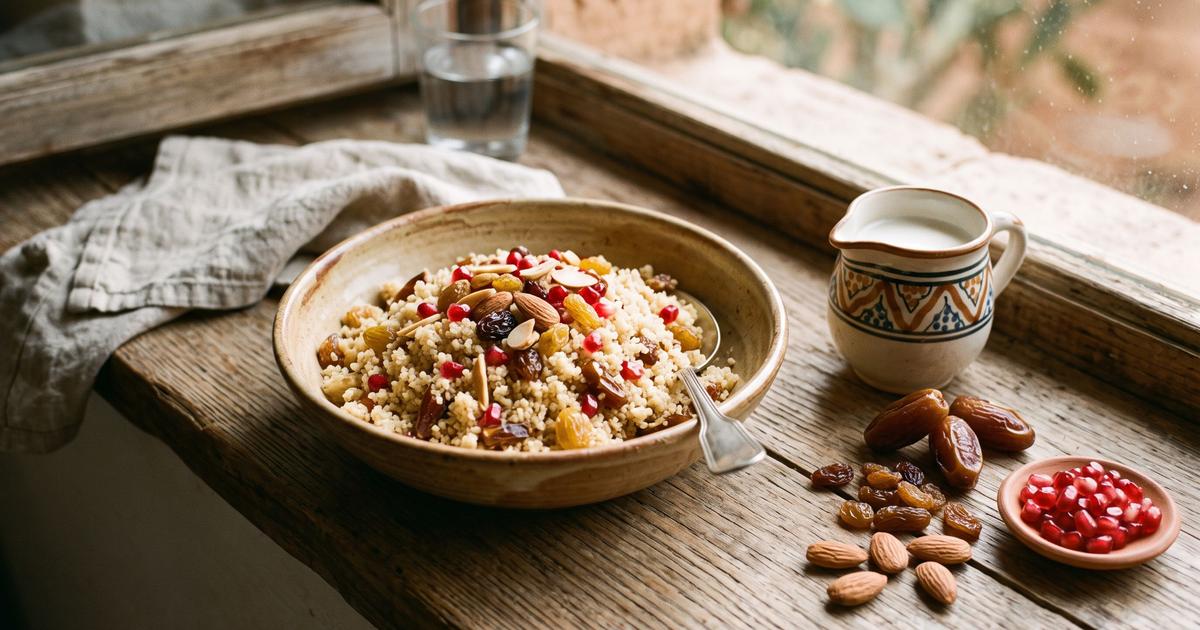
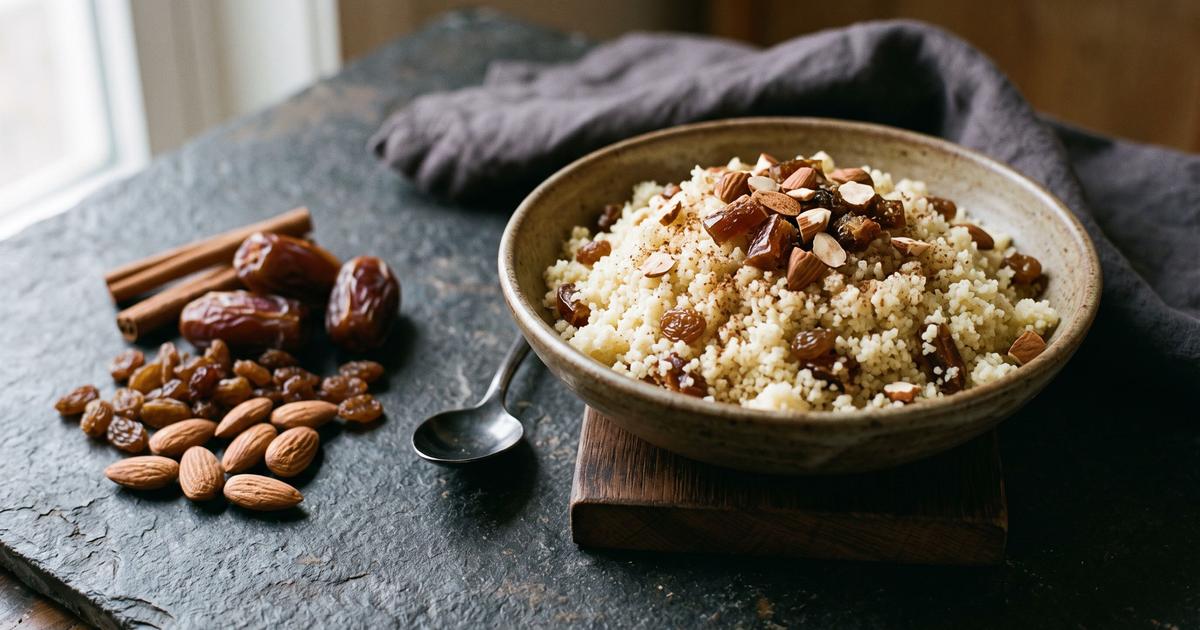
Masfouf is the sweet cousin of savory couscous, eaten across Tunisia and Algeria for breakfast and all through Ramadan. It is usually built on butter and sugar; here the sweetness is dates, raisins, and ripe fruit, and orange juice does the work of the fat, perfuming the grain as it steams. What sets masfouf apart from a Moroccan seffa is the fresh fruit and the bowl of cold milk: pomegranate seeds or grapes go on top, and the whole thing is doused in almond milk at the table, half cereal and half dessert. Make the couscous ahead and keep it cold; add the milk only when you sit down.
Ingredients
- 1 cup Whole wheat couscous
- 2 wholes Oranges, juiced, one zested
- 4 wholes Medjool dates, pitted and chopped
- 1/3 cup Raisins
- 1/4 cup Almonds, toasted and slivered
- 1/2 whole Pomegranate, seeds only
- 1/2 tsp cassia cinnamon, ground
- 1 cup Unsweetened almond milk, cold, to serve
Method
- Plump the raisins in hot water for 10 minutes, then drain. Dried fruit dropped in straight stays leathery; a soak makes it soft enough to melt into the grain.
- Put the couscous in a bowl. Combine the orange juice with enough boiling water to make about 1 cup (240 ml), pour it over, cover, and leave 5 minutes. Fluff with a fork. Steam and fruit juice, not oil, are what keep the grains separate.
- Fold in the dates, drained raisins, cinnamon, orange zest, and half the almonds while the couscous is still warm so it drinks up the flavors.
- Traditional masfouf is steamed three times over a couscoussier for the lightest grain; the quick soak here gets most of the way there without the equipment.
- Top with the pomegranate seeds and remaining almonds. Serve with cold almond milk poured over each bowl, the way Tunisians eat it for breakfast in summer.
Nutrition
Estimated per serving: 300 calories, 8 g protein, 9 g fiber, 30 mg sodium. Computed from USDA FoodData Central reference values for the main ingredients. This is an approximation, not a laboratory measurement. How these are computed.
Cost per serving is estimated from US national-average retail prices for cheap staple forms, using BLS dried-bean prices and USDA produce prices. Prices vary by store and season, so treat it as a guide, not a receipt. How this is computed.