Herbel, Moroccan Barley Porridge
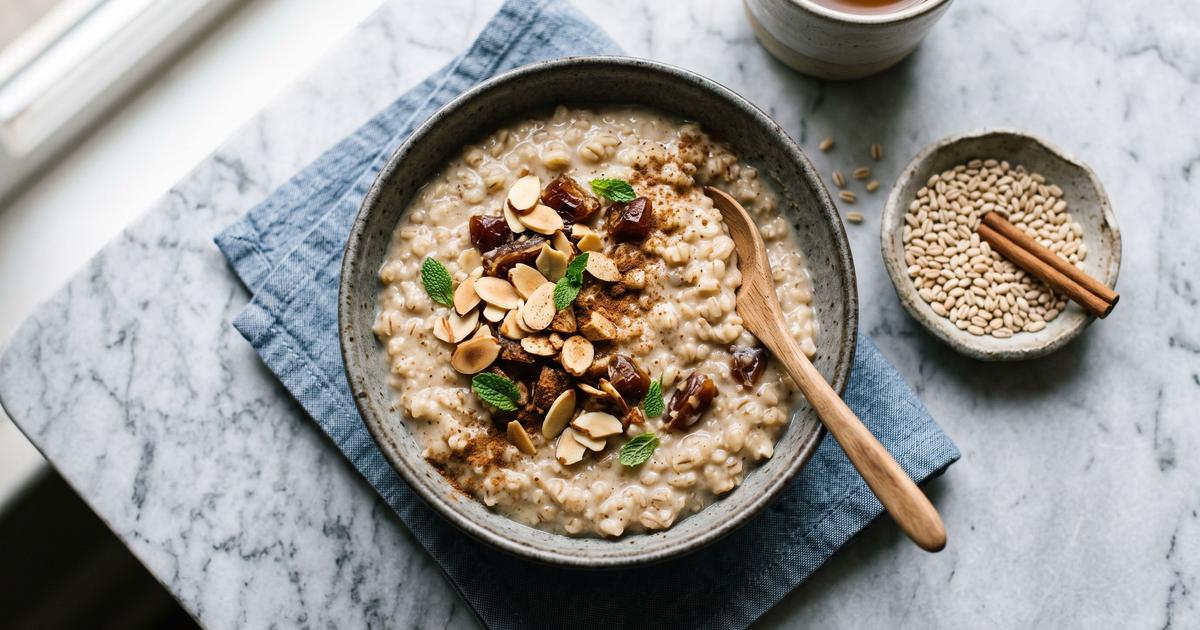
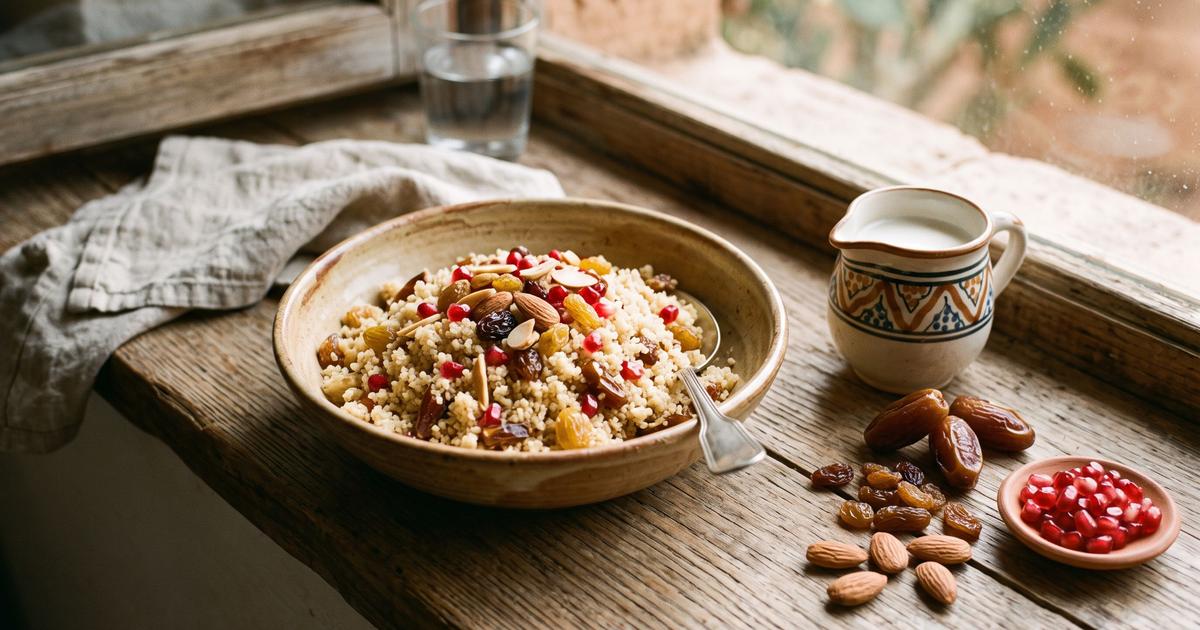
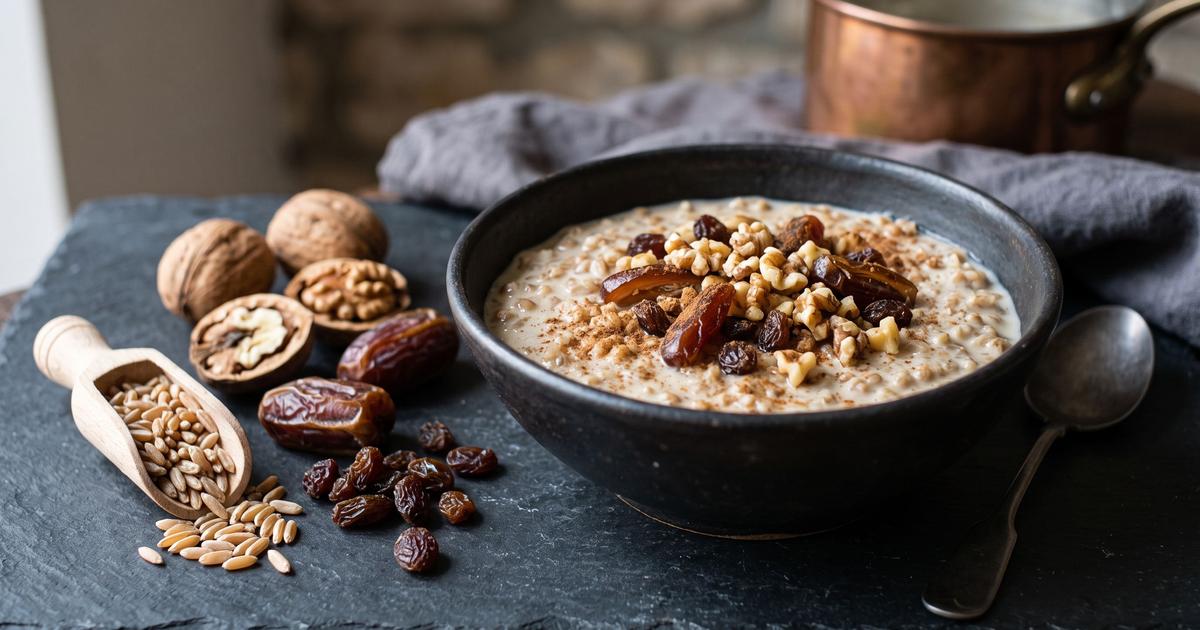
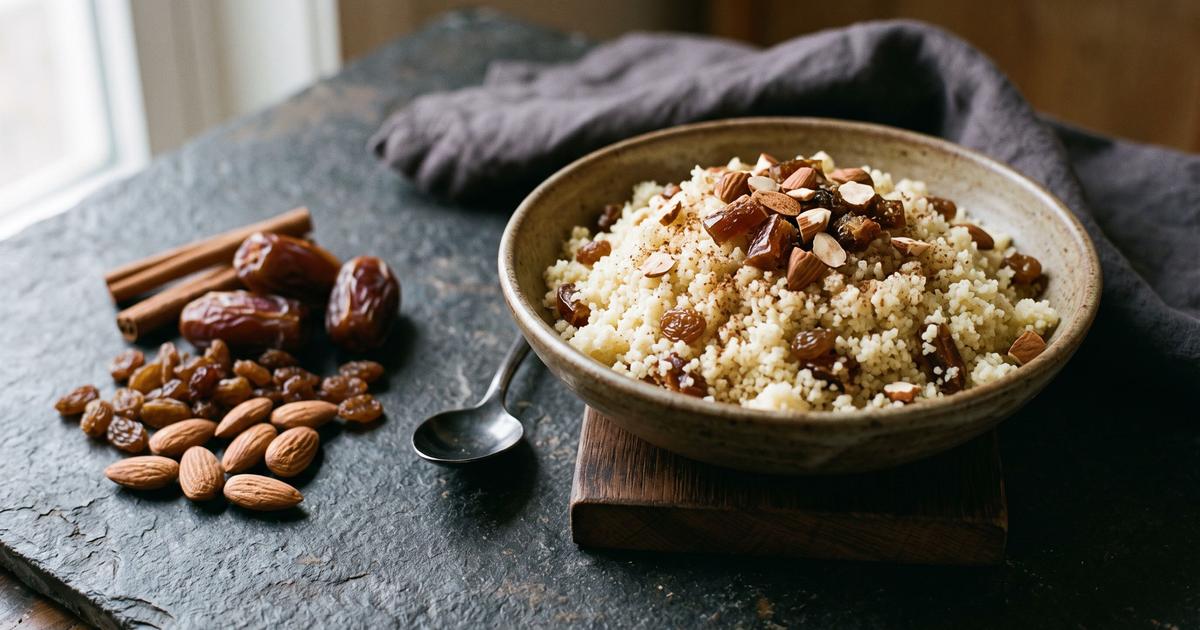
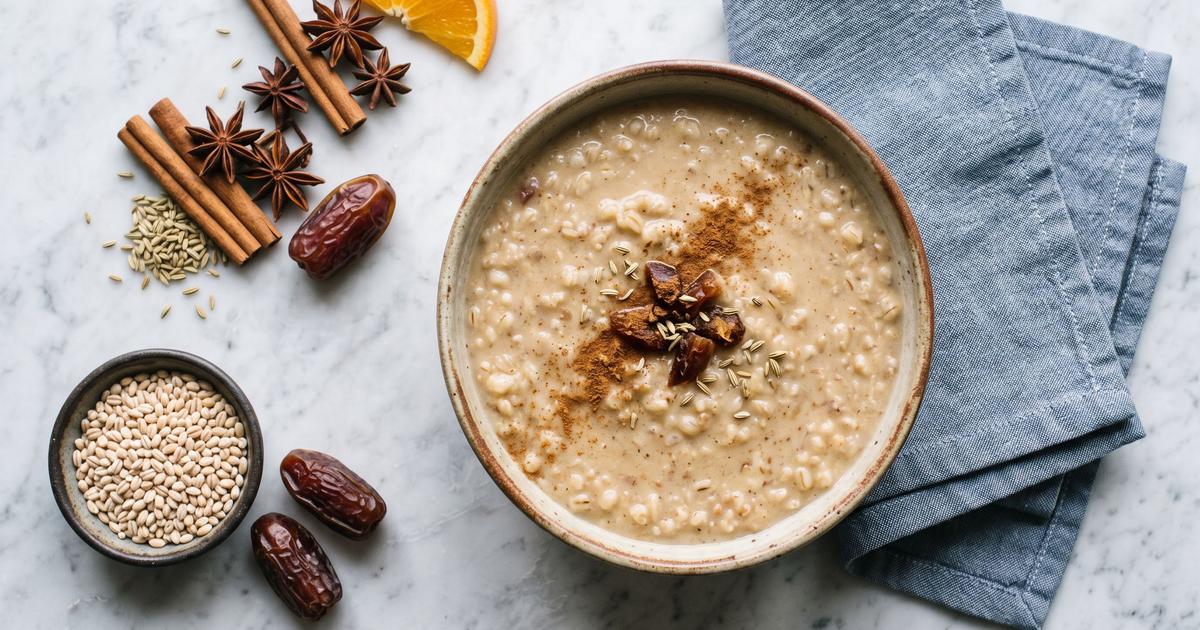
Herbel is a slow Moroccan breakfast for cold mornings, whole barley (or sometimes wheat) cooked down in water and milk until it is soft and creamy, sweetened and often scented with cinnamon or anise. It is humble food, the kind of thing made from a grain that keeps all winter. Using hulled barley rather than the stripped pearl kind means the bran stays on, which is what makes it take an hour but also what makes it worth eating. Dates do the sweetening, toasted almonds go on top, and a little orange zest brightens the whole bowl.
Ingredients
- 1 cup Hulled barley, rinsed, soaked overnight if possible
- 1 1/2 cups Unsweetened soy milk
- 1 stick cassia cinnamon
- 1/2 tsp Fennel seed, lightly crushed, optional
- 4 wholes Medjool dates, pitted and chopped
- 1/4 cup Almonds, toasted and chopped
- 1 whole Oranges, zested, optional
Method
- Simmer the barley in 4 cups (960 ml) water with the cinnamon stick and fennel for 50 to 60 minutes, or about 35 if you soaked it overnight, until very tender and the water has gone starchy and thick. Hulled barley still has its bran, so it needs long, slow heat to soften and turn creamy.
- Add the soy milk and chopped dates and simmer 10 minutes more, until thick and porridge-like. The dates soften and melt into the pot, sweetening it without sugar, and the milk enriches it without dairy.
- Toast the almonds in a dry pan until golden and fragrant. Toasting wakes up their oils, and they are the traditional crown on a bowl of herbel.
- Pull the cinnamon stick, then serve topped with the almonds and a little orange zest. The zest lifts the warm, sweet bowl and keeps it from feeling heavy.
Nutrition
Estimated per serving: 250 calories, 8 g protein, 8 g fiber, 40 mg sodium. Computed from USDA FoodData Central reference values for the main ingredients. This is an approximation, not a laboratory measurement. How these are computed.
Cost per serving is estimated from US national-average retail prices for cheap staple forms, using BLS dried-bean prices and USDA produce prices. Prices vary by store and season, so treat it as a guide, not a receipt. How this is computed.