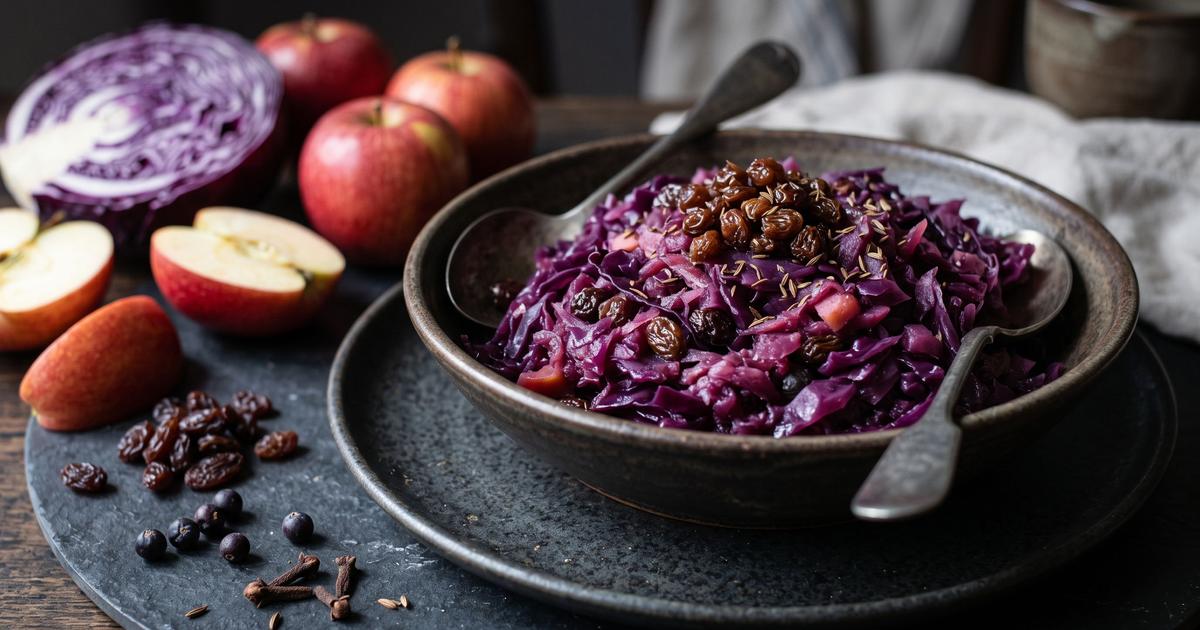
Bayrisch Kraut, Bavarian Braised Cabbage with Apple and Caraway
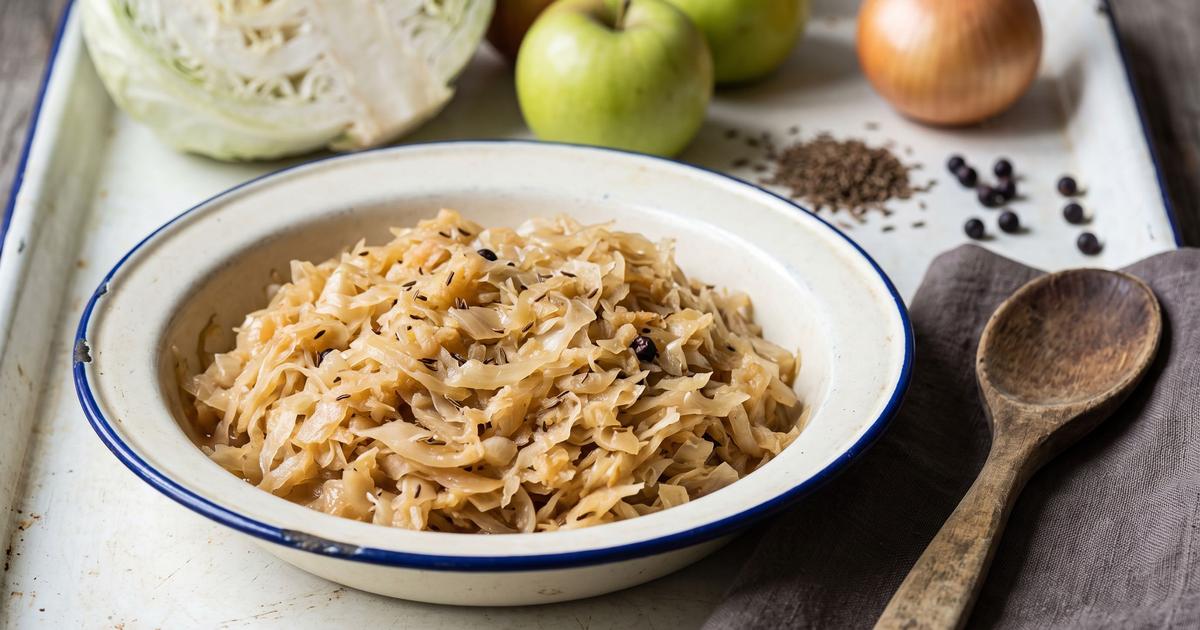
Bayrisch Kraut is the sweet-sour braised white cabbage that shows up alongside dumplings and roasts across Bavaria, the pale cousin to the region's red cabbage. Most recipes start with rendered fat and a spoon of sugar. Neither is necessary. Onion sweated slowly to golden gives all the savory depth, and a whole grated apple melts in to sweeten it. Caraway and crushed juniper are the signature spices, and a good pour of cider vinegar at the end sharpens the whole pot in place of salt. It braises down soft and forgiving, reheats beautifully, and is arguably better the next day.
Ingredients
- 2 lb green cabbage, cored and thinly shredded
- 1 whole Yellow onions, thinly sliced
- 1 whole Apples, grated
- 1 tsp Caraway
- 4 wholes Juniper berries, crushed
- 2 wholes Bay leaves
- 1 tsp no-salt vegetable bouillon
- 2 tbsp Apple cider vinegar
- 1/2 tsp Black peppercorns, freshly ground
Method
- Sweat the onion in 0.25 cup (60 ml) water in a wide pot over medium heat until soft and beginning to turn golden, about 8 minutes, adding water as it dries. Taking the onion past translucent to lightly golden builds the sweet, savory base that a Bavarian cook would have gotten from bacon fat.
- Add the shredded cabbage, caraway, crushed juniper, bay leaves, bouillon, and 0.5 cup (120 ml) water. Cover and braise over low heat, stirring now and then, until the cabbage is meltingly tender, 30 to 35 minutes. Caraway and juniper are the two flavors that make this Bavarian rather than just cooked cabbage; crush the juniper so it gives up its pine and gin.
- Stir in the grated apple and cook uncovered for another 5 minutes. Grated apple all but dissolves and sweetens the pot from within, the whole-food answer to the pinch of sugar a traditional recipe adds.
- Fish out the bay leaves, then stir in the cider vinegar and black pepper. The vinegar is essential: it wakes up a rich, soft dish and balances the sweetness of the apple, doing the job salt would otherwise do. Cook off a minute more and taste for a splash more vinegar.
Nutrition
Estimated per serving: 90 calories, 3 g protein, 5 g fiber, 60 mg sodium. Computed from USDA FoodData Central reference values for the main ingredients. This is an approximation, not a laboratory measurement. How these are computed.
Cost per serving is estimated from US national-average retail prices for cheap staple forms, using BLS dried-bean prices and USDA produce prices. Prices vary by store and season, so treat it as a guide, not a receipt. How this is computed.