Quibebe, Brazilian Squash Puree
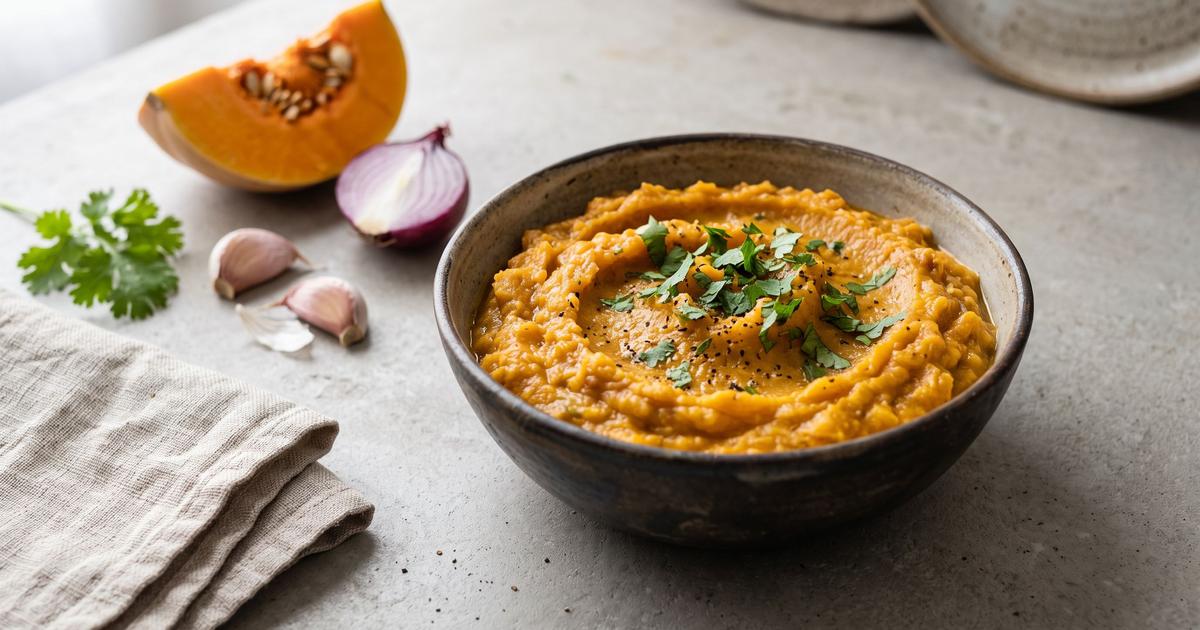
Quibebe is a homestyle squash puree from the Brazilian interior, common in Minas Gerais and the northeast, where a wedge of pumpkin or squash is a cheap and constant thing in the kitchen. It sits somewhere between a side dish and a sauce: loose enough to spoon over rice, thick enough to eat on its own. The sweetness of the squash is the point, so the seasoning stays quiet, a little tomato for acid and a lot of soft onion and garlic underneath. Traditional versions sometimes start with a spoon of oil and a knob of butter, neither of which the squash actually needs to turn creamy. Its own starch does that work once you mash it. Kabocha, if you find it, gives the driest and sweetest result, and its skin is thin enough to leave on.
Ingredients
- 1 1/2 lb Butternut squash, peeled and cut in 1-inch (2.5 cm) cubes
- 1 Yellow onion, diced
- 3 cloves Garlic, minced
- 1 Fresh tomatoe, chopped
- 2 Scallions, sliced
- 1/4 cup Flat-leaf parsley, chopped
- 1/2 tsp Black peppercorns, ground
Method
- Sweat the onion and garlic in a wide pan with 3 tablespoons (45 ml) of water over medium heat until the onion is soft and translucent, about 6 minutes. Add water a splash at a time whenever the pan looks dry. This builds the sweet base that stands in for the fat a Brazilian cook would have started with.
- Add the chopped tomato and cook 3 minutes until it slumps and releases its juice. That juice, plus the water the squash gives up, is all the liquid the dish needs.
- Add the squash cubes and 0.5 cup (120 ml) water. Cover and simmer on low until the squash is completely tender and starting to fall apart, 20 to 25 minutes. Butternut works, but a drier squash like kabocha makes a firmer, sweeter quibebe if you can get it.
- Uncover and mash directly in the pan with a fork or masher. Leave it rough, with some cubes still whole. The squash is high in starch, so mashing alone makes it creamy, and no cream or milk goes in.
- Stir in the ground pepper. Cook off any excess liquid over higher heat if it looks loose, until it holds the shape of a spoon.
- Fold in the scallions and parsley off the heat and serve warm, alongside beans and greens.
Nutrition
Estimated per serving: 120 calories, 3 g protein, 5 g fiber, 45 mg sodium. Computed from USDA FoodData Central reference values for the main ingredients. This is an approximation, not a laboratory measurement. How these are computed.
Cost per serving is estimated from US national-average retail prices for cheap staple forms, using BLS dried-bean prices and USDA produce prices. Prices vary by store and season, so treat it as a guide, not a receipt. How this is computed.