Feijão Tropeiro, Brazilian Beans with Toasted Meal and Collards
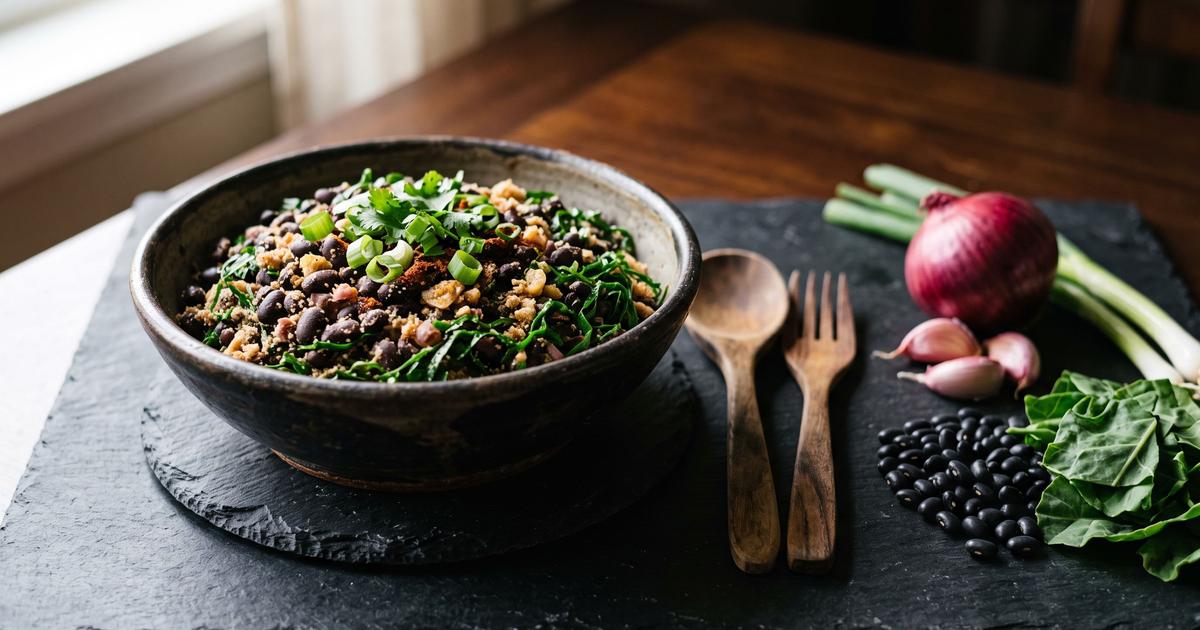
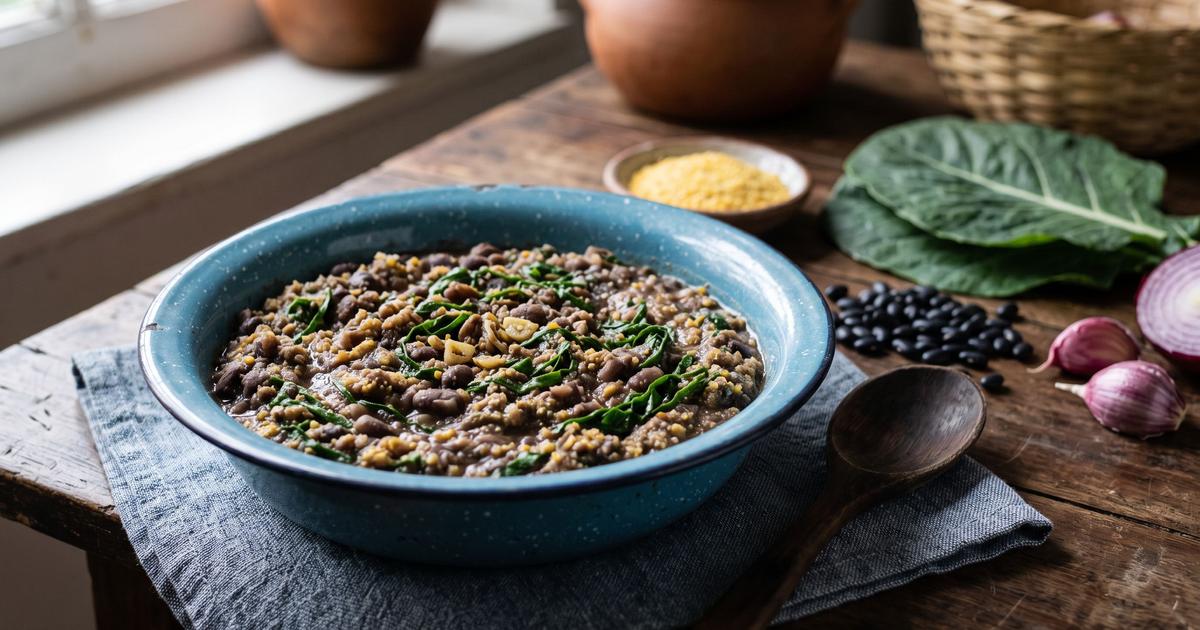
Feijão tropeiro comes from Minas Gerais, named for the tropeiros, the mule drivers who once crossed Brazil carrying beans, cured pork, and cassava meal that could survive the road. The dish is their pantry thrown together: cooked beans tossed with toasted farofa, greens, and whatever else was to hand, until the meal coats everything in a dry, savory crumble. It is distinct from a soupy pot of beans and from mashed tutu, and the texture is the whole point. Toasting coarse cornmeal in a dry pan stands in for the traditional cassava farofa, smoked paprika replaces the pork, and collard greens, couve, cook down in seconds. Cooking your own black beans from dried keeps them firm enough to hold. No salt is needed: the paprika, garlic, and a squeeze of lime season it.
Ingredients
- 3 cups Black beans, cooked from dried and drained
- 1/2 cup Polenta / coarse cornmeal
- 4 cups Collard greens, stemmed and thinly sliced
- 1 Yellow onion, diced
- 4 cloves Garlic, minced
- 3 Scallions, sliced
- 1/4 cup Flat-leaf parsley, chopped
- 1 tsp Smoked paprika
- 1/2 tsp Black peppercorns, ground
- 1 tbsp Lime juice
Method
- Toast the cornmeal in a dry pan over medium heat, stirring, until it smells nutty and darkens a shade, about 5 minutes. This is the oil-free stand-in for farofa, the toasted cassava meal that gives the dish its dry, crumbly texture.
- Sweat the onion and garlic in 3 tablespoons (45 ml) water until soft, then stir in the smoked paprika. The paprika brings the smoky note that bacon and sausage usually carry in this dish.
- Add the collards and cook 3 to 4 minutes, just until they wilt and go glossy but stay green. Cooked briefly, they keep their bite instead of turning to a dull mush.
- Fold in the drained beans and warm them through, then take the pan off the heat.
- Scatter the toasted cornmeal, scallions, and parsley over and toss so the meal coats the beans in a loose, dry finish. Tossing off the heat keeps it crumbly rather than gluey. Season with black pepper and lime.
Nutrition
Estimated per serving: 220 calories, 11 g protein, 11 g fiber, 30 mg sodium. Computed from USDA FoodData Central reference values for the main ingredients. This is an approximation, not a laboratory measurement. How these are computed.
Cost per serving is estimated from US national-average retail prices for cheap staple forms, using BLS dried-bean prices and USDA produce prices. Prices vary by store and season, so treat it as a guide, not a receipt. How this is computed.