Arroz a Grega
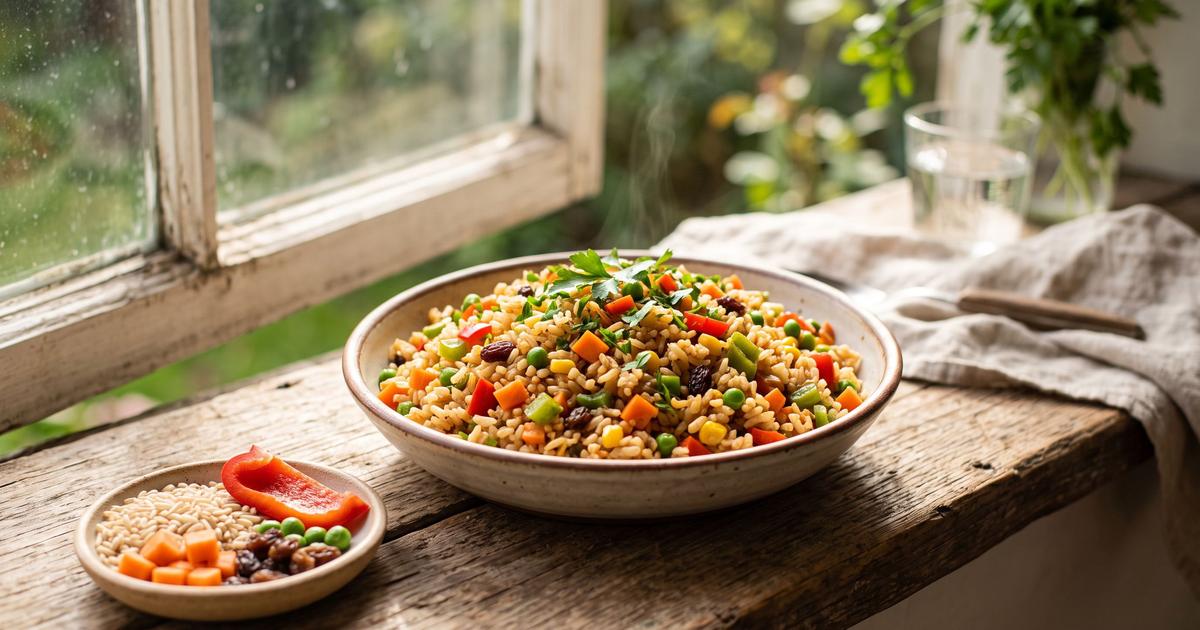
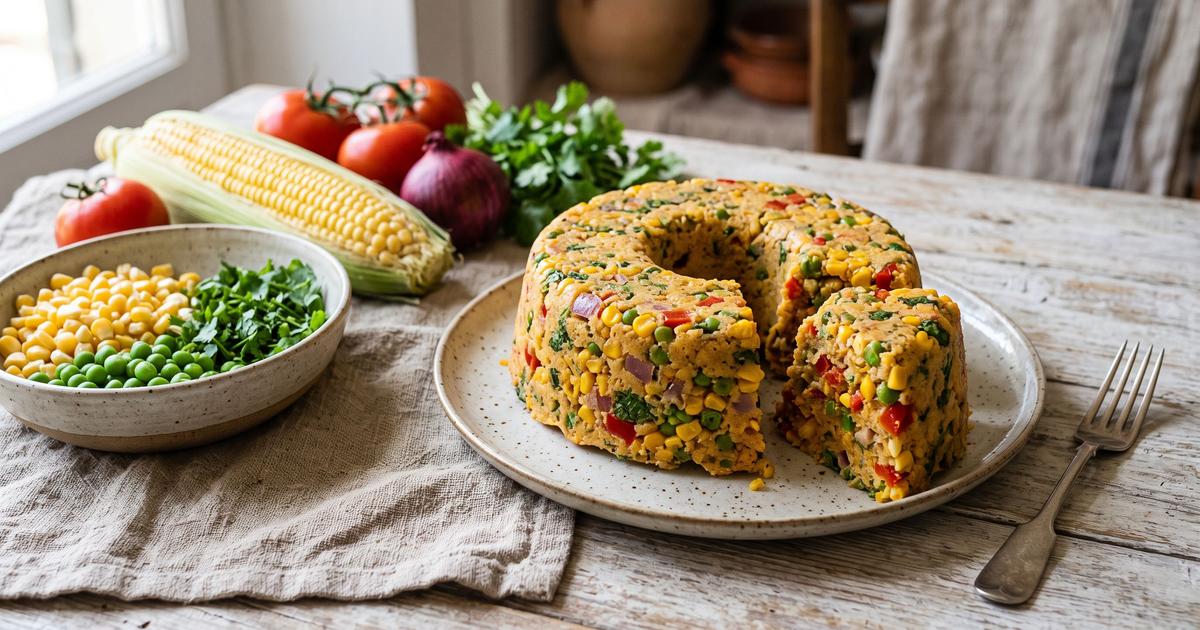
Arroz a grega translates to Greek rice, but it is a Brazilian invention through and through, the festive rice that shows up at Christmas and birthday tables studded like confetti. The point is contrast: sweet raisins, sweet corn and peas, and diced carrot and pepper scattered through a savory grain. This version swaps the usual white rice for brown, which asks for a longer simmer but pays it back in fiber and chew. A pinch of turmeric gives the gentle gold color without the oil or bouillon-cube salt the original often leans on. Make a big pot; it reheats well and travels to a potluck without complaint.
Ingredients
- 1 cup long grain brown rice, rinsed
- 1/2 whole Yellow onions, finely diced
- 2 cloves Garlic, minced
- 1/4 tsp Turmeric
- 1 whole Carrots, small dice
- 1/2 whole Bell peppers, red, small dice
- 1/2 cup Frozen peas
- 1/2 cup Frozen corn
- 1/3 cup Raisins
- 1 tsp no-salt vegetable bouillon
- 3 tbsp Flat-leaf parsley, chopped
- 1/4 tsp Black peppercorns, freshly ground
Method
- Sweat the onion and garlic in a saucepan with 3 tablespoons water until soft, about 6 minutes, then stir in the turmeric. The turmeric is here for the faint gold color the dish is known for, and it needs a moment in the hot pan to lose its raw, chalky edge.
- Add the rinsed rice and stir to coat in the aromatics, then pour in 2.25 cups (530 ml) water with the bouillon. Brown rice needs more water and more time than white, so this is the long simmer the color and chew are worth.
- Bring to a boil, cover, drop the heat to low, and cook 35 minutes without lifting the lid. Peeking lets out the steam that cooks the top layer of grains, so trust the timer instead.
- Scatter the carrot, pepper, peas, corn, and raisins over the rice, replace the lid, and cook 5 minutes more. Adding the vegetables at the end steams them just tender and keeps the peas and corn bright rather than dull and overcooked.
- Turn off the heat and rest it covered 5 minutes, then fluff with a fork and fold in the parsley and black pepper. The rest lets the grains firm up and separate, and the raw parsley at the end keeps the whole pan looking and tasting fresh with no salt.
Nutrition
Estimated per serving: 250 calories, 6 g protein, 5 g fiber, 40 mg sodium. Computed from USDA FoodData Central reference values for the main ingredients. This is an approximation, not a laboratory measurement. How these are computed.
Cost per serving is estimated from US national-average retail prices for cheap staple forms, using BLS dried-bean prices and USDA produce prices. Prices vary by store and season, so treat it as a guide, not a receipt. How this is computed.