Plant Labneh with Za'atar and Sumac
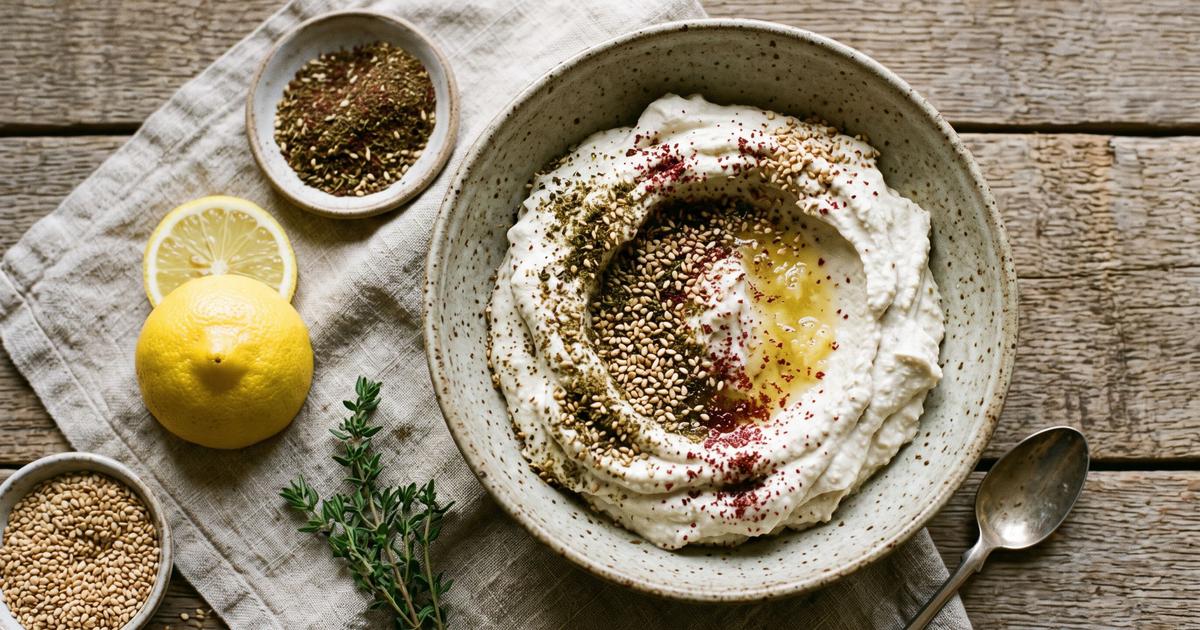
Labneh is strained yogurt, a staple of the Levantine table eaten at breakfast, mezze, and everything between, usually pooled with olive oil and dusted with za'atar. It is one of the easiest things to make at home and one of the easiest to make from plants: strain a good unsweetened soy yogurt overnight and it thickens into a curd close to the dairy original, tangy and dense enough to hold a spoon. Seasoned with lemon and garlic and finished with za'atar and sumac, it needs neither the salt nor the oil that usually dress it. Make the za'atar yourself, or buy a salt-free blend, since most jarred versions are salted. Spread it thick and eat it with raw vegetables, or as part of a larger spread.
Ingredients
- 2 cups Plain plant yogurt, unsweetened, soy-based
- 1 tbsp Lemon juice
- 1 clove Garlic, grated
- 1 tbsp Za'atar, salt-free
- 1/2 tsp Sumac
- 1 tbsp Sesame seeds, toasted
- 2 tbsp Walnuts, chopped
- 1 tbsp Mint, chopped
Method
- Line a sieve with a clean cloth or a doubled coffee filter, spoon in the yogurt, fold the cloth over the top, set it over a bowl, and refrigerate 12 to 24 hours. Draining off the whey is the whole trick: it turns thin, pourable yogurt into a dense, spreadable curd with no cooking and no thickener, just time.
- Scrape the thick curd into a bowl and stir in the lemon juice and grated garlic. The acid and garlic season it all the way through, and a soy-based yogurt is worth seeking out here because it strains the thickest and carries the most protein of the plant yogurts.
- Spread the labneh across a plate and hollow out the center with the back of a spoon. That well is where the topping gathers, the way a pool of olive oil would sit in the traditional version.
- Scatter the za'atar, sumac, toasted sesame, walnuts, and mint over the top. Dry, salt-free za'atar and tart sumac carry the flavor without the salt and oil labneh usually leans on, so use them with a generous hand.
Nutrition
Estimated per serving: 120 calories, 7 g protein, 2 g fiber, 90 mg sodium. Computed from USDA FoodData Central reference values for the main ingredients. This is an approximation, not a laboratory measurement. How these are computed.
Cost per serving is estimated from US national-average retail prices for cheap staple forms, using BLS dried-bean prices and USDA produce prices. Prices vary by store and season, so treat it as a guide, not a receipt. How this is computed.