Lentil, Herb and Pomegranate Salad
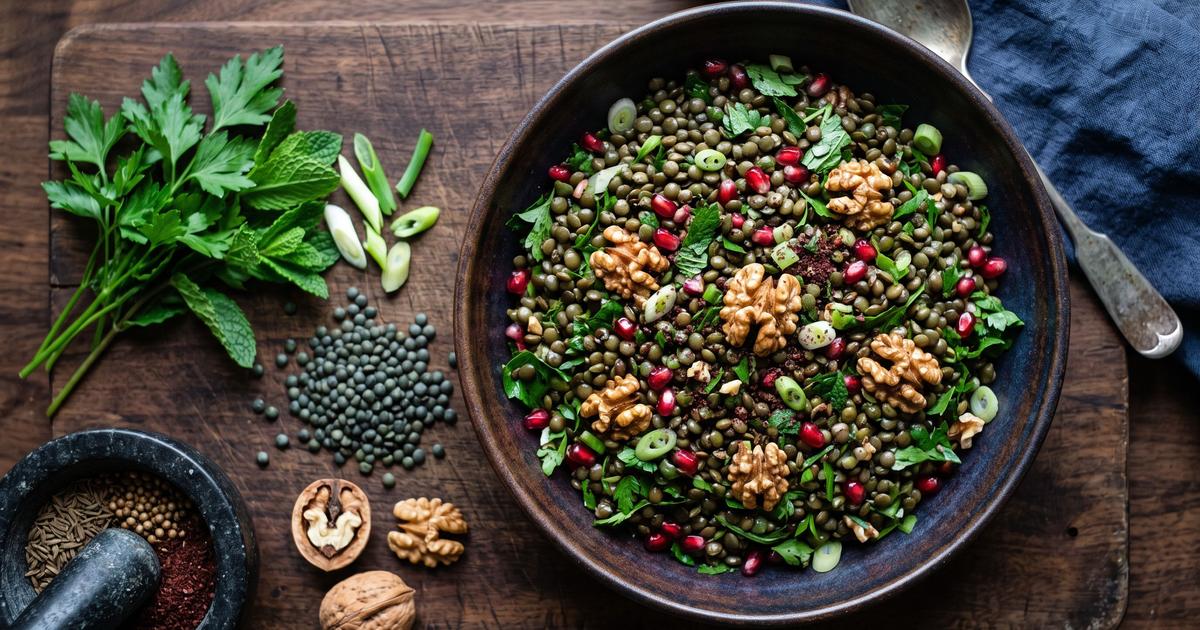
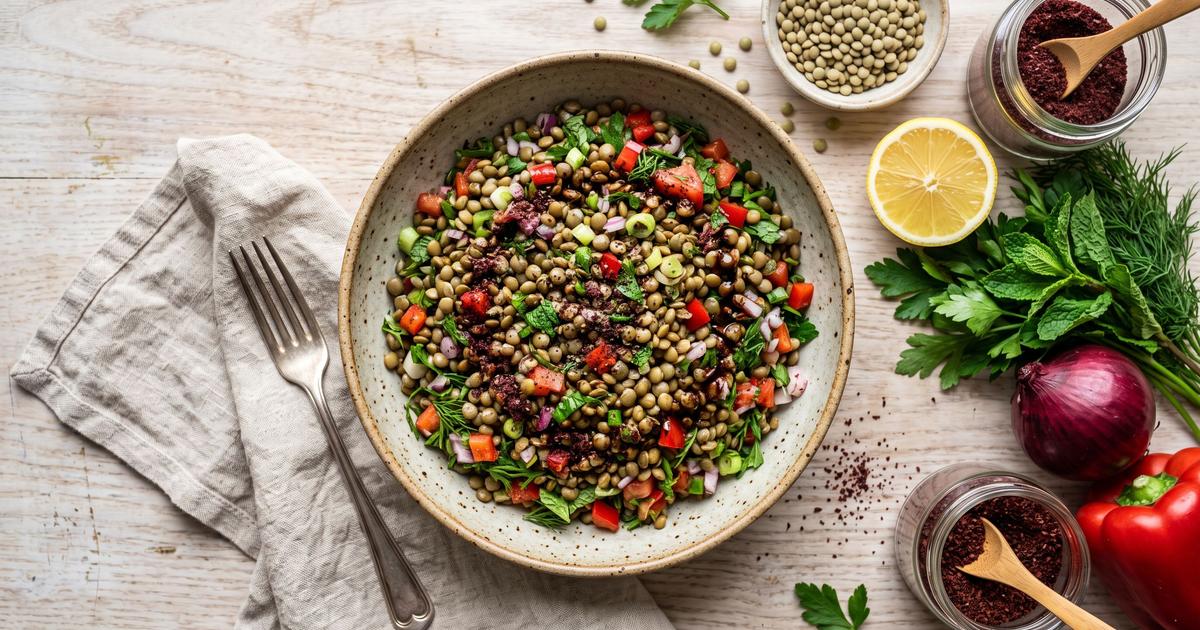
This is a salad in the Levantine mold, where lentils meet more herb than you would expect and the dressing is built on sour fruit rather than oil. Pomegranate molasses, reduced pomegranate juice, brings a sweet-tart depth, sumac adds a second, brighter acid, and a full cup of parsley with half as much mint turns the bowl green and fresh. Cooking the lentils just to the point where they hold their shape, then dressing them warm, is what makes the difference between a salad and a mush. Walnuts and fresh pomegranate seeds go on at the end for crunch and a burst of acid. It keeps for three days and travels well, which makes it a good thing to cook on a Sunday for the week.
Ingredients
- 1 cup Green lentils, dried
- 1 cup Flat-leaf parsley, chopped
- 1/2 cup Mint, chopped
- 3 wholes Scallions, sliced
- 1 tbsp Pomegranate molasses
- 2 tbsp Lemon juice
- 1 tsp Sumac
- 1/2 tsp Cumin seed, toasted and ground
- 1/4 cup Walnuts, toasted and chopped
- 1/3 cup Pomegranate, seeds
- 1/2 tsp Black peppercorns, freshly ground
Method
- Simmer the lentils in plenty of unsalted water until tender but still holding their shape, 20 to 25 minutes, then drain well. Green lentils are chosen here because they stay separate and firm rather than collapsing, which is the texture a lentil salad lives on; hold the salt, since salt in the water keeps them chalky at the center.
- While the lentils are still warm, toss them with the pomegranate molasses, lemon juice, cumin, sumac, and black pepper. Warm lentils drink in a dressing the way cold ones never will, so this is the moment they take on most of their flavor.
- Let them cool to room temperature, then fold in the parsley, mint, and scallion. Adding the herbs after the lentils cool keeps them bright green instead of wilting them into the warm pile.
- Scatter the walnuts and pomegranate seeds over the top just before serving. Folded in too early they soften, so keep them for the end where they stay crunch and pop against the soft lentils.
Nutrition
Estimated per serving: 250 calories, 11 g protein, 9 g fiber, 40 mg sodium. Computed from USDA FoodData Central reference values for the main ingredients. This is an approximation, not a laboratory measurement. How these are computed.
Cost per serving is estimated from US national-average retail prices for cheap staple forms, using BLS dried-bean prices and USDA produce prices. Prices vary by store and season, so treat it as a guide, not a receipt. How this is computed.