Marinated White Bean Salad
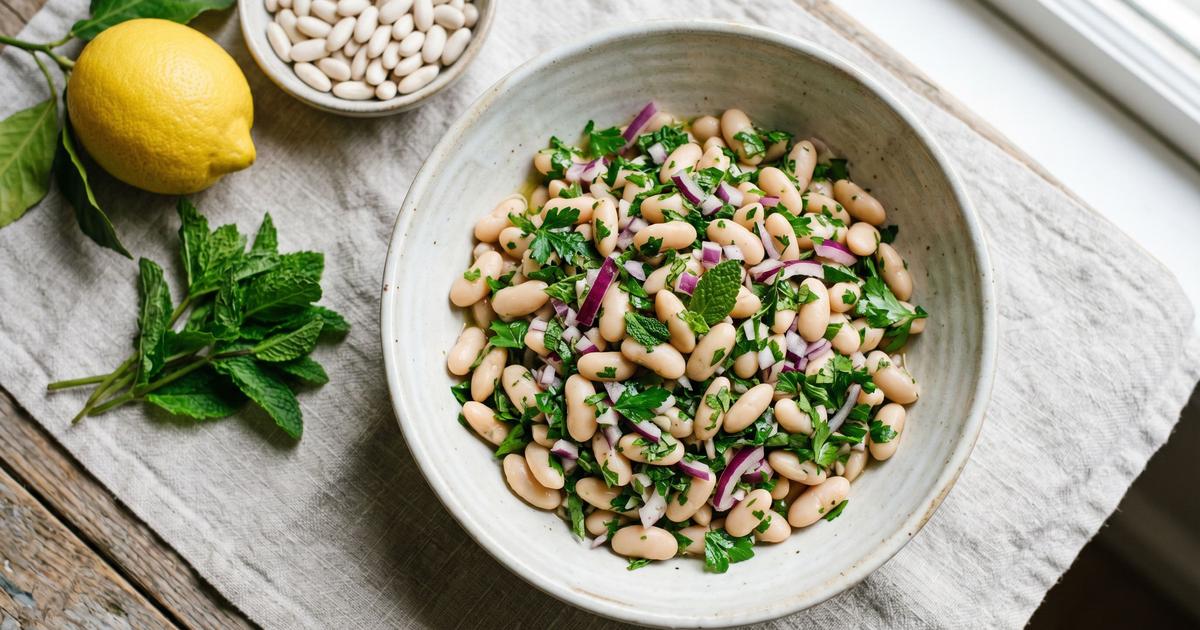
Marinated white bean salads turn up across the Mediterranean under different names: Tuscan fagioli in salsa verde, Greek fasolia horiatiki, the white-bean píazi found in Turkish and Balkan kitchens. They share one shape, a dish built to travel and to improve overnight. The trick that replaces both oil and salt here is temperature: tossing the beans into the marinade while they are still warm lets them absorb the lemon, vinegar, and garlic all the way through, the same way pasta drinks up sauce better hot than cold. Macerating the red onion in the acid first does double duty, softening its sting into a sweet-sharp crunch without a rinse or a pinch of salt.
Ingredients
- 3 cups Cannellini beans, cooked and drained (about two 15-oz cans, or 1.5 cups dried, soaked and simmered until tender)
- 1/2 cup Red onions, thinly sliced
- 2 cloves Garlic, minced
- 2 pieces Lemons, zest of 1 reserved, both juiced (about 1/3 cup juice)
- 1 tbsp Red wine vinegar
- 1/2 cup Flat-leaf parsley, chopped
- 2 tbsp Mint, chopped
- 1 tsp Dried oregano
- 1/4 tsp Black peppercorns, cracked
Method
- Stir the red onion, lemon zest, lemon juice, and red wine vinegar together in a large bowl. Let it sit for at least 10 minutes while you handle the beans: the acid softens the onion's raw bite and turns the slices translucent pink, so no salt has to do that job.
- If the beans are cold, warm them in a saucepan with a few tablespoons of water over medium heat for about 3 minutes, just until steaming. A warm bean is porous and pulls the marinade into itself; a cold one only wears it on the surface.
- Add the warm beans to the onion mixture with the garlic, oregano, and black pepper. Toss well and let stand at room temperature for at least 20 minutes, or refrigerate up to overnight, tossing once or twice as it marinates.
- Fold in the parsley and mint just before serving. Adding them last keeps their color bright and stops them from wilting into the acid.
- Taste and add more lemon juice or vinegar if needed. The finished salad should taste bright and tangy, not sour.
Nutrition
Estimated per serving: 195 calories, 11 g protein, 9 g fiber, 10 mg sodium. Computed from USDA FoodData Central reference values for the main ingredients. This is an approximation, not a laboratory measurement. How these are computed.
Cost per serving is estimated from US national-average retail prices for cheap staple forms, using BLS dried-bean prices and USDA produce prices. Prices vary by store and season, so treat it as a guide, not a receipt. How this is computed.