Insalata di Riso, Italian Summer Rice Salad
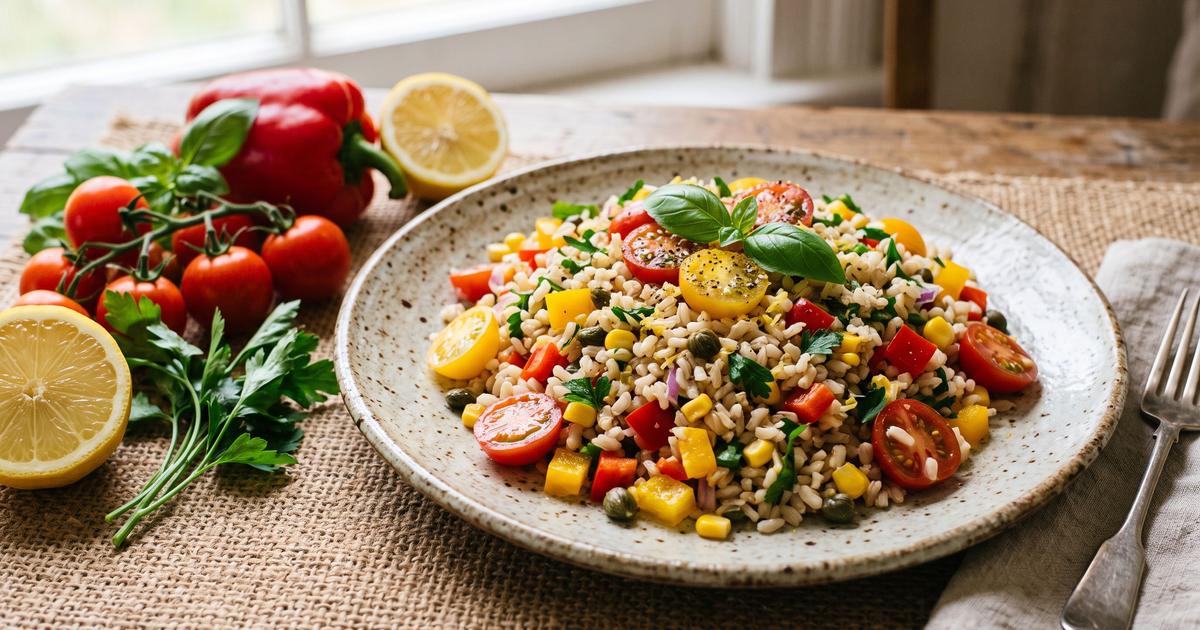
Insalata di riso is what Italian families pull out of the fridge all summer, a cold bowl of rice studded with whatever vegetables are around, made the day before and better for it. The usual jarred version leans on oil-packed vegetables and cured meats; this one keeps the spirit and drops both, using brown rice for chew and fiber where white rice would go soft. Cherry tomatoes, sweet pepper, corn, and peas bring color and crunch, a spoon of rinsed capers brings the single salty, briny note, and basil brings the perfume. The dressing is nothing but red wine vinegar, lemon, and pepper, which is all a bowl this fresh needs. It travels well and feeds a crowd, which is the whole point of it.
Ingredients
- 1 cup long grain brown rice, cooked and cooled
- 1 cup Cherry tomatoes, halved
- 1 whole Bell peppers, finely diced
- 1/2 cup Frozen corn, thawed
- 1/2 cup Frozen peas, thawed
- 1 tbsp Capers, rinsed
- 1/4 cup Basil, torn
- 2 tbsp Red wine vinegar
- 1 tbsp Lemon juice
- 1/2 tsp Black peppercorns, freshly ground
Method
- Cook the brown rice, drain it, and spread it on a tray to cool. Cooling it flat and fast keeps the grains separate and gives them the firm, chewy bite a rice salad needs, where warm rice would clump and turn gluey.
- Bring a small pot of water to a boil and dip the corn and peas in for 1 minute, then drain. A quick blanch wakes up the frozen vegetables and sets their color without cooking them soft.
- Rinse the capers well under running water and chop them roughly. Capers are the one salty note in the bowl, so rinsing pulls off the excess brine and lets a little go a long way, which is why the dish needs no added salt.
- In a large bowl, toss the cooled rice with the tomatoes, pepper, corn, peas, capers, and basil. Whisk the red wine vinegar, lemon juice, and black pepper and pour it over, folding until everything is coated.
- Let it stand at least 20 minutes, or chill it for a few hours, before serving. The rice keeps absorbing the dressing as it sits, so taste and add a splash more vinegar or lemon right before it goes to the table.
Nutrition
Estimated per serving: 230 calories, 6 g protein, 6 g fiber, 170 mg sodium. Computed from USDA FoodData Central reference values for the main ingredients. This is an approximation, not a laboratory measurement. How these are computed.
Cost per serving is estimated from US national-average retail prices for cheap staple forms, using BLS dried-bean prices and USDA produce prices. Prices vary by store and season, so treat it as a guide, not a receipt. How this is computed.