Perkedel Kentang, Indonesian Baked Potato Cakes
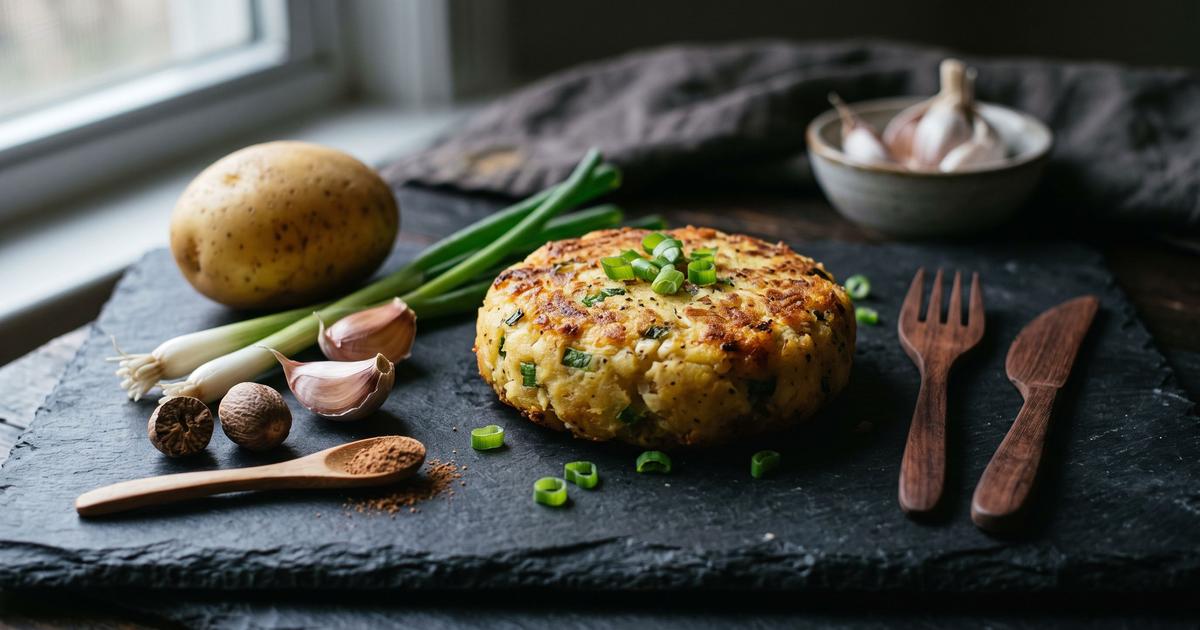
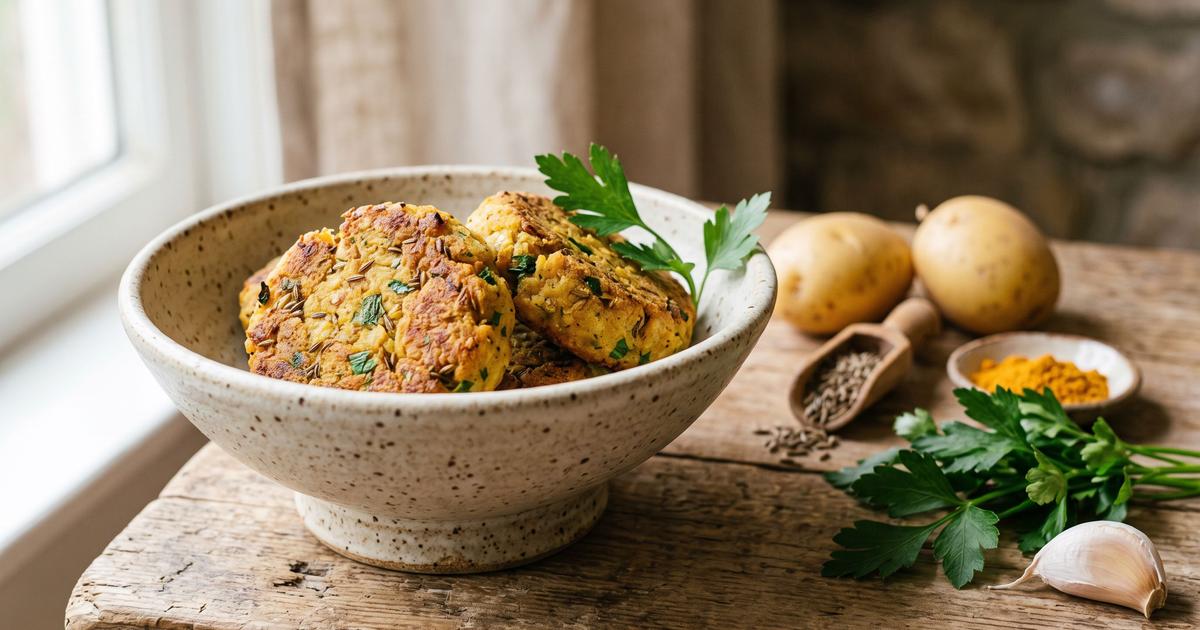
Perkedel kentang are the little potato cakes that sit on the side of an Indonesian rice plate, eaten with soto and nasi campur or on their own as a snack. In the warung they are shaped, dipped in egg, and deep-fried, which gives them their crust but also their oil. Baked and bound with flaxseed instead, they keep what actually matters: the soft interior, the sweetness of sweated shallot and carrot, and the warm hit of nutmeg and white pepper that is the signature of the dish.
Ingredients
- 1 1/2 lb Potatoes, peeled and cut into chunks
- 1 Carrot, grated
- 2 Shallots, minced
- 3 cloves Garlic, minced
- 3 Scallions, sliced thin
- 1/4 cup Cilantro, chopped
- 1/2 tsp White pepper
- 1/4 tsp Nutmeg, freshly grated
- 2 tbsp Ground flaxseed, stirred into 4 tbsp warm water and left to gel
Method
- Boil the potatoes until very tender, then drain and return them to the dry pot over low heat for a minute, shaking, to steam off the surface water. A wet mash is the single reason a baked perkedel falls apart, so get the potatoes dry.
- Sweat the shallots, garlic, and grated carrot in 2 tablespoons water until soft and the carrot has lost its raw crunch. Traditionally these are fried, but sweating them in water tames the harshness with no oil in the pan.
- Mash the potatoes and fold in the aromatics, scallions, cilantro, white pepper, and nutmeg. Nutmeg and white pepper are the two flavors that make this read as perkedel rather than plain mashed potato, so measure them in.
- Stir in the gelled flaxseed. As the cakes bake it sets and binds them the way beaten egg binds the fried original, holding each patty together.
- Shape into 8 patties on a lined baking sheet and bake at 425F (220C) for about 25 minutes, turning once halfway, until browned and firm at the edges. Serve warm with a squeeze of lime.
Nutrition
Estimated per serving: 160 calories, 5 g protein, 4 g fiber, 30 mg sodium. Computed from USDA FoodData Central reference values for the main ingredients. This is an approximation, not a laboratory measurement. How these are computed.
Cost per serving is estimated from US national-average retail prices for cheap staple forms, using BLS dried-bean prices and USDA produce prices. Prices vary by store and season, so treat it as a guide, not a receipt. How this is computed.