Maakouda, Moroccan Baked Potato Cakes
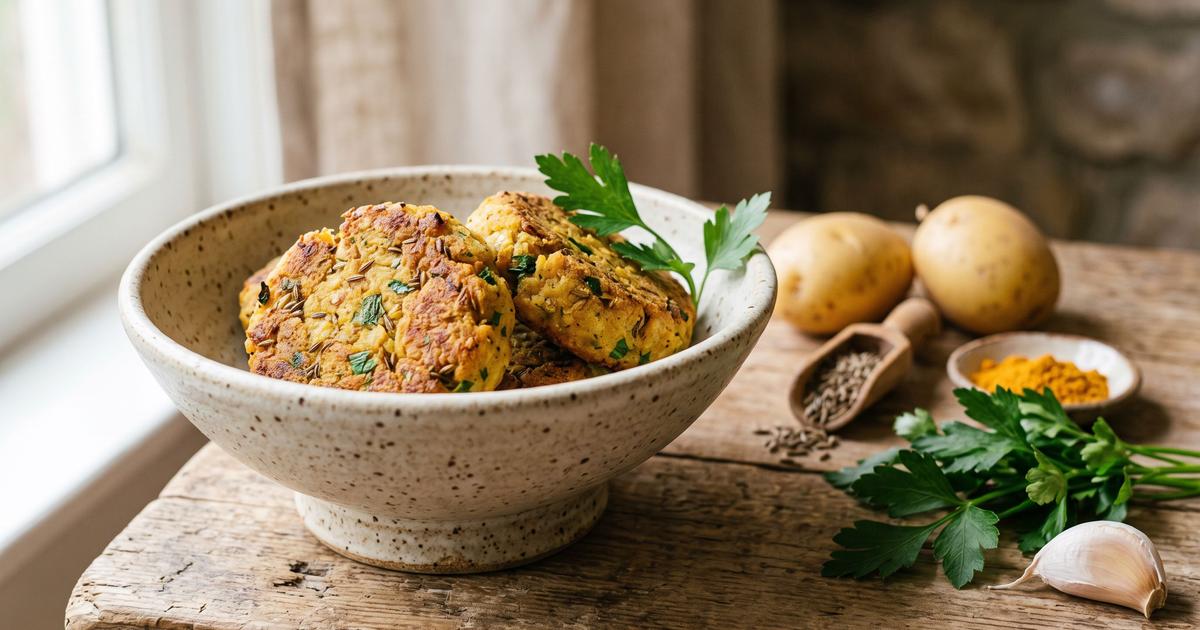
Maakouda are the fried potato cakes sold from Moroccan sandwich carts, spiced yellow with turmeric and cumin and packed with parsley. Fried is the tradition; baked on a hot sheet, they come out with the same craggy edges and none of the oil. The trick is a dry mash, no milk, so the cakes hold their shape, and a little ground flaxseed soaked in water to bind them where egg usually would. Bake them hot and leave them alone until the underside sets, then flip once. They are eaten stuffed into bread with harissa, but they stand on their own with a squeeze of lemon, and they reheat well for a lunchbox.
Ingredients
- 4 wholes Potatoes, about 1.5 lb (700 g), peeled and quartered
- 2 tbsp Ground flaxseed
- 1 1/2 tsp Cumin seed, toasted and ground
- 1/2 tsp Turmeric
- 1/2 tsp Sweet paprika
- 1 pinch Cayenne
- 2 cloves Garlic, grated
- 1/3 cup Flat-leaf parsley, chopped
- 1/4 cup Cilantro, chopped
- 1 tbsp Lemon juice
Method
- Boil the potatoes until fork-tender, drain very well, and mash them dry with no milk. A dry mash is what lets the cakes hold their shape without oil or egg to bind them.
- Stir the ground flaxseed into 4 tbsp water and let it sit 5 minutes until it turns to a gel. This flax gel binds the cakes the way a beaten egg does in the fried original.
- Fold the flax gel, cumin, turmeric, paprika, cayenne, garlic, parsley, and cilantro into the mash until evenly colored yellow and flecked with green.
- Shape into 8 flat cakes and set them on a parchment-lined tray. Bake at 450 F (230 C) for about 25 minutes, flipping once, until browned and crisp at the edges. High heat and a single flip give the fried craggy crust without the oil, so leave them alone until the underside sets before turning.
- Squeeze the lemon over just before serving. Tradition tucks them into bread with harissa; the lemon alone seasons them in place of salt.
Nutrition
Estimated per serving: 170 calories, 5 g protein, 5 g fiber, 30 mg sodium. Computed from USDA FoodData Central reference values for the main ingredients. This is an approximation, not a laboratory measurement. How these are computed.
Cost per serving is estimated from US national-average retail prices for cheap staple forms, using BLS dried-bean prices and USDA produce prices. Prices vary by store and season, so treat it as a guide, not a receipt. How this is computed.