Perkedel Jagung, Indonesian Corn Fritters
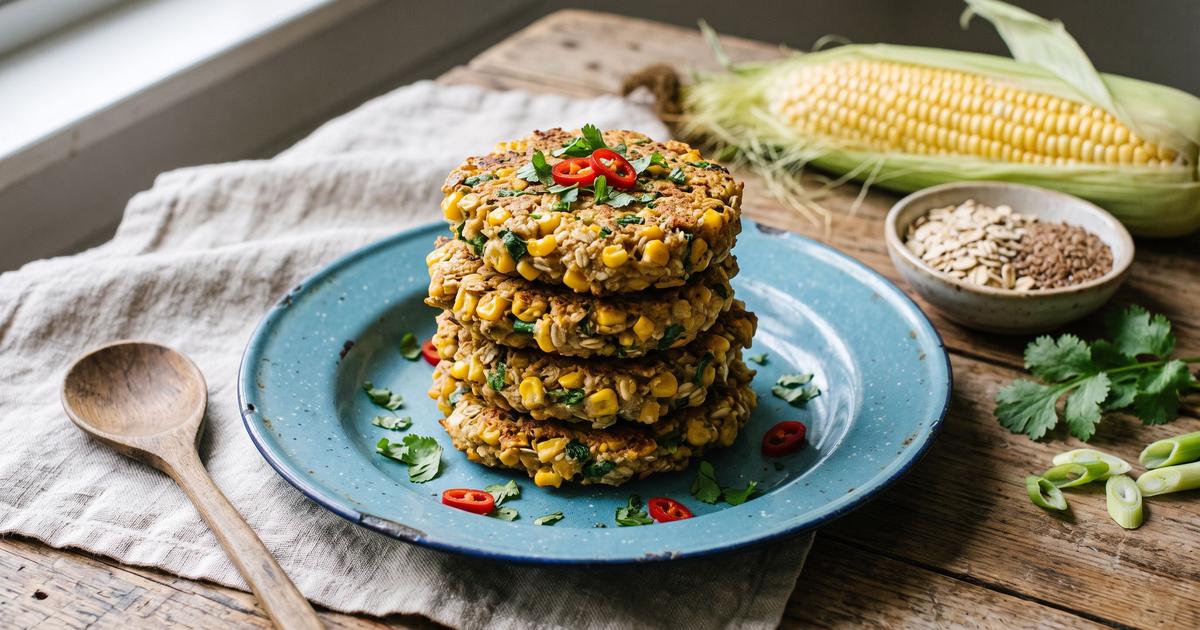
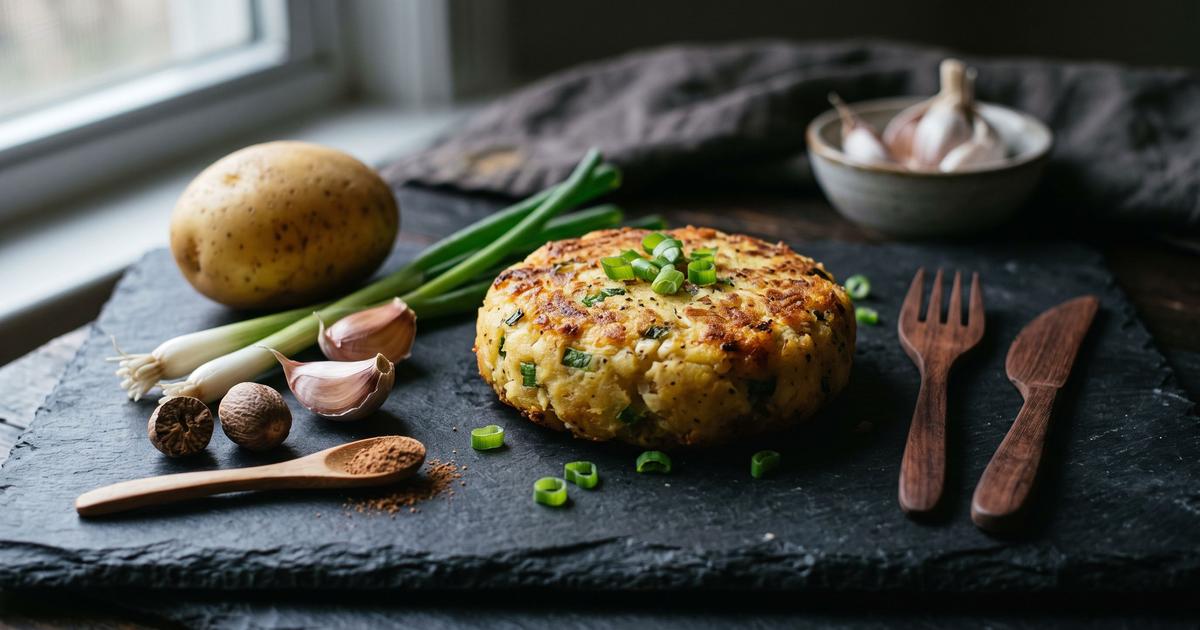
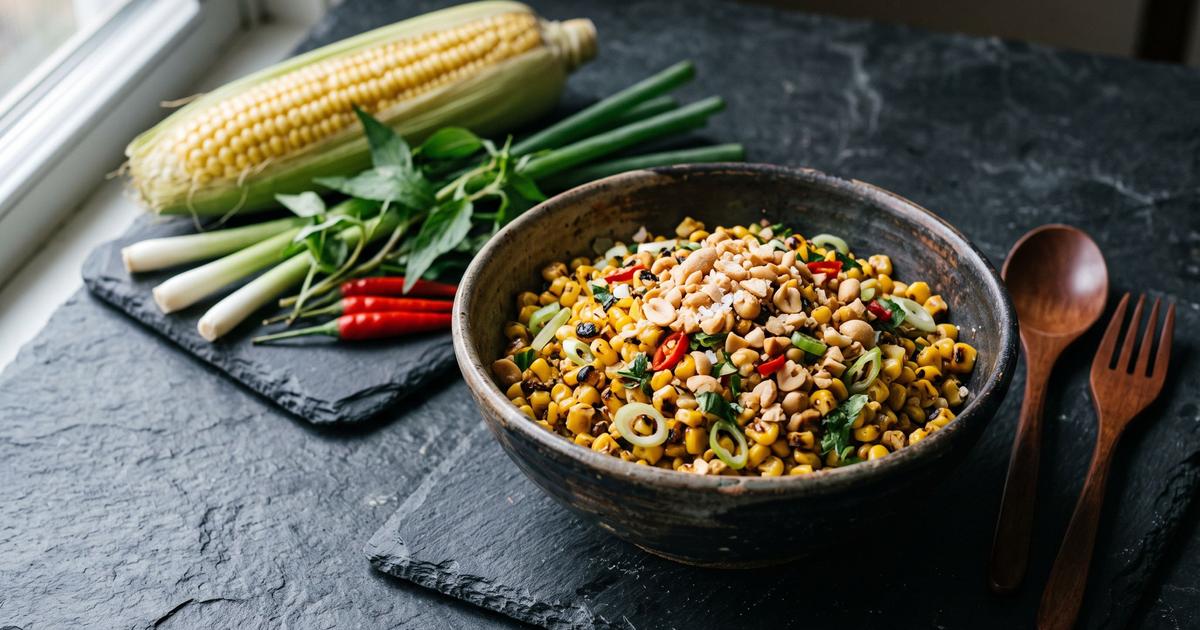
Perkedel jagung, also called bakwan jagung, is the sweet corn fritter sold from Indonesian street stalls and set out at family tables, crisp at the edges and studded with whole kernels. The usual version is bound with wheat flour and egg and deep-fried; this one keeps the corn front and center and gets there another way. Half the kernels are blended to a paste for a batter that clings, ground flaxseed replaces the egg, and blended oats replace the flour, all whole foods. A hot oven and a single flip stand in for the fryer, browning both faces until they crisp. Shallot, garlic, scallion, and coriander season the batter the way they would in Java. Eat them warm, with sambal alongside.
Ingredients
- 3 cups Frozen corn, thawed
- 2 tbsp Ground flaxseed
- 1/2 cup Rolled oats, blended to flour
- 3 Shallots, minced
- 3 cloves Garlic, minced
- 3 Scallions, sliced
- 3 tbsp Cilantro, chopped
- 1 tsp Coriander seed, ground
- 1/4 tsp White pepper
Method
- Stir the ground flaxseed into 5 tablespoons (75 ml) water and let it sit 5 minutes until it thickens to a gel. This is the egg of the fritter: as it bakes it sets and holds everything together.
- Blend half the corn to a rough paste and leave the other half whole. The paste gives the batter a creamy, cohesive body while the whole kernels keep the pop that makes these perkedel jagung and not a pancake.
- Fold in the oat flour, shallot, garlic, scallion, cilantro, coriander, white pepper, and the flax gel until it holds together in a soft, scoopable mass. The oat flour tightens the batter enough to shape without any wheat flour.
- Scoop into 12 mounds on a parchment-lined tray, flatten each to about half an inch (1 cm), and bake at 425 F (220 C) for 25 minutes, flipping once, until browned and crisp at the edges. A hot oven and the flip dry and brown both sides, giving the crust that frying would otherwise provide.
Nutrition
Estimated per serving: 170 calories, 6 g protein, 5 g fiber, 30 mg sodium. Computed from USDA FoodData Central reference values for the main ingredients. This is an approximation, not a laboratory measurement. How these are computed.
Cost per serving is estimated from US national-average retail prices for cheap staple forms, using BLS dried-bean prices and USDA produce prices. Prices vary by store and season, so treat it as a guide, not a receipt. How this is computed.