Pease Pudding
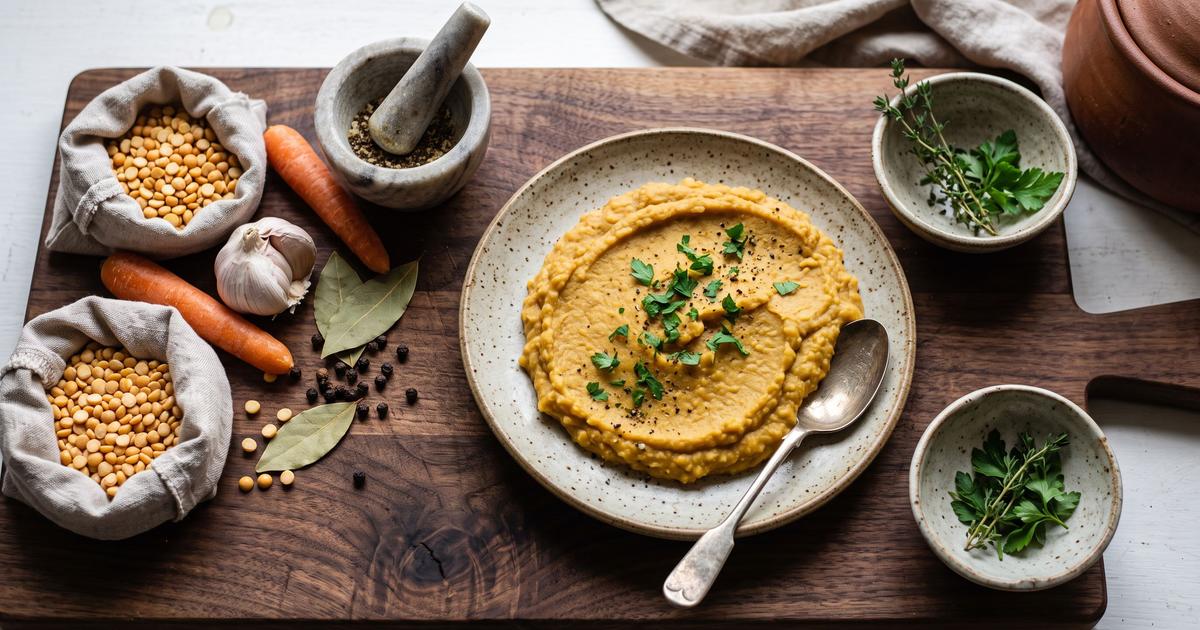
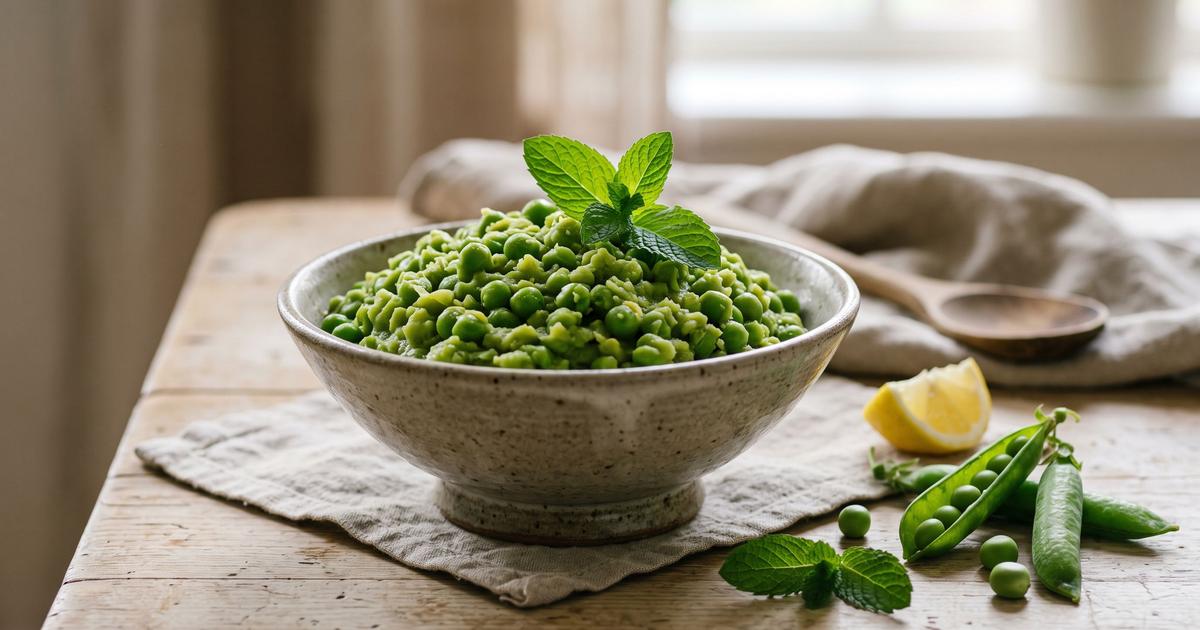
Pease pudding is one of the oldest dishes in the English kitchen, a thick puree of dried peas that fed the North East of England for centuries because it is filling, keeps well, and costs almost nothing. Traditionally it was boiled in a cloth alongside a ham and takes its salt and smoke from that; on its own the peas need help, which here comes from aromatics cooked into the pot and a finish of mustard, lemon, and black pepper. Yellow split peas are the whole trick, since they dissolve into a naturally creamy mass with no thickener. Eat it warm beside braised greens and grains, or chill it until sliceable and spread it cold, the way generations actually ate it.
Ingredients
- 1 1/2 cups Yellow split peas, rinsed
- 1 whole Yellow onions, halved
- 1 whole Carrots, halved
- 2 Bay leaves
- 1 tsp Dried savory
- 1 tsp Dijon mustard
- 1 tbsp Lemon juice
- 1/2 tsp Black peppercorns, freshly ground
Method
- Put the split peas, onion, carrot, bay, and savory in a pot with 4 cups (1 L) water. Simmer, partly covered, until the peas have completely collapsed and drunk most of the liquid, about 60 minutes. Yellow split peas break down into a puree on their own; cooking the aromatics in with them means the whole pot tastes seasoned without any stock cube or salt.
- Fish out the bay leaves, the onion, and the carrot. Simmering the aromatics whole lets you pull them cleanly once they have given up their flavor, leaving a smooth pale-gold base.
- Beat the peas hard with a spoon, or blend briefly, into a thick puree that mounds on a spoon. Pease pudding should be stiffer than soup and hold its shape, so keep it dry; if it seems loose, cook it a few minutes more to drive off water.
- Beat in the mustard, lemon juice, and plenty of black pepper. Mustard and acid stand in for the ham stock and salt the traditional cloth-boiled version relied on, giving it a savory edge with none of the meat or sodium.
- Serve warm as a side, or press into a dish and chill until firm enough to slice. As the old rhyme has it, pease pudding hot, pease pudding cold: cold it sets solid and spreads on anything.
Nutrition
Estimated per serving: 180 calories, 12 g protein, 9 g fiber, 45 mg sodium. Computed from USDA FoodData Central reference values for the main ingredients. This is an approximation, not a laboratory measurement. How these are computed.
Cost per serving is estimated from US national-average retail prices for cheap staple forms, using BLS dried-bean prices and USDA produce prices. Prices vary by store and season, so treat it as a guide, not a receipt. How this is computed.