Mushy Peas
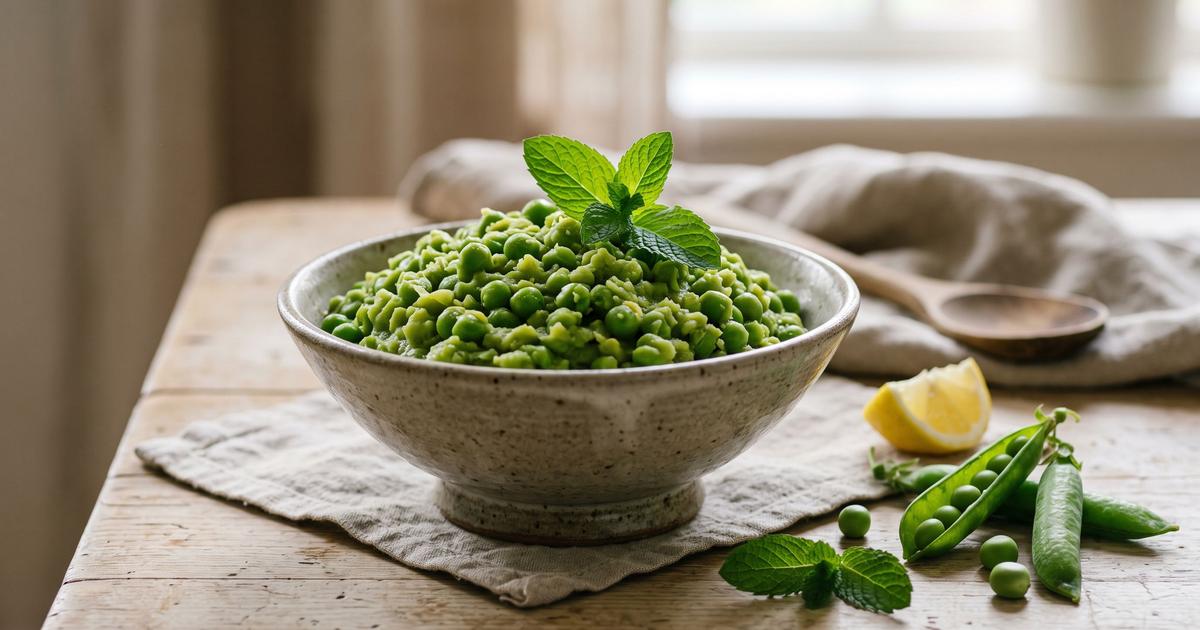
Mushy peas are the green smear next to fish and chips across the north of England, and stripped of the butter and salt they are simply crushed peas at their sweetest. The usual version starts with dried marrowfat peas soaked with a bicarbonate tablet, but frozen peas get you there in fifteen minutes and taste brighter for it. The point is the texture: crush them only halfway, so some dissolve into a thick puree and some stay whole. A sweated onion builds the savory base, no-salt broth loosens them in place of butter, and mint with a squeeze of lemon does the seasoning. It belongs beside anything roasted or baked.
Ingredients
- 4 cups Frozen peas
- 1/2 whole Yellow onions, finely diced
- 1 tsp no-salt vegetable bouillon
- 2 tbsp Mint, chopped
- 1 tbsp Lemon juice
- 1/2 tsp Black peppercorns, freshly ground
Method
- Sweat the onion in 3 tablespoons (45 ml) water in a saucepan until soft and translucent, about 6 minutes. Cooking the onion down first gives the peas a savory base; dropped in raw it would stay sharp and crunchy against the soft peas.
- Add the frozen peas, the bouillon, and 0.5 cup (120 ml) water. Cover and simmer until the peas are fully tender and starting to burst, about 6 minutes. Traditional mushy peas use dried marrowfat peas soaked overnight; frozen peas reach the same soft, sweet place in minutes and taste greener.
- Crush the peas with a potato masher or the back of a spoon, leaving them coarse rather than smooth. A rough crush is what defines the dish: half the peas collapse into a puree while the rest stay whole for texture. Add a splash more water if they tighten up.
- Off the heat, stir in the mint, lemon juice, and black pepper. The lemon lifts the whole pan and stands in for the salt and vinegar a chip shop would add, while the mint keeps the peas tasting fresh rather than heavy. Serve hot alongside roast potatoes or baked beans.
Nutrition
Estimated per serving: 110 calories, 7 g protein, 6 g fiber, 45 mg sodium. Computed from USDA FoodData Central reference values for the main ingredients. This is an approximation, not a laboratory measurement. How these are computed.
Cost per serving is estimated from US national-average retail prices for cheap staple forms, using BLS dried-bean prices and USDA produce prices. Prices vary by store and season, so treat it as a guide, not a receipt. How this is computed.