Clapshot, Scottish Potato and Turnip Mash
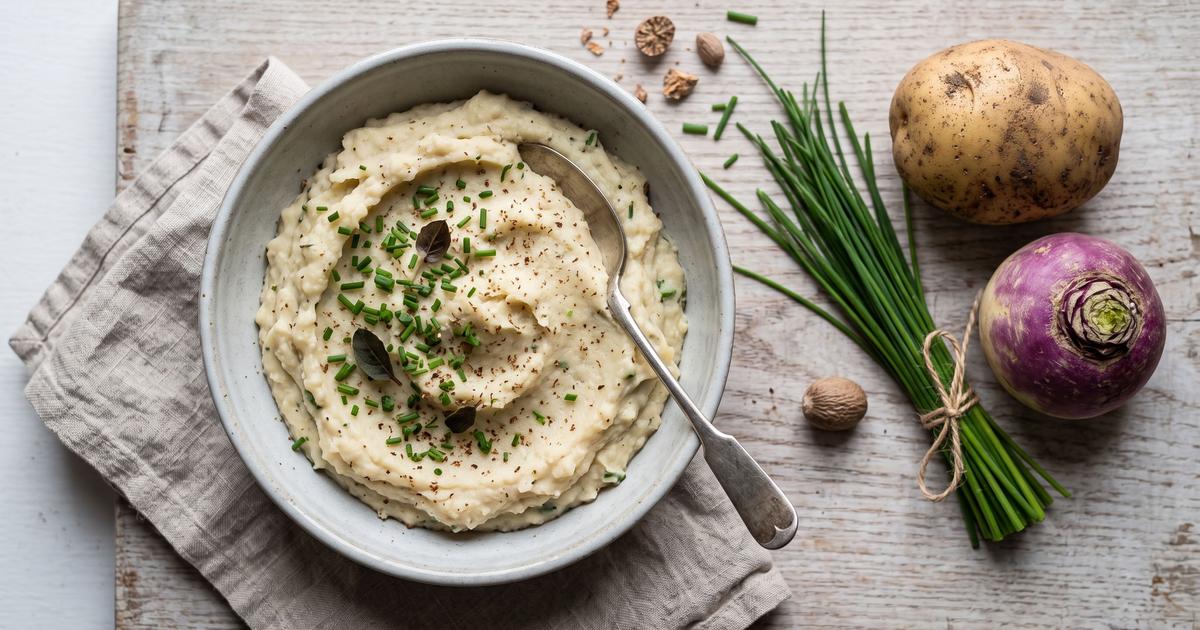
Clapshot comes from Orkney, off the north of Scotland, where potatoes and turnips grow better than most things and get mashed together into one dish. Swede, the yellow-fleshed rutabaga, is the traditional root, but the sharper white turnip in the pantry works and is easier to find, so use whichever you have. The one thing to get right is drying the boiled vegetables before you mash, because turnip is watery and a wet mash goes gluey. Warm soy milk stands in for the butter and cream, bringing the same softness plus a little protein, while nutmeg and a shower of chives keep it from tasting plain. It is the classic bed for anything saucy, and it reheats well with a splash more soy milk.
Ingredients
- 1 lb Potatoes, peeled and chunked
- 1 lb Turnips, peeled and chunked
- 1/4 cup Unsweetened soy milk, warmed
- 3 tbsp Chives, snipped
- 1/4 tsp Nutmeg, freshly grated
- 1/2 tsp Black peppercorns, freshly ground
Method
- Boil the potatoes and turnips together in a large pot of water until both are very tender, about 20 minutes. Cook them in the same pot for one mash, but cut the denser turnip a little smaller so the two finish at the same time.
- Drain thoroughly and let them steam dry in the colander for a couple of minutes. Turnip holds a lot of water, and a wet mash turns gluey; the brief steam-off in the colander drives off the excess so the finished mash is fluffy, not soupy.
- Return them to the warm pot and mash, working in the warmed soy milk a little at a time until smooth. Soy milk brings the creaminess and a bit of protein that butter and cream once did, without the fat; warming it first keeps the mash hot.
- Beat in the nutmeg, black pepper, and most of the chives, then scatter the rest on top. A grate of nutmeg is the traditional warmth here, and the chives are the Orkney signature, sharp and green against the sweet root.
Nutrition
Estimated per serving: 115 calories, 4 g protein, 4 g fiber, 40 mg sodium. Computed from USDA FoodData Central reference values for the main ingredients. This is an approximation, not a laboratory measurement. How these are computed.
Cost per serving is estimated from US national-average retail prices for cheap staple forms, using BLS dried-bean prices and USDA produce prices. Prices vary by store and season, so treat it as a guide, not a receipt. How this is computed.