Miyeok-guk (Seaweed Soup)
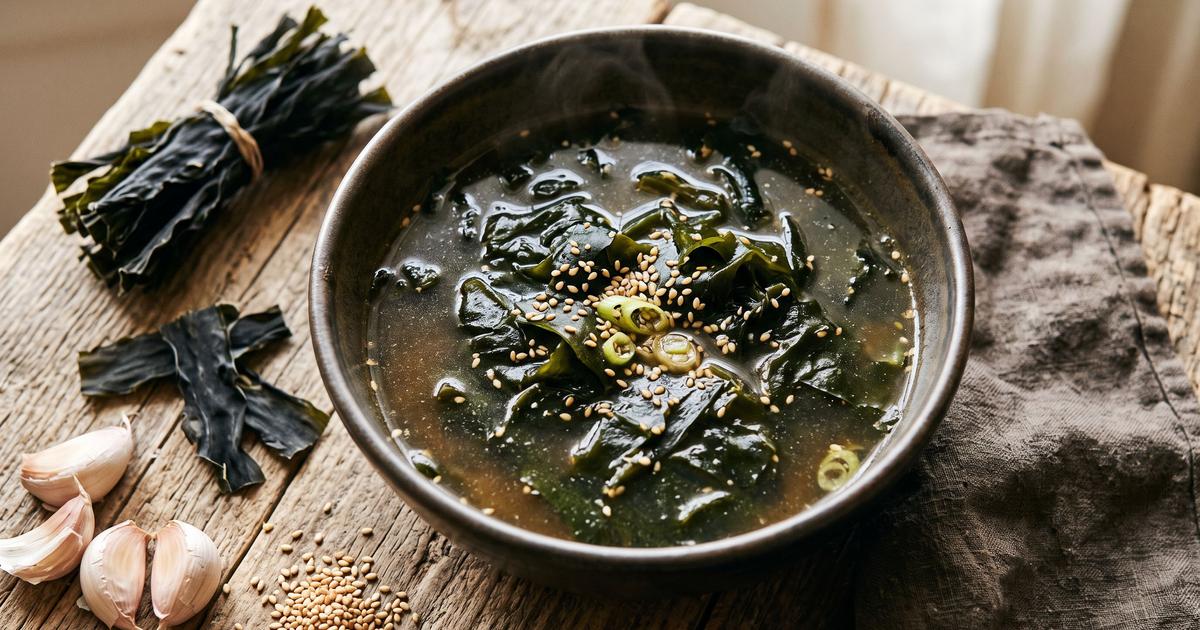
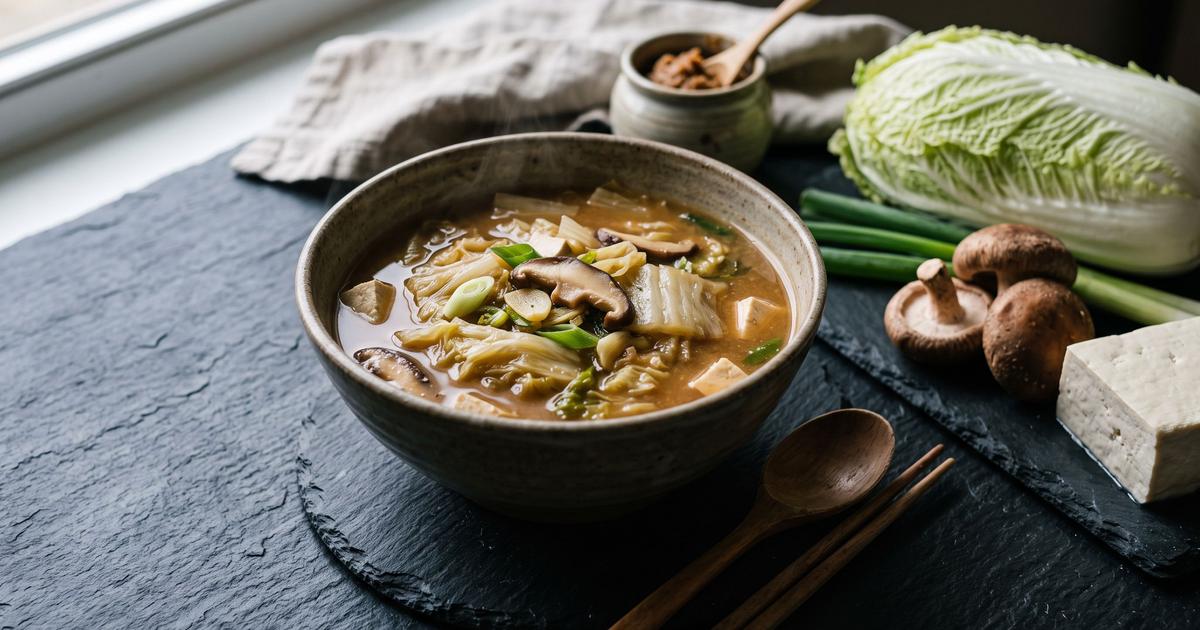
Miyeok-guk is the seaweed soup Koreans eat on birthdays and after childbirth, prized for the iron and iodine the wakame carries. The classic version starts by frying the soaked seaweed in sesame oil and often simmers it in anchovy or beef stock; this one skips both. Dry-toasting the wakame with garlic builds the same savory foundation, and a long, slow simmer coaxes so much body out of the seaweed that the broth needs only two tablespoons of tamari to taste complete. A little tofu adds protein and turns a thin soup into something closer to a meal.
Ingredients
- 3/4 oz Wakame, dried (about 1 cup once soaked)
- 4 cloves Garlic, minced
- 2 tbsp Low-sodium tamari
- 7 oz Firm tofu, half a block, cut into small cubes
- 1 tbsp Sesame seeds, toasted and lightly crushed
- 2 pieces Scallions, sliced
- 1/8 tsp White pepper
Method
- Soak the dried wakame in a bowl of cool water for 10 minutes. It swells to many times its dry size, so start with far less than looks right. Drain, and if the pieces are long, chop them into bite-size lengths.
- Set a dry pot over medium heat and add the wakame and garlic with a splash of water. Toss for 2 minutes, until the seaweed smells toasty and deep green. This dry-toasting stands in for the sesame-oil fry that normally starts the soup, and it is what turns flat seaweed savory.
- Pour in 5 cups (1.2 L) water and the tamari. Bring to a simmer, then drop the heat and cook gently, partly covered, for 20 minutes. A long, quiet simmer is the point: the wakame slowly gives its minerals and body to the broth, so the liquid itself becomes the flavor.
- Add the tofu cubes and simmer 5 minutes more, just to heat them through and let them take on the broth.
- Off the heat, stir in the sesame seeds, scallions, and white pepper. Taste: the broth should read gently briny and round, carried by the seaweed as much as the tamari. Serve in deep bowls, on its own or over a scoop of brown rice.
Nutrition
Estimated per serving: 70 calories, 6 g protein, 2 g fiber, 340 mg sodium. Computed from USDA FoodData Central reference values for the main ingredients. This is an approximation, not a laboratory measurement. How these are computed.
Cost per serving is estimated from US national-average retail prices for cheap staple forms, using BLS dried-bean prices and USDA produce prices. Prices vary by store and season, so treat it as a guide, not a receipt. How this is computed.