Baechu-guk, Napa Cabbage and Soybean Paste Soup
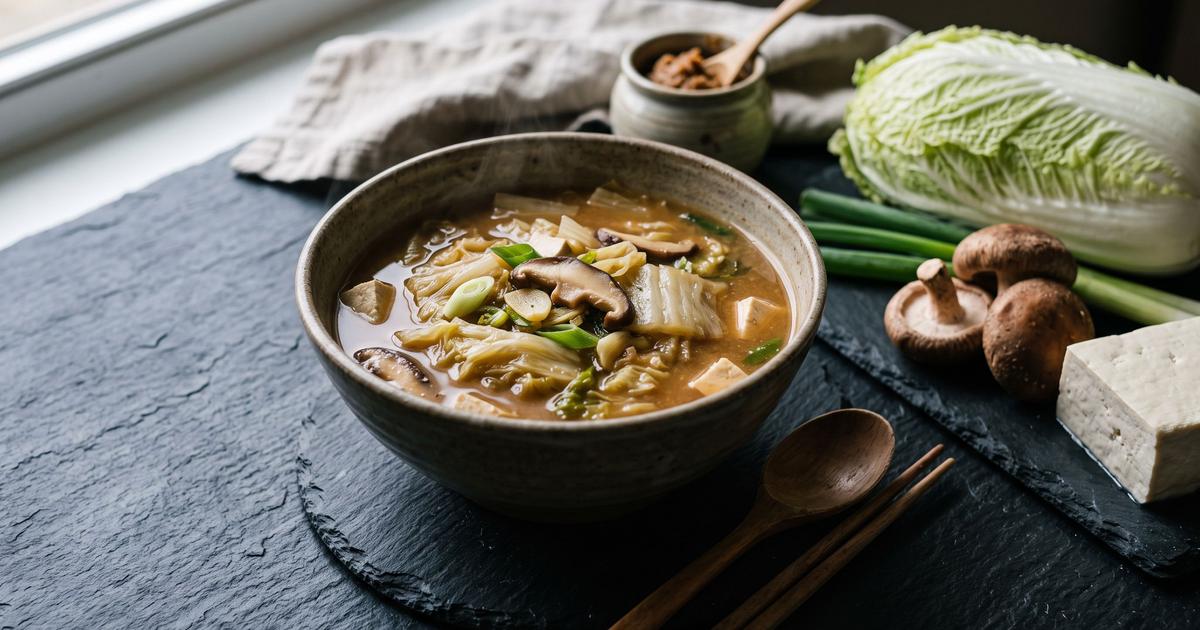
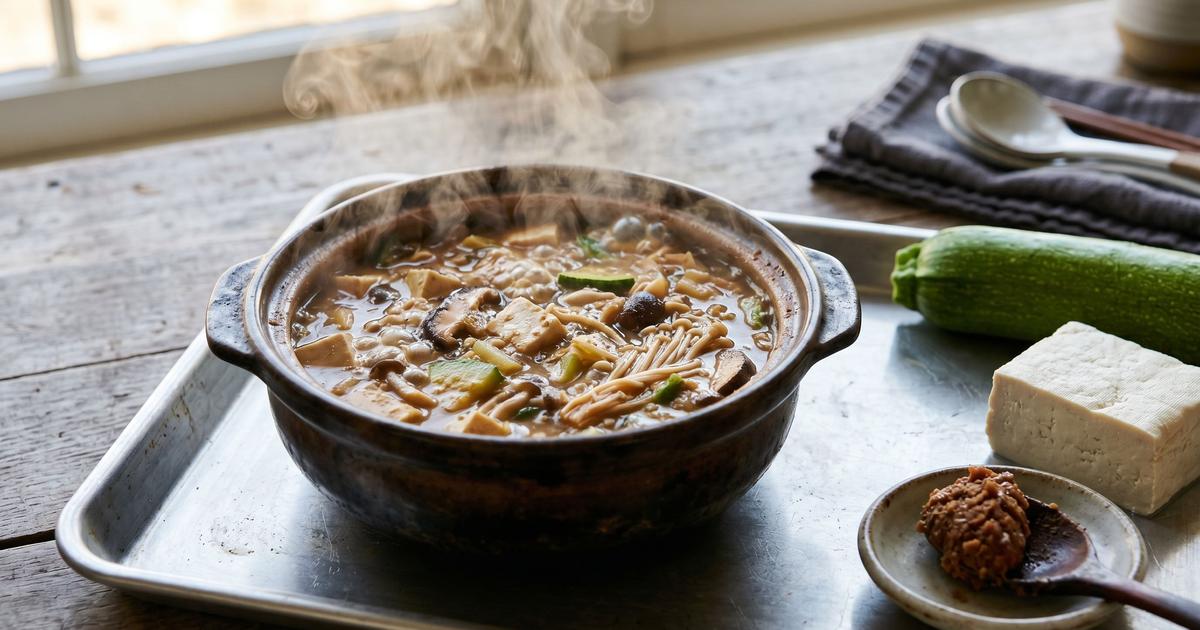
Baechu-guk is the plain, homey soybean-paste soup that turns up on a Korean table any night of the week, not to be confused with the thick, bubbling doenjang-jjigae. Guk means a light, brothy soup, and here it is little more than napa cabbage simmered soft in a doenjang broth until the cabbage goes sweet and the whole thing tastes deeply of soybeans. Dried shiitake and their soaking water build the stock without meat or fish. Doenjang is saltier and funkier than miso because it ferments from soybeans alone, so a tablespoon and a half seasons the whole pot; it is the one essential salt source, used with intent.
Ingredients
- 3 pieces Dried shiitake, soaked in 1 cup (240 ml) warm water, then sliced; keep the soaking water
- 1 lb Napa cabbage, about 450 g, cut into 2-inch (5 cm) pieces
- 1 1/2 tbsp Doenjang
- 3 cloves Garlic, minced
- 2 pieces Scallions, sliced
- 1 tsp Ginger, grated, optional
Method
- Pour the shiitake soaking water into a pot through your fingers to catch the grit, add 4 cups (960 ml) fresh water and the sliced mushrooms, and bring to a simmer. The dark soaking liquid is a free stock, the mineral backbone that stands in for the anchovy broth a Korean cook would usually build here.
- Whisk the doenjang into the warm broth until it dissolves with no lumps. Breaking the paste up in the liquid before it boils keeps it from clumping, and it carries all the salt and savory depth the soup needs, so nothing else gets added.
- Add the napa cabbage and simmer 15 minutes, until the thick stems turn silky and translucent. Napa is mostly water and collapses to a gentle sweetness with a long simmer, which is the point of the dish.
- Stir in the garlic and ginger and cook 2 minutes more, then finish with the scallions off the heat. Late garlic stays fragrant rather than boiling away, and the raw scallion keeps a fresh bite against the mellow broth.
Nutrition
Estimated per serving: 60 calories, 4 g protein, 3 g fiber, 300 mg sodium. Computed from USDA FoodData Central reference values for the main ingredients. This is an approximation, not a laboratory measurement. How these are computed.
Cost per serving is estimated from US national-average retail prices for cheap staple forms, using BLS dried-bean prices and USDA produce prices. Prices vary by store and season, so treat it as a guide, not a receipt. How this is computed.