Kongnamul-guk
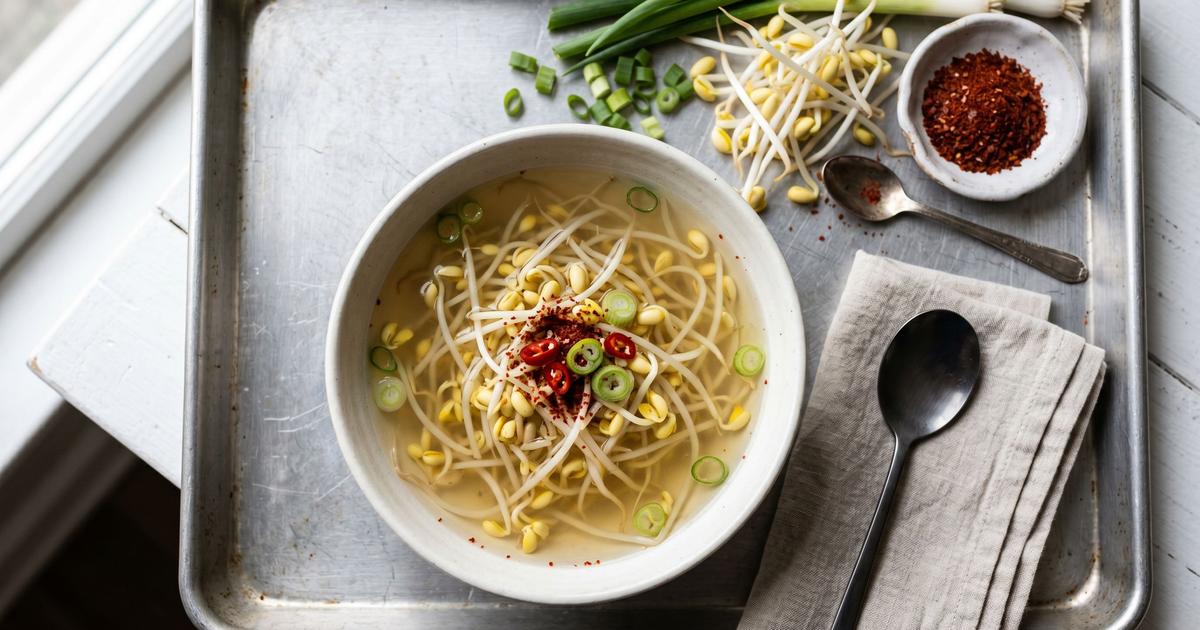
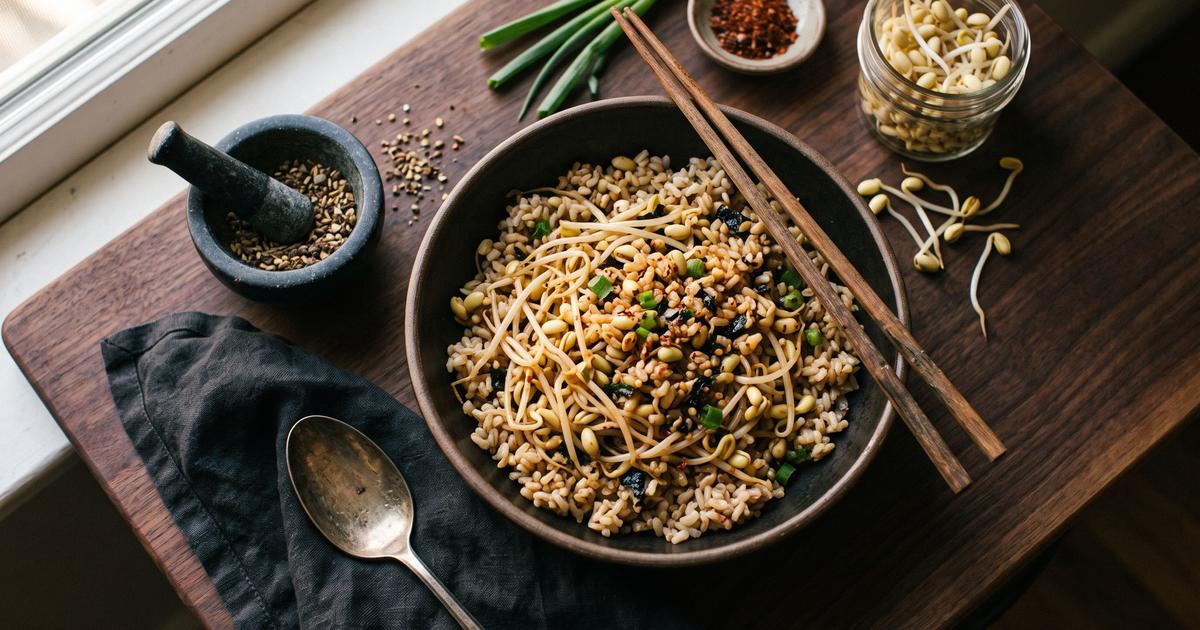
Kongnamul-guk is a fixture of Korean home cooking: a clear broth built from nothing more than soybean sprouts, water, garlic, and scallion, often the meal that follows a late night out because it is light, not because of any particular effect. Cooks pass down one firm rule for it: never lift the lid while the sprouts simmer. Raw soybean sprouts carry a grassy edge from plant enzymes that turn volatile in hot water; trapped under a tight lid, that vapor has time to mellow into the broth's clean, faintly sweet flavor instead of venting into the kitchen and taking the flavor with it. Garlic, tamari, and a last-minute dusting of gochugaru are the only other ingredients doing real work, so the soup lives or dies on sprouts simmered whole and left alone.
Ingredients
- 12 oz Soybean sprouts, rinsed
- 4 cloves Garlic, thinly sliced
- 4 Scallions, white and green parts separated, sliced
- 1 tbsp Gochugaru
- 1 tbsp Low-sodium tamari
- 1 tsp Sesame seeds, toasted
For no added salt, leave out the tamari. Garlic, scallion, and a pinch more gochugaru keep the broth savory.
Method
- Put the soybean sprouts, the white parts of the scallions, and 5 cups (1.2 L) water in a pot with a tight-fitting lid. Bring to a boil over high heat.
- Once it boils, cover and simmer for 8 to 10 minutes without lifting the lid. This is the one rule that matters here: every peek lets the sprouts' grassy volatiles escape before they have time to mellow into the broth.
- Lift the lid and check a sprout. It should have gone from squeaky-crisp to tender with a slight give. If it still squeaks, cover and simmer 2 minutes more.
- Add the garlic and simmer uncovered for 2 minutes, just long enough to lose its raw bite without turning bitter.
- Stir in the tamari, then taste. The broth should taste of the sprouts first and salt second; add more tamari a teaspoon at a time only if it needs it.
- Ladle into bowls and top each with the scallion greens, a pinch of gochugaru, and the toasted sesame seeds. Let each person stir their own gochugaru in at the table so they control their own heat.
Nutrition
Estimated per serving: 45 calories, 4 g protein, 2 g fiber, 150 mg sodium. Computed from USDA FoodData Central reference values for the main ingredients. This is an approximation, not a laboratory measurement. How these are computed.
Cost per serving is estimated from US national-average retail prices for cheap staple forms, using BLS dried-bean prices and USDA produce prices. Prices vary by store and season, so treat it as a guide, not a receipt. How this is computed.