Matbucha, Slow-Cooked Tomato and Pepper Salad
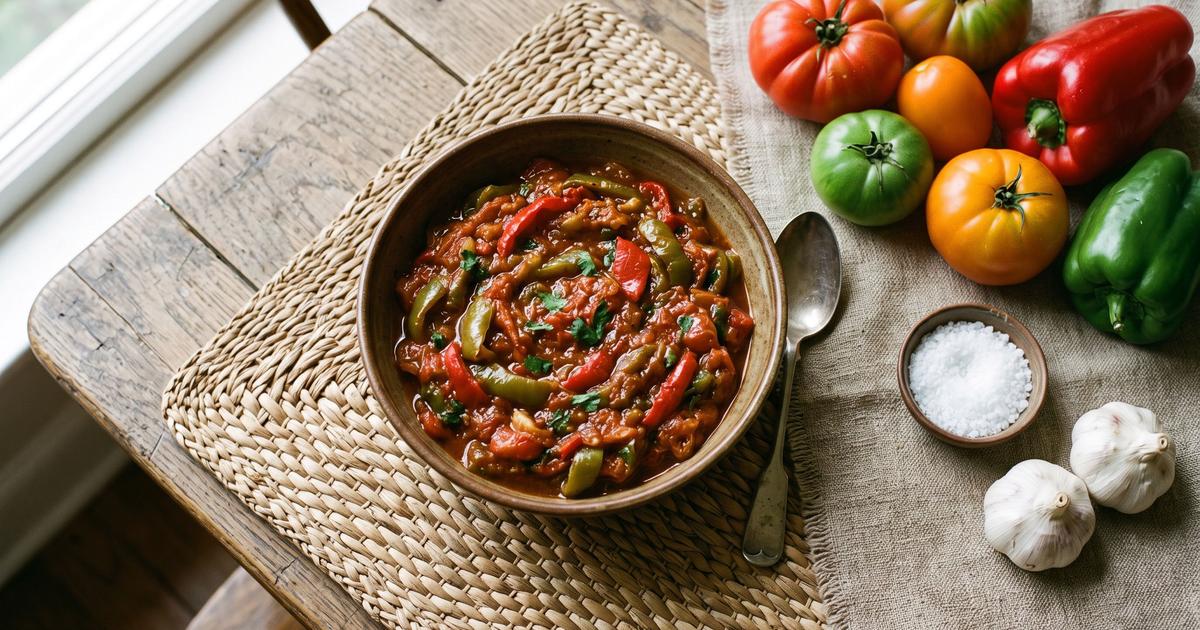
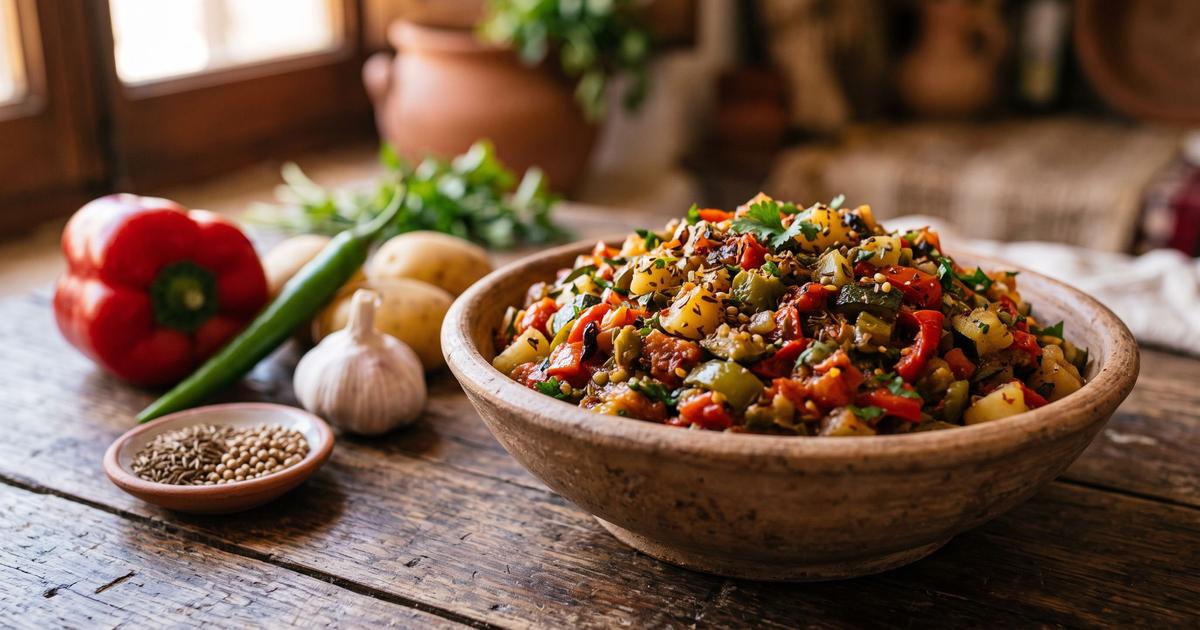
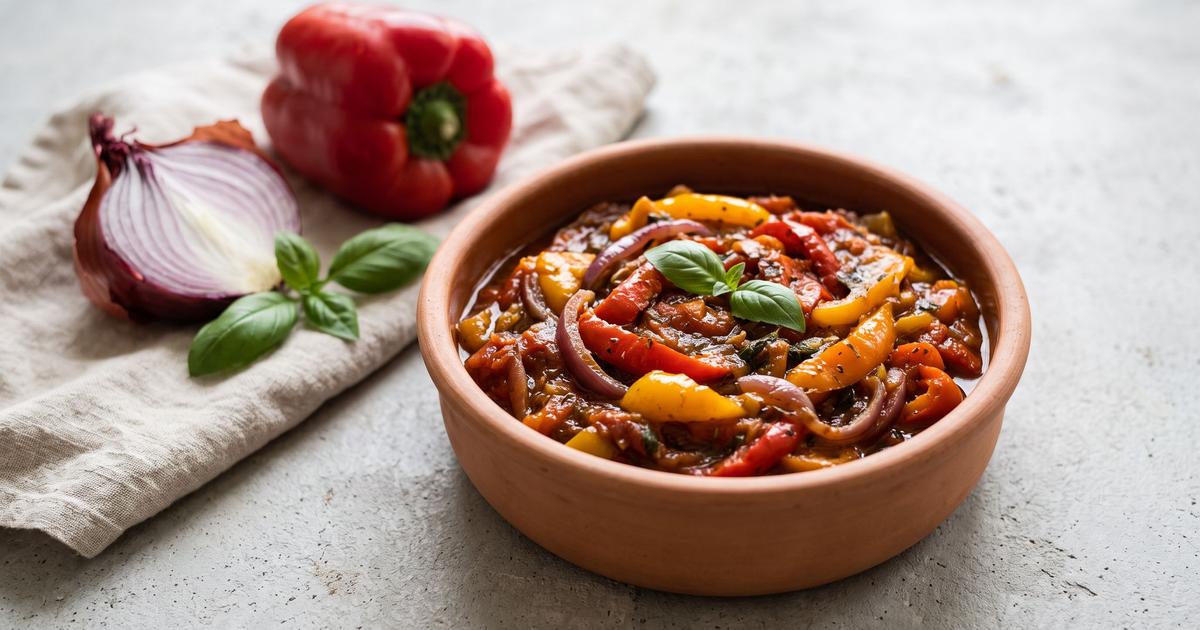
Matbucha is the slow-cooked tomato and pepper salad found across Morocco, Algeria, and the wider Maghreb, cooked down until it is thick enough to scoop. The name points to the method: everything is simmered, not fresh, and the long reduction is the whole point. Roast and peel the peppers first for their smoky softness, then let the tomato cook patiently until it turns jammy and deep. It keeps for a week in the fridge and only improves, which makes it a standing part of the table rather than a last-minute dish.
Ingredients
- 6 Fresh tomatoes, grated on the large holes of a box grater
- 3 Bell peppers, roasted, peeled, and diced
- 5 cloves Garlic, thinly sliced
- 1 tbsp Sweet paprika
- 1 Jalapeño, seeded and minced
- 1/4 tsp Cayenne
Method
- Grate the tomatoes over a bowl and discard the skins left in your hand. Grating gives you pulp without the papery skin and without turning on a blender, and that loose pulp is what cooks down into the base.
- Put the tomato pulp, garlic, and minced chile in a wide pan over medium heat and simmer uncovered. A wide pan matters here: the more surface area, the faster the water leaves and the sooner the sauce concentrates.
- After about 20 minutes, when the tomato has thickened and darkened, stir in the roasted peppers, paprika, and cayenne. Adding the peppers now keeps them from dissolving completely, so the finished salad still has some body.
- Cook down another 20 to 25 minutes, stirring often as it thickens so it does not catch. It is ready when a spoon dragged across the pan leaves a track that holds. The long reduction is what builds sweetness and depth in place of salt.
- Cool to room temperature or chill. Matbucha tastes fuller cold and the day after, so make it ahead. Serve it as a side or scoop it up with bread.
Nutrition
Estimated per serving: 45 calories, 2 g protein, 3 g fiber, 20 mg sodium. Computed from USDA FoodData Central reference values for the main ingredients. This is an approximation, not a laboratory measurement. How these are computed.
Cost per serving is estimated from US national-average retail prices for cheap staple forms, using BLS dried-bean prices and USDA produce prices. Prices vary by store and season, so treat it as a guide, not a receipt. How this is computed.