Kafteji, Tunisian Roasted Vegetable Chop
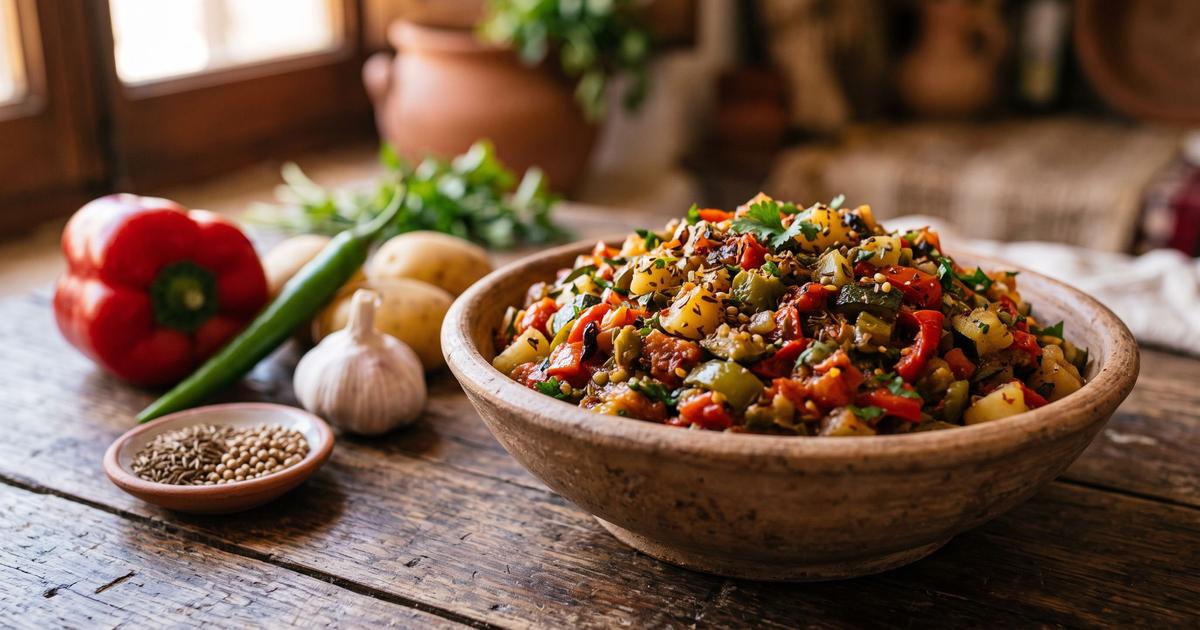
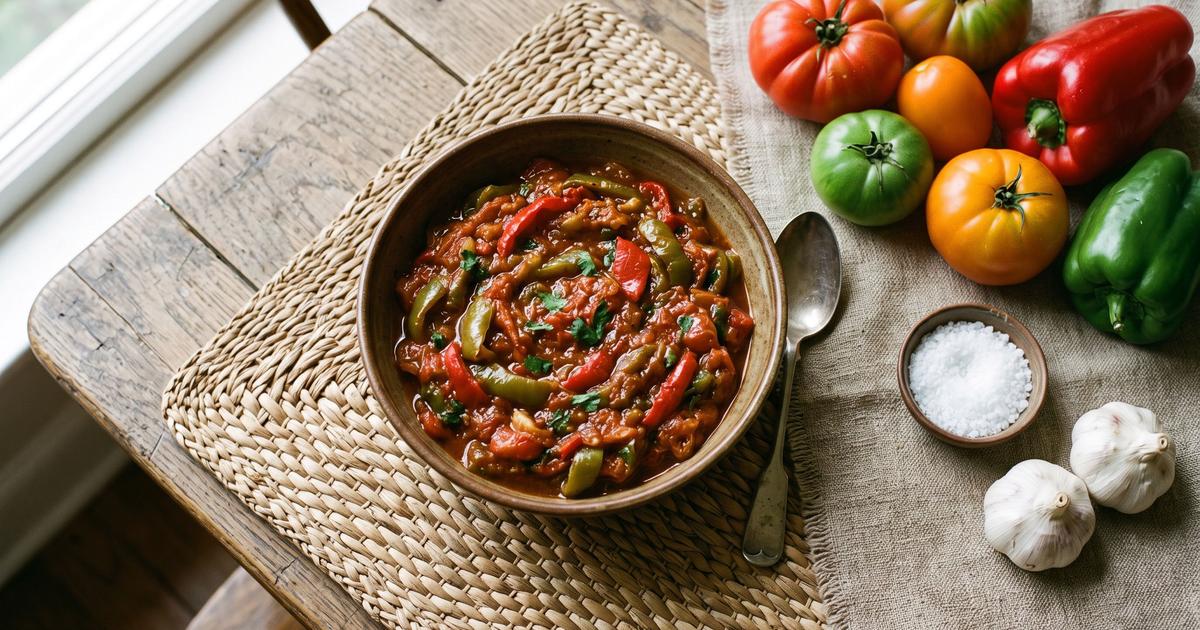
Kafteji is Tunisian street food, a jumble of vegetables fried and then chopped fine on a board with garlic and spice. Roasting the peppers, potato, zucchini, and tomato hard and dry gives the same soft, charred, jammy result the fryer does, with no oil in sight. The character comes from tabil, the Tunisian pairing of caraway and coriander, plus cayenne where harissa would normally sit, and a good squeeze of lemon to carry it in place of salt. Chopping by hand keeps it coarse, so every forkful has distinct pieces. Eat it warm as a side or at room temperature as a mezze.
Ingredients
- 2 wholes Bell peppers
- 1 whole Zucchini
- 2 wholes Potatoes, small
- 2 wholes Fresh tomatoes
- 3 cloves Garlic
- 1 tsp Caraway, ground
- 1 tsp Coriander seed, ground
- 1 tsp Sweet paprika
- 1/2 tsp Cayenne
- 2 tbsp Lemon juice
- 1/4 cup Flat-leaf parsley, chopped
Method
- Heat the oven to 450 F (230 C). Halve the peppers and zucchini, quarter the potatoes, and halve the tomatoes, then roast everything on a lined tray until soft and blistered, pulling each vegetable as it is done: the tomatoes and zucchini in about 20 minutes, the peppers and potatoes closer to 30. Kafteji is normally deep-fried, and dry-roasting at high heat gets the same collapse and char with none of the oil.
- Slip the skins off the peppers once they are cool enough to handle. The charred skin turns bitter and papery, and pulling it away leaves the sweet, smoky flesh that gives the dish its backbone.
- Pile all the roasted vegetables on a board with the raw garlic and chop everything together, going back and forth until it is a coarse, jammy mince. Chopping by hand rather than blending is what makes it kafteji and not a puree; you want to still find pieces of each vegetable.
- Scrape the mince into a bowl and fold in the caraway, coriander, paprika, and cayenne. Caraway and coriander are the Tunisian signature here, the tabil pairing that turns roasted vegetables into something unmistakably North African, and the cayenne stands in for the harissa that would usually bring the heat.
- Stir in the lemon juice and parsley and taste. The acid is doing the job of salt, so add lemon until the whole thing tastes lively rather than flat. Serve warm or at room temperature.
Nutrition
Estimated per serving: 150 calories, 4 g protein, 6 g fiber, 35 mg sodium. Computed from USDA FoodData Central reference values for the main ingredients. This is an approximation, not a laboratory measurement. How these are computed.
Cost per serving is estimated from US national-average retail prices for cheap staple forms, using BLS dried-bean prices and USDA produce prices. Prices vary by store and season, so treat it as a guide, not a receipt. How this is computed.