Betengan Mekhalel, Egyptian Pickled Eggplant
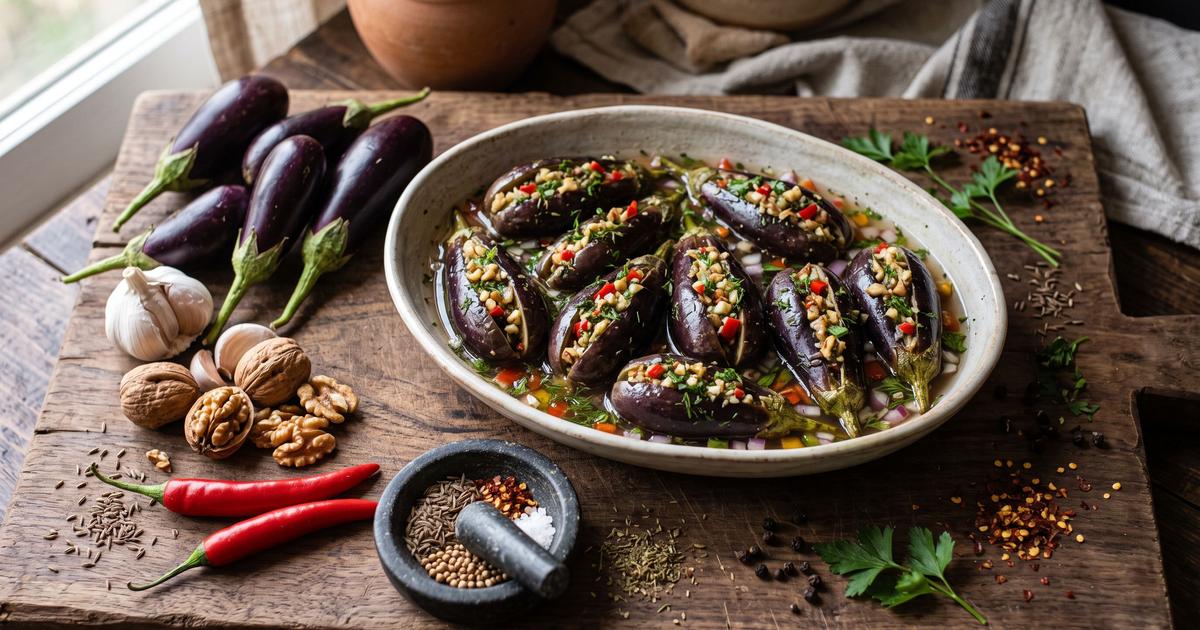
Across the eastern Mediterranean, small eggplants get stuffed with garlic and walnuts and cured into a pickle: makdous in the Levant, betengan mekhalel in Egypt. The classic is sealed under a layer of oil and carries a lot of salt, both to preserve it for months. This is a lighter, honest version meant for the fridge, not the cellar: the eggplants are cooked for safety, packed with the same garlicky, chili-flecked walnut filling, and held in a sharp vinegar brine that does the preserving on its own. It will not keep as long as the oil-cured original, and it is not trying to. Serve a piece or two alongside beans, grains, or a plate of ful.
Ingredients
- 1 lb Eggplant, baby or small
- 6 cloves Garlic, minced
- 1/3 cup Walnuts, chopped fine
- 1 tsp Red pepper flakes
- 1/2 cup Flat-leaf parsley, chopped
- 1/2 tsp Cumin seed, ground
- 1 1/2 cups Red wine vinegar
- 2 tbsp Lemon juice
Method
- Steam or boil the whole eggplants until just tender but still firm, 8 to 10 minutes. Cooking them first is what makes the pickle safe and lets the flesh take the brine; raw eggplant stays bitter, spongy, and slow to sour.
- Cool the eggplants, then press each gently to squeeze out the water they hold, and cut a lengthwise pocket in each without slicing all the way through.
- Mix the garlic, walnuts, pepper flakes, parsley, and cumin, and pack a little into every pocket.
- Stand the stuffed eggplants upright in a clean jar and cover them completely with the vinegar, lemon juice, and a splash of water. Tuck something clean on top to keep them under the surface, since anything above the brine can spoil.
- Refrigerate at least 3 days before eating so the acid can work through. Here vinegar, not a heavy dose of salt, is what preserves and seasons. Eat within two weeks.
Nutrition
Estimated per serving: 70 calories, 2 g protein, 3 g fiber, 15 mg sodium. Computed from USDA FoodData Central reference values for the main ingredients. This is an approximation, not a laboratory measurement. How these are computed.
Cost per serving is estimated from US national-average retail prices for cheap staple forms, using BLS dried-bean prices and USDA produce prices. Prices vary by store and season, so treat it as a guide, not a receipt. How this is computed.