Ommek Houria, Tunisian Carrot Dip
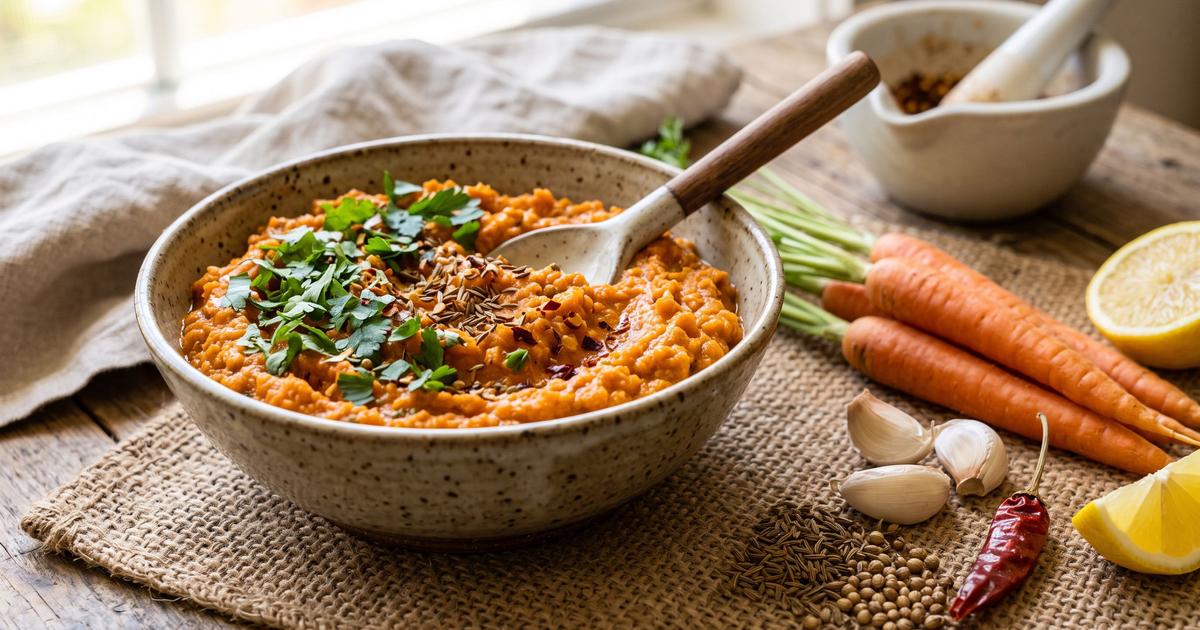
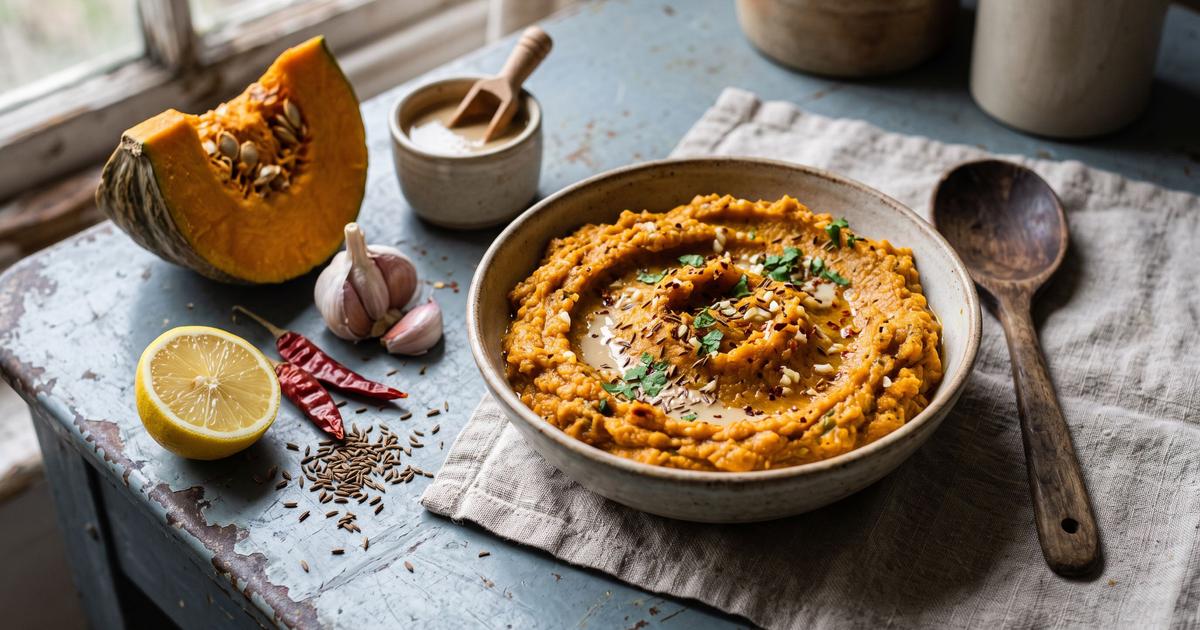
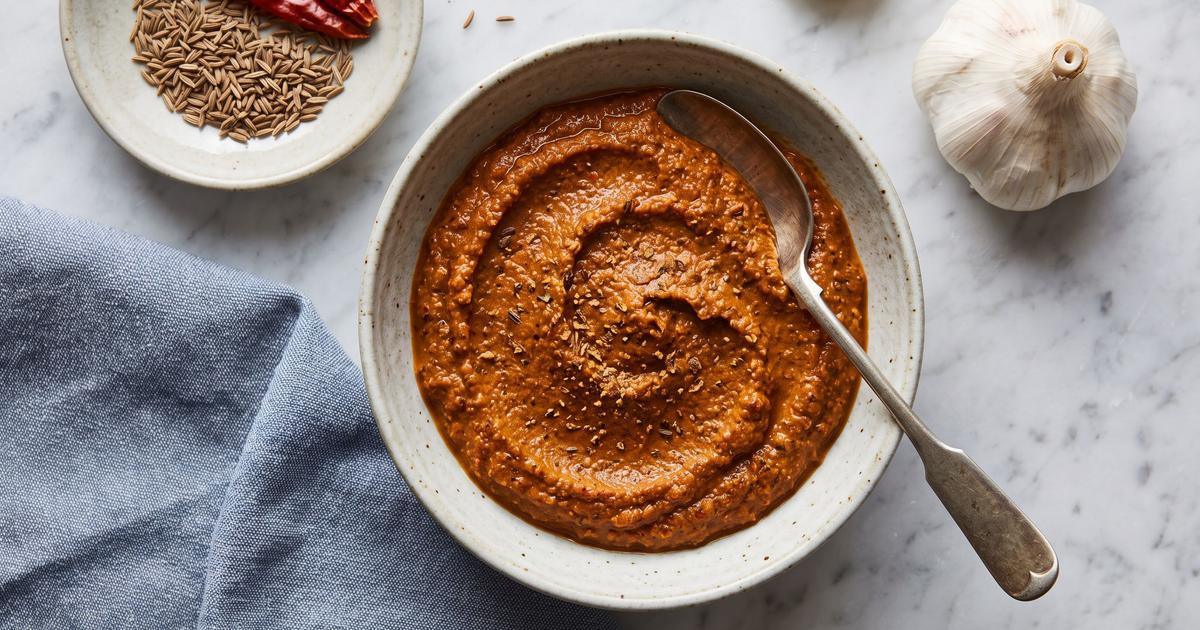
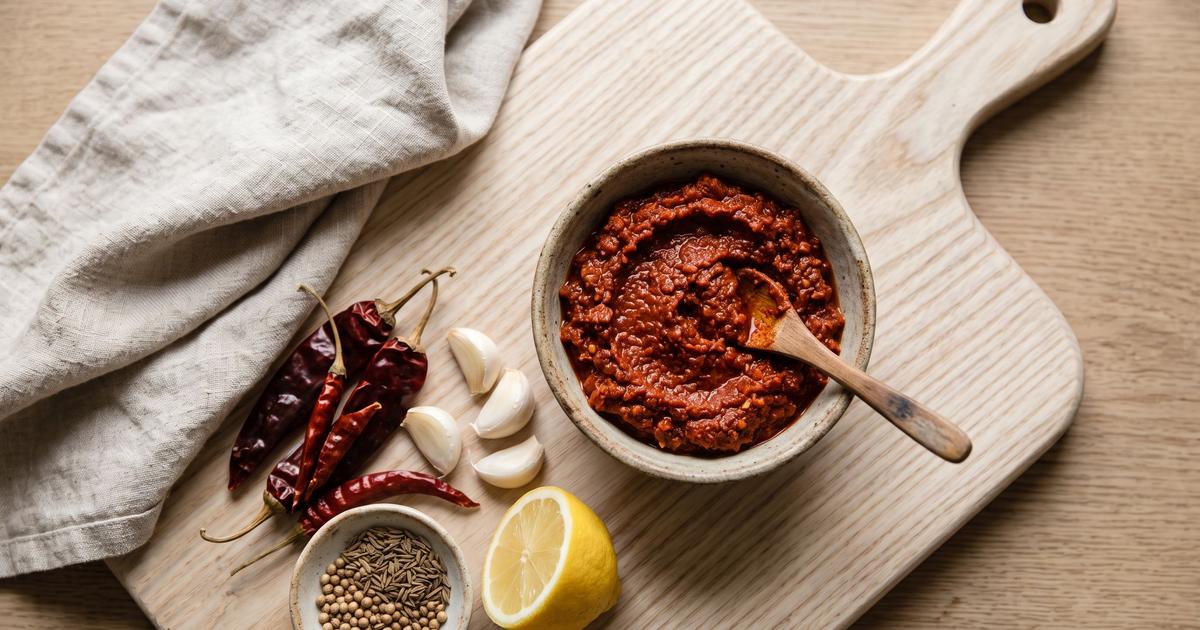
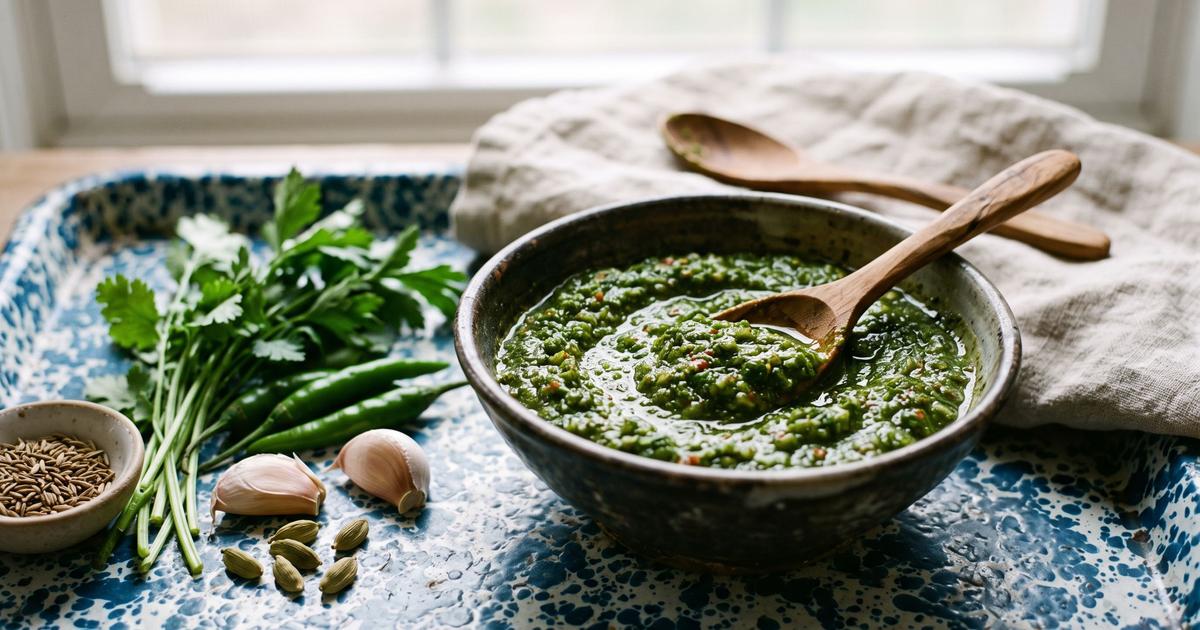
Ommek Houria is a Tunisian carrot dip whose name translates roughly as mother of freedom, a fixture of the small plates that open a Tunisian meal. Carrots are boiled soft and mashed, then driven hard with garlic, caraway, and chile, the same aromatic trio behind Tunisian harissa. Most versions are slack with olive oil and finished with salt; this one leans on lemon and a generous hand of toasted spice instead, which the sweet cooked carrot can easily carry. Keep the mash coarse so it stays a vegetable rather than a puree, and let it rest before serving so the caraway has time to come forward. Scoop it with raw vegetables or whole-grain bread.
Ingredients
- 1 lb Carrots (cooking), peeled and sliced
- 3 cloves Garlic
- 1 tsp Caraway, toasted and ground
- 1 tsp Coriander seed, toasted and ground
- 1/2 tsp Cumin seed, toasted and ground
- 1/2 tsp Cayenne
- 2 tbsp Lemon juice
- 2 tbsp Flat-leaf parsley, chopped
Method
- Boil the carrots and whole garlic cloves in unsalted water for about 15 minutes, until a knife slides through with no resistance. Cooking the garlic alongside the carrots mellows its bite to a sweet, mild background, so it never bullies the dip the way raw garlic would.
- Toast the caraway, coriander, and cumin in a dry pan until fragrant, then grind. Caraway is the seed that makes this Tunisian rather than generic; toasting wakes it up and keeps it from tasting like raw rye.
- Drain the carrots and garlic well, then mash with a fork to a coarse, chunky paste. A fork leaves texture where a blender would whip it into baby food, and the point of this dip is that you can still tell it was a carrot.
- Work in the ground spices, cayenne, and lemon juice while the carrots are still warm. Warm carrot soaks up the spice and acid far better than cold, so season now rather than after it has sat.
- Fold in the parsley and let it stand 15 minutes before serving. The rest lets the caraway and chile bloom through the mash, and it keeps three days in the fridge, the flavor deepening each day.
Nutrition
Estimated per serving: 60 calories, 2 g protein, 4 g fiber, 55 mg sodium. Computed from USDA FoodData Central reference values for the main ingredients. This is an approximation, not a laboratory measurement. How these are computed.
Cost per serving is estimated from US national-average retail prices for cheap staple forms, using BLS dried-bean prices and USDA produce prices. Prices vary by store and season, so treat it as a guide, not a receipt. How this is computed.