Harissa, Tunisian Chili Paste
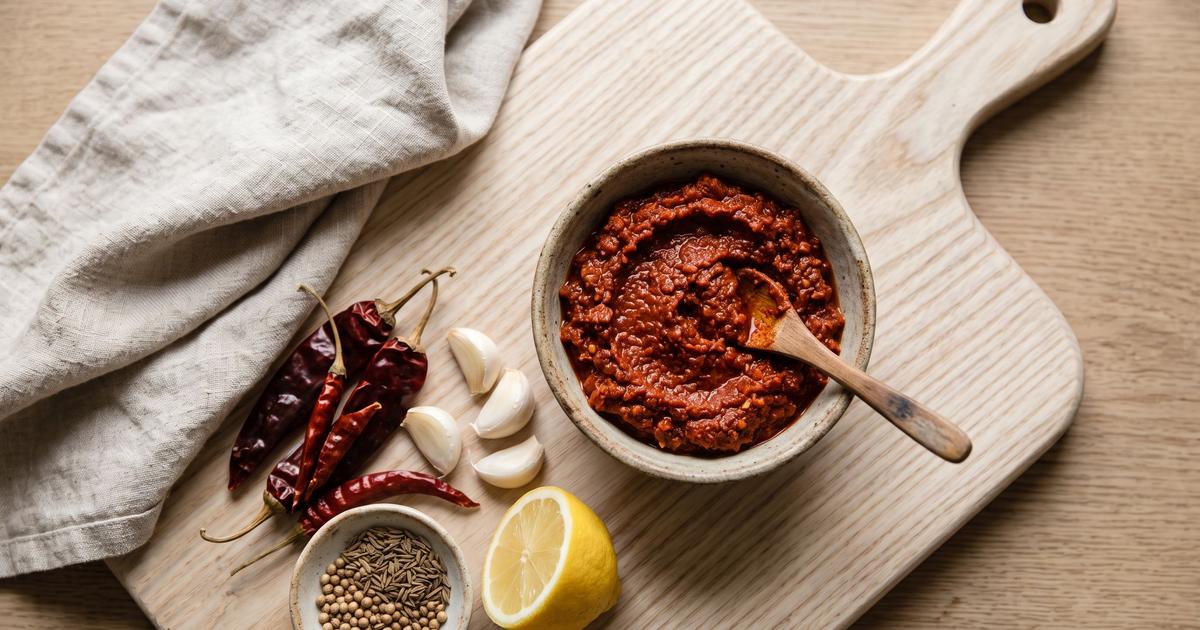
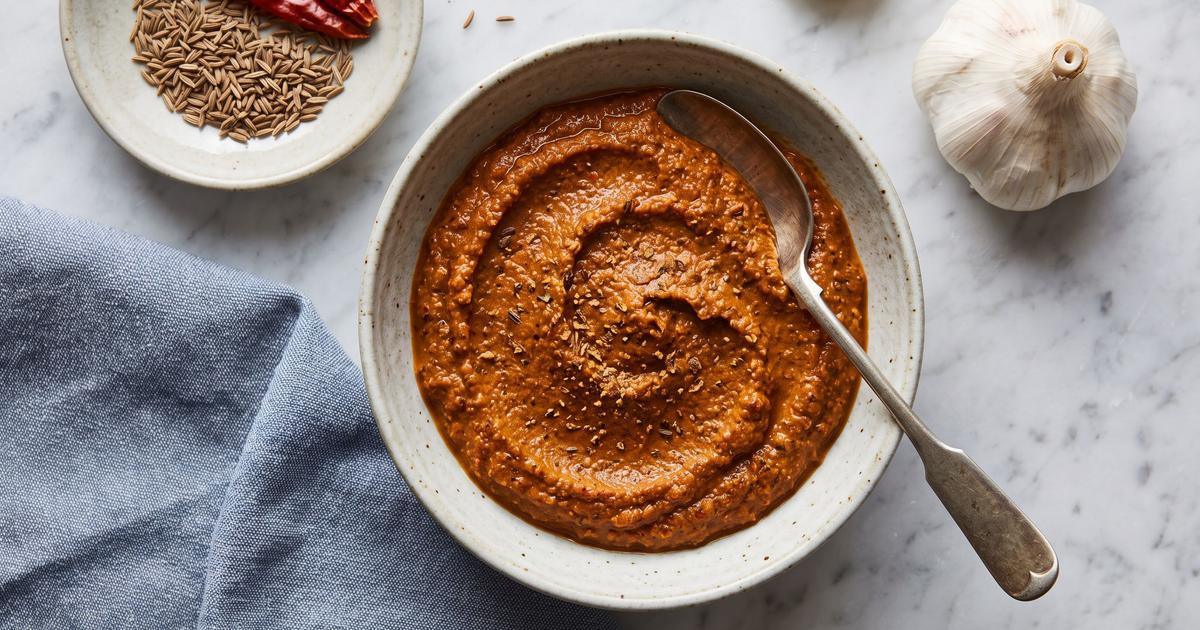
Harissa is the chili paste that anchors Tunisian cooking, stirred into soups and stews, spread on bread, and served alongside almost everything. The classic is made from soaked dried chiles pounded with garlic, caraway, and coriander, then loosened with olive oil and salted for keeping. This version skips both: it leans on a well-toasted spice base and a hit of lemon for the savory depth and preservation the salt and oil would give, and it stays a pure paste of chiles and aromatics. Guajillos bring body and color, arbol brings the heat, and you can dial the ratio to your own tolerance. Make it once and it earns its jar in the fridge door.
Ingredients
- 4 wholes Guajillo, stemmed and seeded
- 3 wholes Chile de árbol, stemmed
- 4 cloves Garlic
- 1 tsp Caraway
- 1 tsp Coriander seed
- 1/2 tsp Cumin seed
- 1 tbsp Tomato paste
- 1/2 tsp Smoked paprika
- 2 tbsp Lemon juice
Method
- Toast the dried chiles in a dry pan over medium heat for about a minute a side, until they smell nutty and turn slightly pliable. A brief toast wakes up the oils in the skins, which is where a chile's fruit and depth live, but pull them before they scorch or the paste turns bitter.
- Cover the toasted chiles with just-boiled water and soak 15 minutes until fully soft. Soaking rehydrates them into something that blends smooth, and you keep a little of the soaking liquid to loosen the paste later.
- Toast the caraway, coriander, and cumin in the same dry pan until fragrant, then grind them. Whole seeds freshly toasted are the aromatic backbone of harissa, and blooming them this way gives the paste the savory weight that salt would in another sauce.
- Drain the chiles and blend them with the garlic, ground spices, tomato paste, smoked paprika, and lemon juice, adding soaking liquid a spoon at a time until it turns to a thick, spoonable paste.
- Taste and adjust the lemon for brightness and the arbol for heat. Scrape into a clean jar and refrigerate, where it keeps two weeks. A spoonful lifts a bean stew, dresses grains, or spreads thin on whole-grain bread.
Nutrition
Estimated per serving: 25 calories, 1 g protein, 2 g fiber, 15 mg sodium. Computed from USDA FoodData Central reference values for the main ingredients. This is an approximation, not a laboratory measurement. How these are computed.
Cost per serving is estimated from US national-average retail prices for cheap staple forms, using BLS dried-bean prices and USDA produce prices. Prices vary by store and season, so treat it as a guide, not a receipt. How this is computed.