Filfel Chuma, Libyan Garlic and Chili Paste
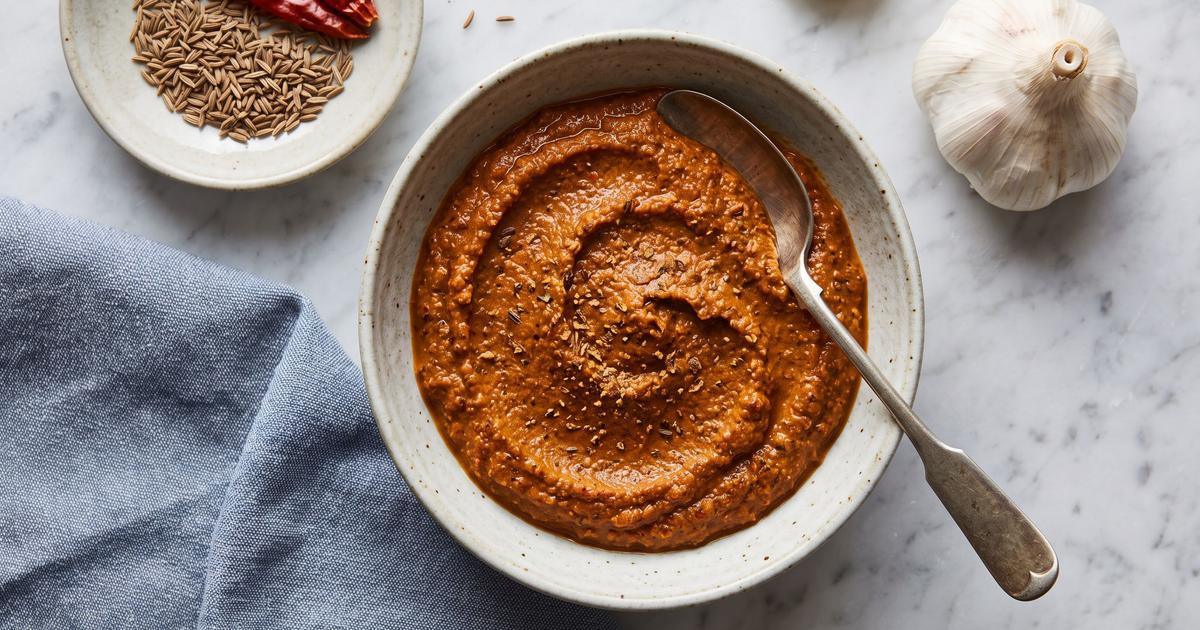
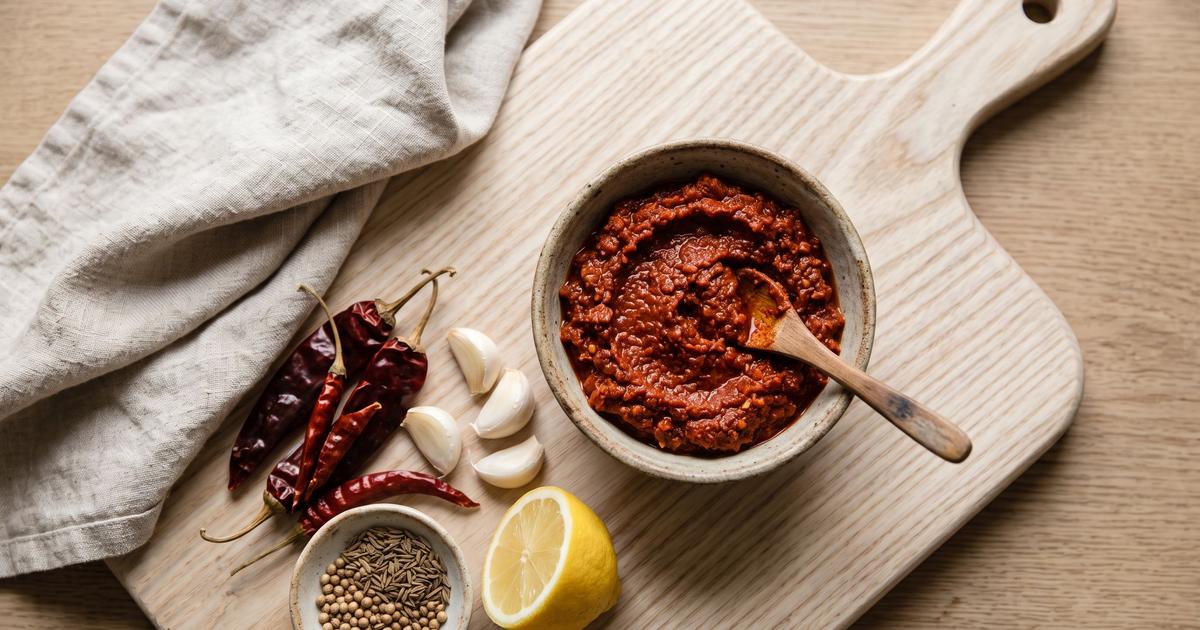
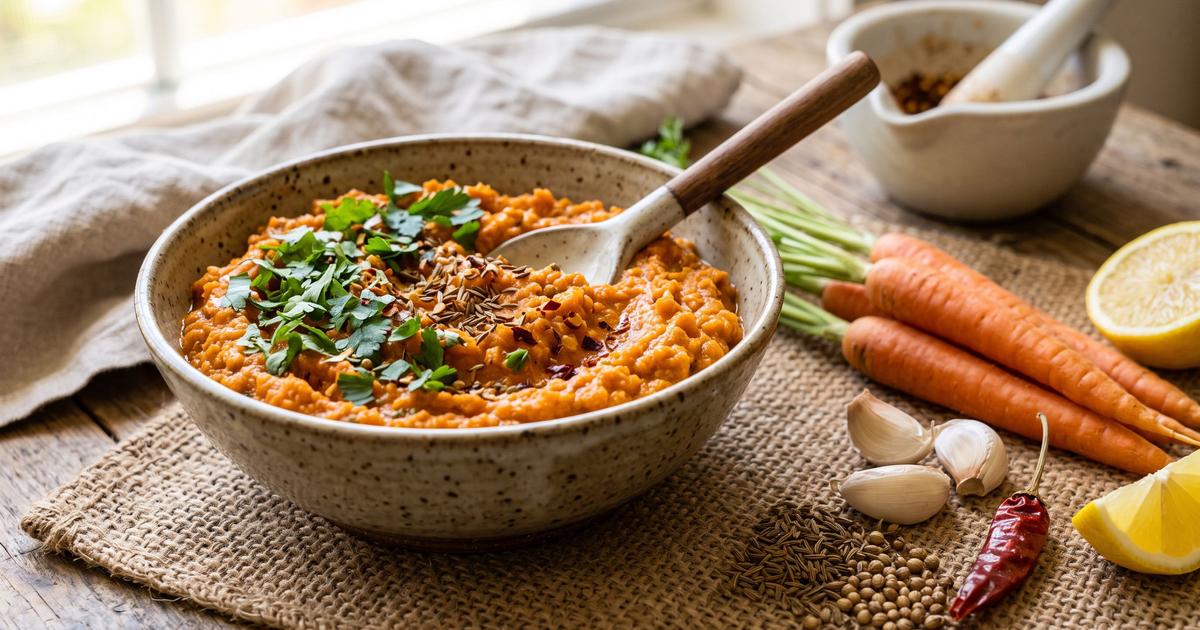
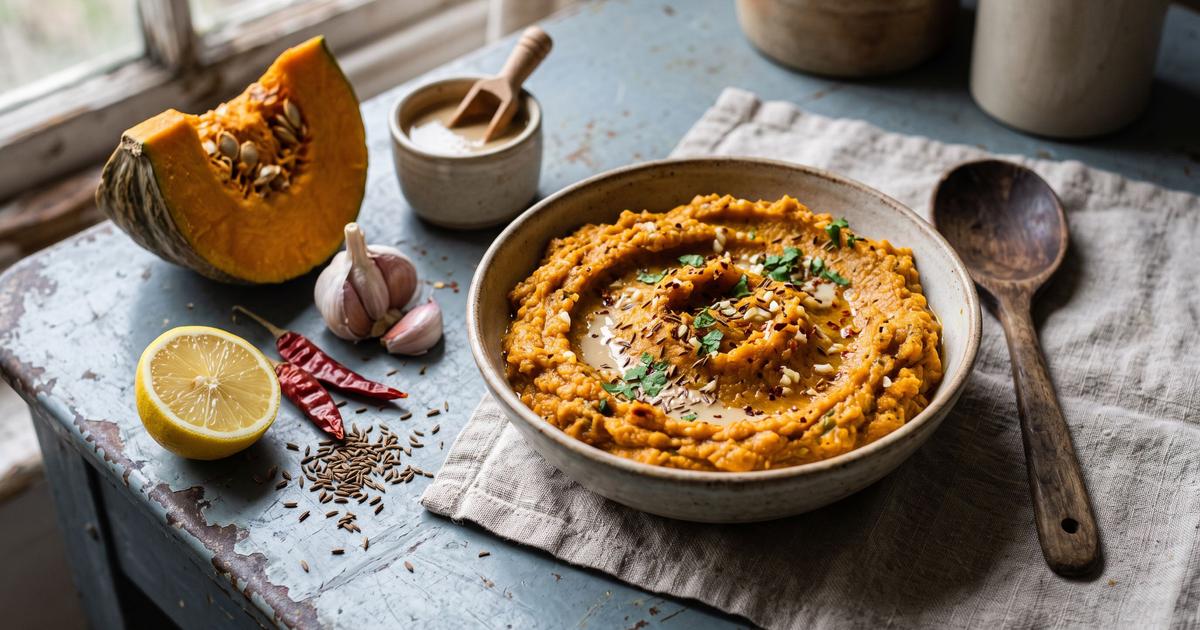
Filfel chuma is Libya's everyday chili paste, and the name says it plainly: filfel is pepper, chuma is garlic. Where Tunisian harissa is all about the chile, this one is built on garlic, a whole head of it, softened and blended smooth with sweet paprika and the caraway and cumin that run through North African cooking. It is usually bound with oil, but a poach in water tames the garlic and gives the paste enough body to spread or stir into a stew. Use it the way a Libyan cook would: a smear on whole grains, a spoonful stirred into soup, or a dab next to plain beans to wake them up.
Ingredients
- 12 cloves Garlic, peeled
- 2 tbsp Sweet paprika
- 1 tsp Cayenne
- 1 tsp Caraway, ground
- 1 tsp Cumin seed, ground
- 1/2 tsp Coriander seed, ground
- 1 tbsp Tomato paste
- 1 tbsp Red wine vinegar
- 1 tbsp Lemon juice
Method
- Simmer the peeled garlic cloves in water to cover for about 8 minutes, until a knife slides in easily. Raw garlic in this quantity would be a punch to the face; a short poach mellows it into something you can eat by the spoonful. Save 2 tbsp of the cooking water.
- Toast the paprika, cayenne, caraway, cumin, and coriander in a dry pan for 30 to 45 seconds, just until they smell fragrant. Watch them closely, since paprika scorches in seconds and turns bitter. Blooming the spices dry is what separates this from a raw, dusty paste.
- Blend the garlic, toasted spices, tomato paste, vinegar, lemon juice, and the reserved cooking water to a thick paste, adding water a teaspoon at a time until it is spreadable.
- Let it rest at least 30 minutes so the flavors settle. Filfel chuma is traditionally loosened with a slug of olive oil; the poaching water and tomato paste give it body instead. It keeps two weeks in the fridge and gets rounder as it sits.
Nutrition
Estimated per serving: 35 calories, 2 g protein, 2 g fiber, 20 mg sodium. Computed from USDA FoodData Central reference values for the main ingredients. This is an approximation, not a laboratory measurement. How these are computed.
Cost per serving is estimated from US national-average retail prices for cheap staple forms, using BLS dried-bean prices and USDA produce prices. Prices vary by store and season, so treat it as a guide, not a receipt. How this is computed.