Masala Popcorn
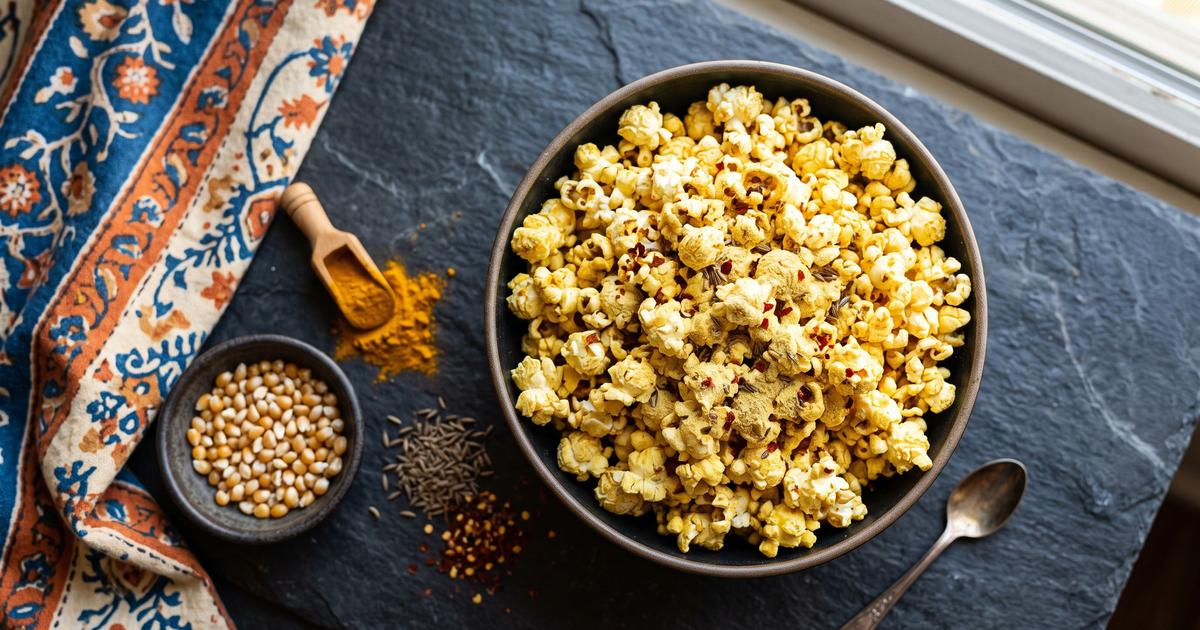
Movie popcorn is a delivery system for oil and salt. Strip both away and you are left with a whole grain that is mostly fiber and air, one of the cheapest snacks in the store. The flavor problem is real, though: seasonings need something to cling to. A light mist of water solves it without fat, just enough tack to catch the spice before it evaporates. Bloomed turmeric and toasted cumin do the heavy lifting, nutritional yeast adds a savory, almost cheesy note, and amchur, dried green mango, brings the sourness your tongue reads as seasoning. Work fast while the popcorn is hot, because that is when the spices grip best.
Ingredients
- 1/2 cup Popcorn kernels
- 1/4 tsp Turmeric
- 3/4 tsp Cumin seed, toasted and ground
- 1/4 tsp Cayenne
- 1/2 tsp Amchur
- 2 tbsp Nutritional yeast
Method
- Air-pop the popcorn kernels, or pop them in a tall dry pot with a lid over medium-high heat, shaking constantly, until the popping slows to a few seconds between pops. No oil is needed to pop corn: the moisture sealed inside each kernel is what makes it burst.
- Toast the cumin seeds in a dry skillet until fragrant, about a minute, and grind them. In a small bowl, stir the ground cumin together with the turmeric, cayenne, amchur, and nutritional yeast.
- The one trick with oil-free popcorn is glue. Dry spice slides off dry popcorn, so mist the hot popcorn very lightly with water from a spray bottle, tossing as you go, until it is just barely tacky, not damp. A tablespoon of water across the whole bowl is plenty.
- Immediately shower the spice mix over the popcorn and toss hard for a full 30 seconds so every piece picks up color. The nutritional yeast brings a cheesy, savory depth and the amchur brings the sour tang that usually comes from salt.
- Taste and add more amchur or cayenne to your liking. Eat right away, while it is warm and the crunch is at its peak.
Nutrition
Estimated per serving: 120 calories, 4 g protein, 4 g fiber, 10 mg sodium. Computed from USDA FoodData Central reference values for the main ingredients. This is an approximation, not a laboratory measurement. How these are computed.
Cost per serving is estimated from US national-average retail prices for cheap staple forms, using BLS dried-bean prices and USDA produce prices. Prices vary by store and season, so treat it as a guide, not a receipt. How this is computed.