Kala Chana Chaat
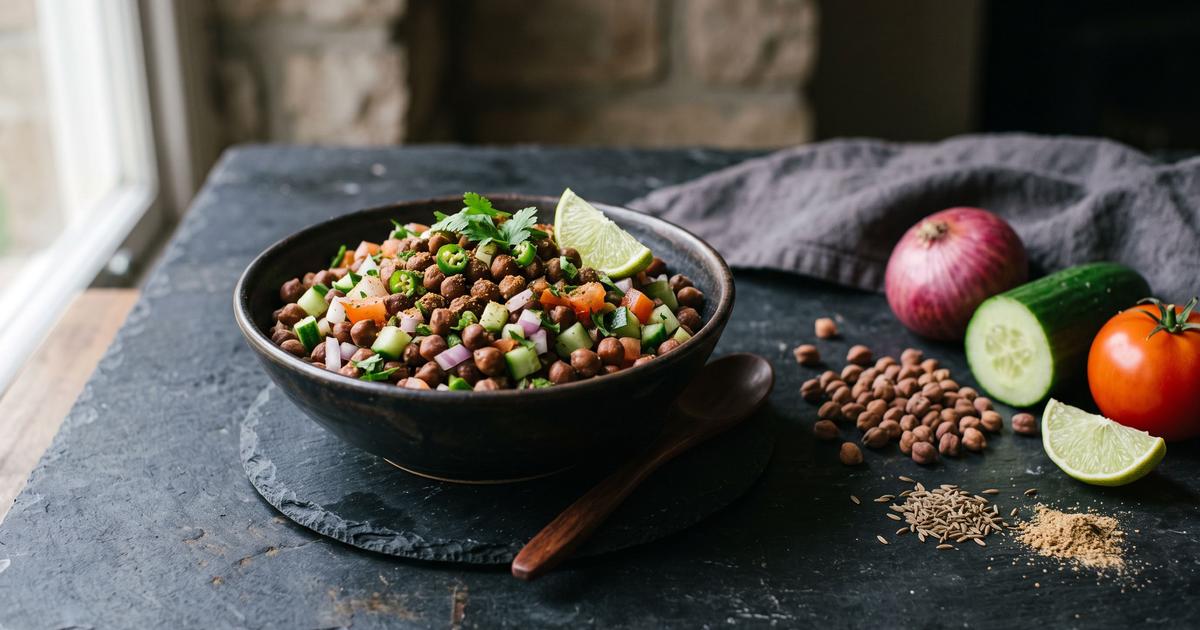
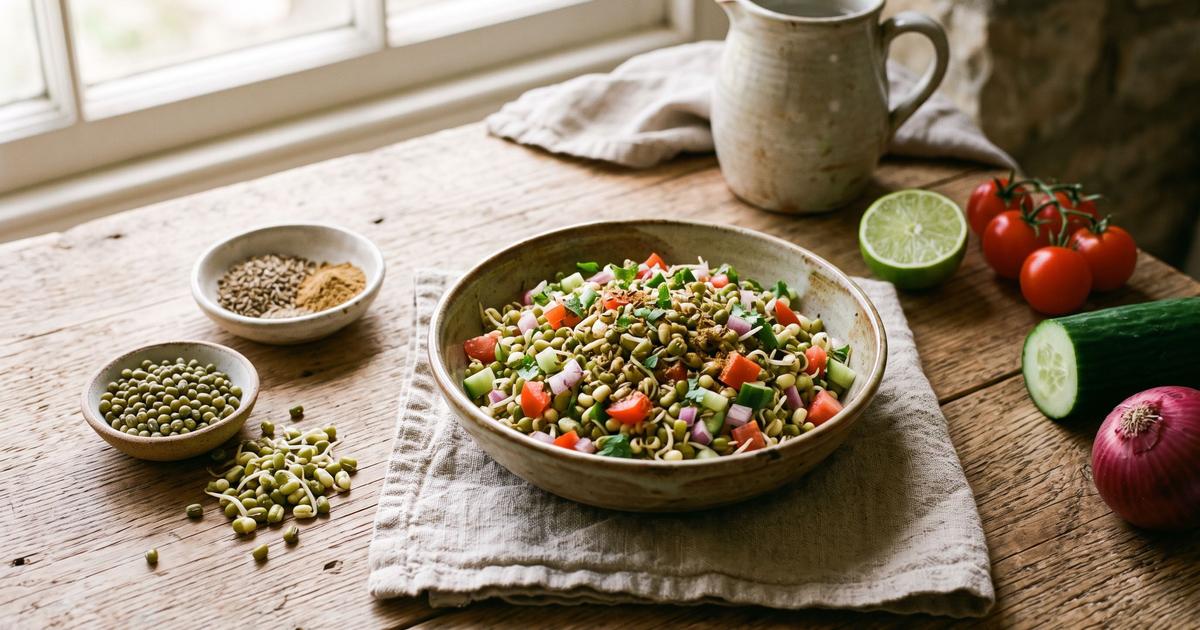
Chaat is Indian street food built on contrast: soft and crisp, sour and hot, all at once. This cold version leans on kala chana, the small dark chickpea that holds its shape and brings more fiber than the pale kind, so it stays a bowl of distinct beads rather than a mash. The seasoning does the work usually handed to black salt and a tamarind drizzle: toasted cumin for depth, amchur for tang, cayenne for heat, and enough lime to make it bracing. Dress it at the last minute, because the crunch of raw onion and cucumber is the reward.
Ingredients
- 1 cup Black chickpeas, dried, soaked overnight
- 1/2 cup Red onions, finely diced
- 1 cup Cucumber, diced small
- 1 cup Cherry tomatoes, quartered
- 1/2 cup Cilantro, chopped
- 2 tbsp Mint, chopped
- 1 tsp Cumin seed, toasted and ground
- 1 tsp Amchur
- 1/4 tsp Cayenne
- 1/2 tsp Black peppercorns, freshly ground
- 3 tbsp Lime juice
Method
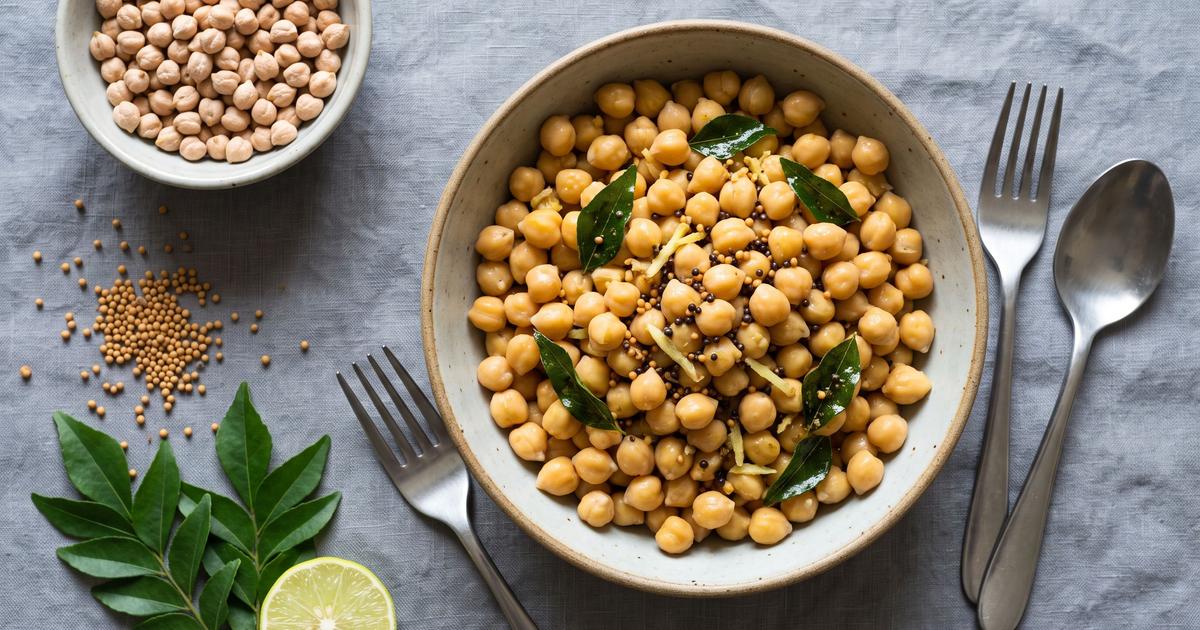
- Drain the soaked black chickpeas and simmer them in fresh unsalted water for 40 to 50 minutes, until tender but still holding their shape. Kala chana is firmer than tan chickpeas, so it should give a little chew rather than collapse. Drain and cool to room temperature.
- Toast the cumin seeds in a dry pan until fragrant, about a minute, then grind them. Freshly toasted and ground cumin is the backbone of any chaat masala, and the pre-ground jar cannot match it.
- Combine the cooled chickpeas, onion, cucumber, tomato, cilantro, and mint in a bowl. Dress just before serving so the vegetables stay crisp and do not weep.
- Add the ground cumin, amchur, cayenne, and black pepper, then the lime juice, and fold everything together. Amchur is dried green mango, and it delivers the sour-tart tang that a chaat usually gets from black salt, without the sodium.
- Taste and push the lime and amchur until it makes your mouth water. That mouth-watering sourness, not salt, is the whole point of chaat, so err toward more acid. Eat right away, while the cucumber and onion still snap.
Nutrition
Estimated per serving: 180 calories, 9 g protein, 9 g fiber, 25 mg sodium. Computed from USDA FoodData Central reference values for the main ingredients. This is an approximation, not a laboratory measurement. How these are computed.
Cost per serving is estimated from US national-average retail prices for cheap staple forms, using BLS dried-bean prices and USDA produce prices. Prices vary by store and season, so treat it as a guide, not a receipt. How this is computed.