Luobo Tang, Daikon and Shiitake Soup
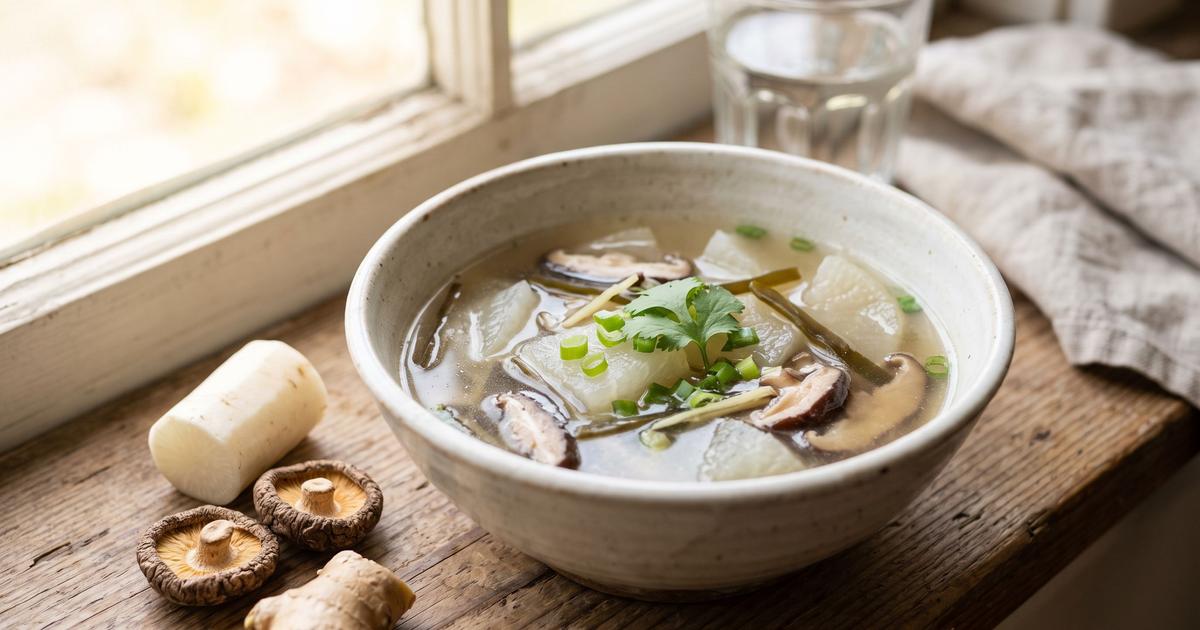
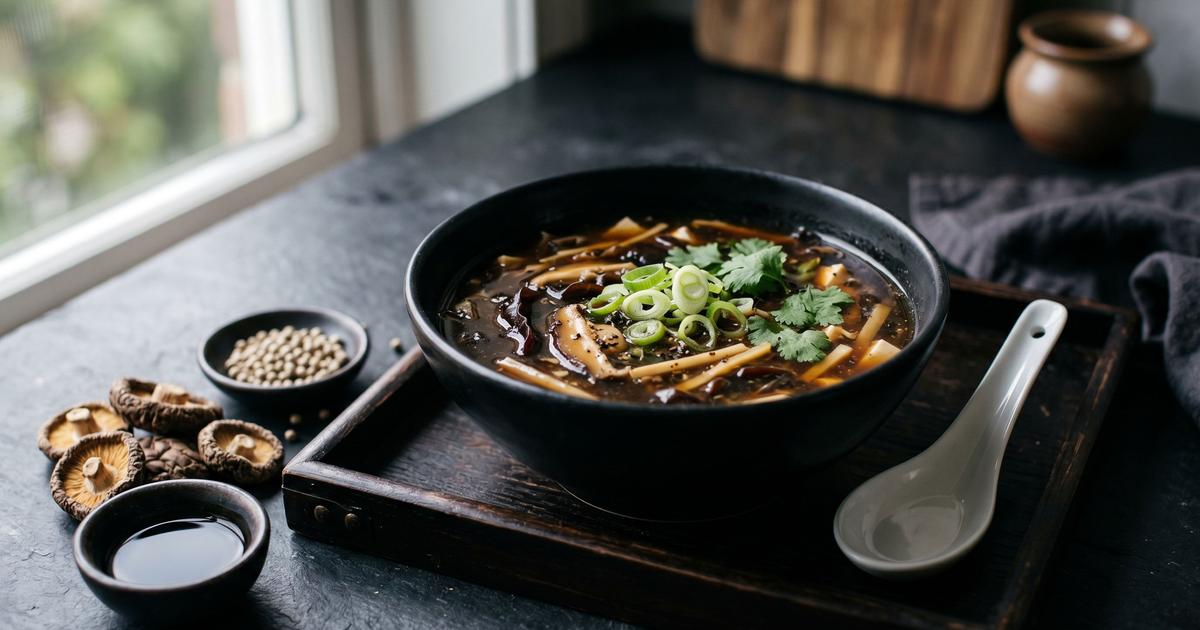
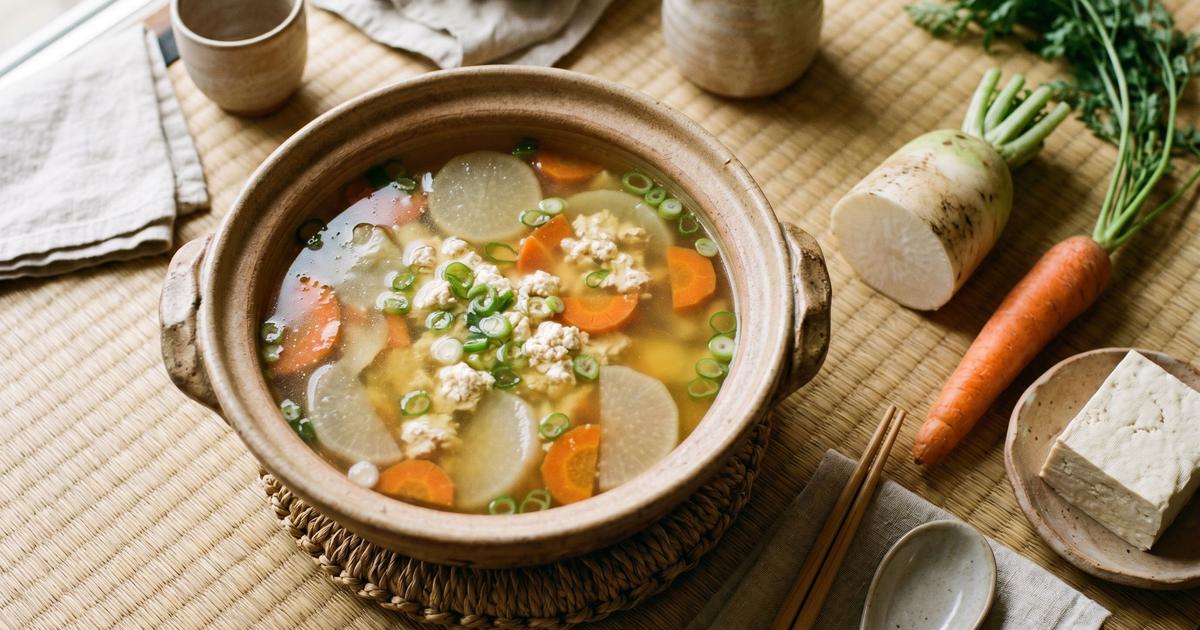
A pot of daikon simmered soft in a light broth is everyday comfort food across southern China, the kind of clear soup that rounds out a table of stronger dishes. The radish is the whole point: raw it is sharp and watery, but forty minutes in gentle heat turns it translucent and mild, almost sweet. Dried shiitake and a square of kombu build a savory backbone with no meat and no bouillon cube, and white pepper gives the warmth. It comes together in one pot with a few minutes of knife work, which makes it an easy weeknight soup that tastes like it took longer.
Ingredients
- 1 lb Daikon radish, about 450 g, peeled and cut into thick half-moons
- 4 pieces Dried shiitake
- 1 piece Kombu, 4-inch (10 cm) square
- 1 inch Ginger, about 2.5 cm, sliced
- 1 medium Carrots, cut into rounds
- 1 tsp no-salt vegetable bouillon
- 1/4 tsp White pepper
- 2 Scallions, sliced thin
Method
- Put the kombu and dried shiitake in a pot with 6 cups (1.4 L) cold water and heat slowly, pulling the kombu out just before the water boils. Kombu simmered at a rolling boil turns slick and bitter, so you steep it gently and remove it once its work is done.
- Lift out the softened shiitake, slice them, and return them to the pot along with the daikon, carrot, ginger, and no-salt bouillon. The mushroom and its soaking water are the backbone of the broth, standing in for the meat stock this soup is often built on.
- Simmer, partly covered, for 30 to 35 minutes until the daikon is translucent and a piece gives no resistance to a spoon. Daikon starts sharp and peppery and only turns sweet and silky after a long, quiet simmer, so do not rush this stretch.
- Season with the white pepper and scatter the scallions over each bowl. White pepper gives the soup its warm, faintly floral heat, and the shiitake and kombu carry enough savory depth that the pot needs no salt.
Nutrition
Estimated per serving: 45 calories, 2 g protein, 3 g fiber, 110 mg sodium. Computed from USDA FoodData Central reference values for the main ingredients. This is an approximation, not a laboratory measurement. How these are computed.
Cost per serving is estimated from US national-average retail prices for cheap staple forms, using BLS dried-bean prices and USDA produce prices. Prices vary by store and season, so treat it as a guide, not a receipt. How this is computed.