Leblebi, Turkish Roasted Chickpeas
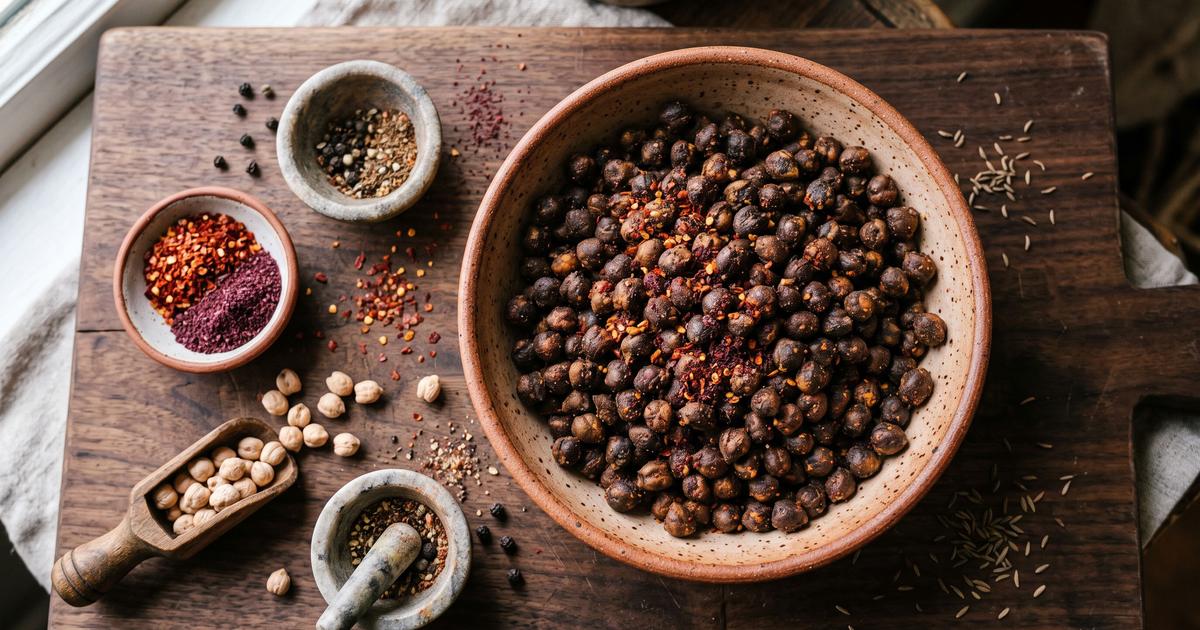
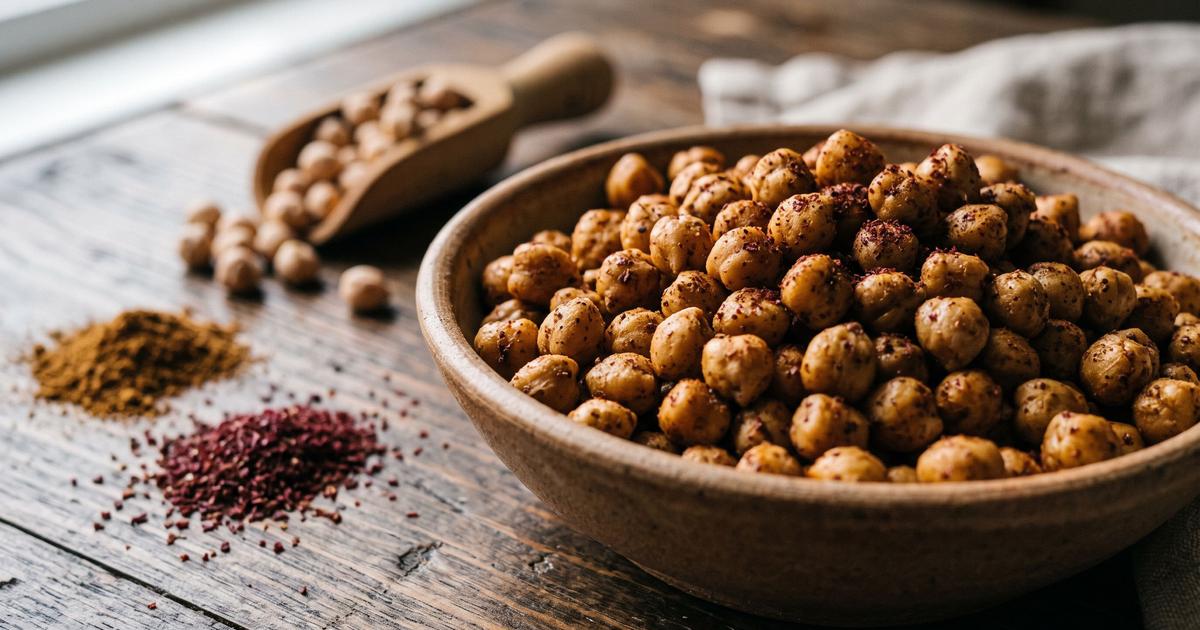
Leblebi are the roasted chickpeas sold from Turkish street carts and kept in bowls for snacking, dry and crunchy and eaten by the handful. The traditional product is double-roasted from special dried chickpeas over days, and this is the home shortcut: cooked chickpeas dried well and roasted hard in a hot oven until they rattle. The seasoning is Turkish and salt-free, fruity Aleppo pepper and tart sumac tossed on while the chickpeas are still hot so the spices cling. The one rule that decides whether they crunch or go leathery is drying them thoroughly before they go in, so do not skip the towel.
Ingredients
- 3 cups Chickpeas, cooked
- 1/2 tsp Cumin seed, toasted and ground
- 1 1/2 tsp Aleppo pepper, salt-free
- 1 tsp Sumac
Method
- Heat the oven to 400°F (200°C). Spread the cooked chickpeas on a clean towel and roll them around to dry them thoroughly, letting loose skins come off. Surface moisture is the enemy of crunch: any water left on the chickpeas turns to steam in the oven and leaves them leathery instead of crisp.
- Tip the dry chickpeas onto a bare sheet pan in a single layer and roast, shaking the pan every 10 minutes, until they are deep gold and rattle when the pan moves, 30 to 35 minutes. The long, dry roast is what separates leblebi from a soft bean: it drives out the interior moisture so they crunch all the way through.
- While they roast, toast the cumin seed in a dry pan until fragrant and grind it. Toasting whole seed first, rather than reaching for pre-ground, gives a rounder, nuttier cumin that stands up to the chickpeas.
- Tip the hot chickpeas into a bowl and toss at once with the cumin, Aleppo pepper, and sumac. Dressing them straight from the oven lets the spices grip the warm, slightly oily surface of the chickpea. Use a salt-free Aleppo pepper so the sumac's tartness, not salt, carries the seasoning. Cool before storing so they stay crunchy.
Nutrition
Estimated per serving: 150 calories, 7 g protein, 6 g fiber, 20 mg sodium. Computed from USDA FoodData Central reference values for the main ingredients. This is an approximation, not a laboratory measurement. How these are computed.
Cost per serving is estimated from US national-average retail prices for cheap staple forms, using BLS dried-bean prices and USDA produce prices. Prices vary by store and season, so treat it as a guide, not a receipt. How this is computed.