Piyaz, Turkish White Bean Salad
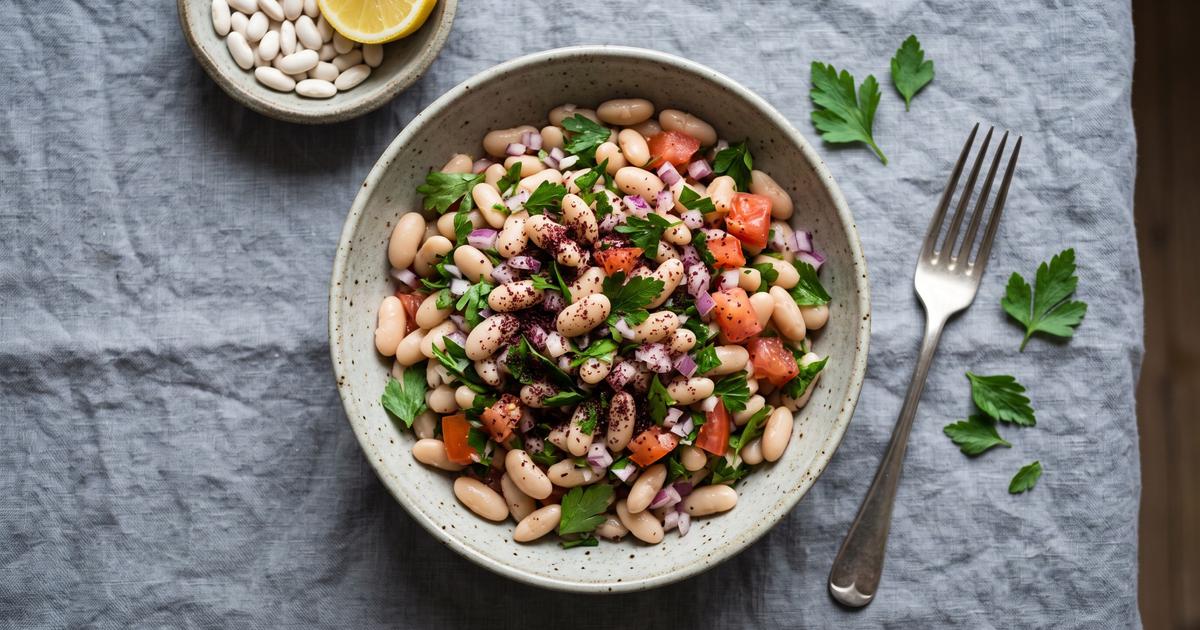
Piyaz is the bean salad that fills out a Turkish table of small plates, and the version here leans on sumac to do what salt usually does. Rubbed into raw onion, sumac's tartness strips away the sulfur bite and leaves the sweetness behind, no soaking required. Dress the beans while they are still a little warm so they pull the lemon and vinegar into their centers. Serve it at room temperature with tomatoes and whole-grain bread, or spoon it over greens for a fuller lunch.
Ingredients
- 1 1/2 cups Cannellini beans, cooked and cooled, from about 0.66 cup dried, or one 15 oz can, drained and rinsed
- 1/2 whole Red onions, cut into thin half-moons
- 1 1/2 tsp Sumac
- 2 wholes Fresh tomatoes, cut into thin wedges
- 1/2 cup Flat-leaf parsley, chopped
- 3 tbsp Lemon juice, fresh
- 1 tbsp Red wine vinegar
Method
- Toss the sliced onion with the sumac in a bowl and let it sit for 10 minutes. The sumac's acid draws out the onion's harshness and dyes the slices pink, which is why Turkish cooks reach for it here instead of salt.
- Warm the beans slightly, or use them at room temperature, never cold from the fridge. A cold bean is a bland bean, and warm ones drink up the dressing.
- Add the beans, tomato wedges, and parsley to the sumac onion. Use the parsley by the half cup, as a vegetable and not a garnish. It carries most of the fresh flavor.
- Dress with the lemon juice and red wine vinegar and fold gently so the beans stay whole. Two acids do more than one: lemon for brightness, vinegar for a rounder background note that reads as savory.
- Rest the salad for 10 minutes before serving so the beans absorb the dressing. It is better after an hour and keeps for two days, making it a true make-ahead dish.
Nutrition
Estimated per serving: 185 calories, 9 g protein, 8 g fiber, 30 mg sodium. Computed from USDA FoodData Central reference values for the main ingredients. This is an approximation, not a laboratory measurement. How these are computed.
Cost per serving is estimated from US national-average retail prices for cheap staple forms, using BLS dried-bean prices and USDA produce prices. Prices vary by store and season, so treat it as a guide, not a receipt. How this is computed.