Acılı Ezme, Turkish Spicy Tomato Relish
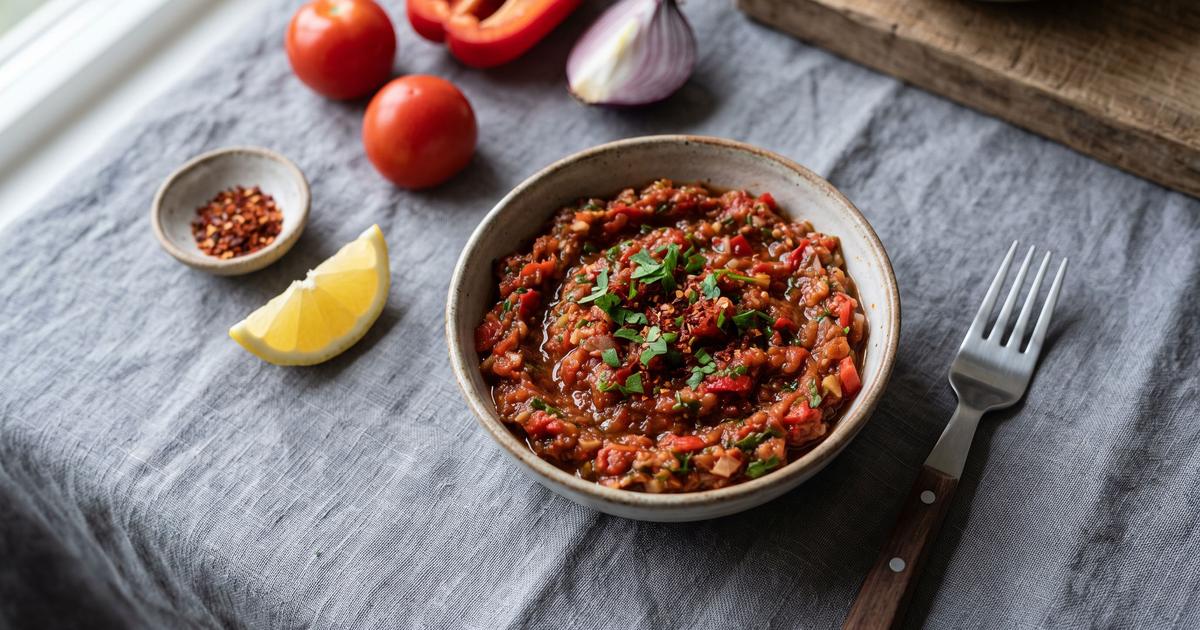
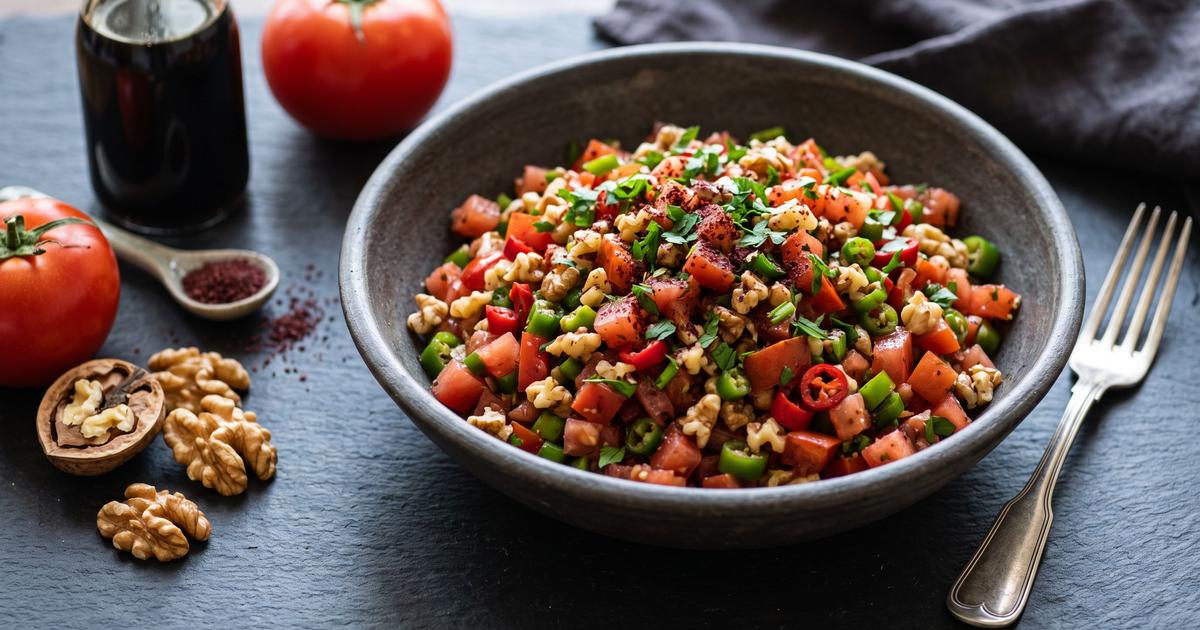
Acılı ezme is the fiery red relish that lands on the table before a Turkish kebab, meant to be scooped with bread or spooned over anything grilled. Restaurant versions lean on oil, but the dish does not need it: ripe tomato, red pepper, and onion crushed fine give up enough of their own juice to bind, and the seasoning comes from two acids, tart pomegranate molasses and lemon, plus a heavy hand of fruity Aleppo pepper. A little walnut adds body and a faint richness. Use the salt-free Aleppo pepper, check the pomegranate molasses for added sugar, and let it sit a few minutes so the flavors marry before you serve it.
Ingredients
- 3 wholes Fresh tomatoes, ripe, seeded and very finely chopped
- 1 whole Bell peppers, red, seeded and finely chopped
- 1/2 whole Red onions, very finely chopped
- 1 clove Garlic, grated
- 1/2 cup Flat-leaf parsley, finely chopped
- 3 tbsp Walnuts, toasted and finely chopped
- 1 tbsp Pomegranate molasses, check the label for added sugar
- 2 tbsp Lemon juice, fresh
- 1 1/2 tsp Aleppo pepper, salt-free
- 1/2 tsp Cumin seed, toasted and ground
Method
- Chop the tomatoes, pepper, and onion as finely as you have patience for, almost to a mince. Ezme means crushed, and the texture should be a coarse spoonable relish, not a chunky salad.
- Seed the tomatoes before chopping and let the mince sit in a strainer for 5 minutes. Draining the tomato water keeps the relish thick enough to hold on bread instead of turning into a puddle.
- Combine everything in a bowl and work it together with the back of a spoon to bruise the vegetables and release their juice. Crushing rather than just stirring is what melds the flavors and gives ezme its jammy body without any oil.
- Let it rest 10 minutes before serving so the onion mellows and the Aleppo pepper softens into the tomato. Taste and adjust with more lemon or pomegranate molasses; the two acids, not salt, are what make it pop.
Nutrition
Estimated per serving: 70 calories, 2 g protein, 2 g fiber, 15 mg sodium. Computed from USDA FoodData Central reference values for the main ingredients. This is an approximation, not a laboratory measurement. How these are computed.
Cost per serving is estimated from US national-average retail prices for cheap staple forms, using BLS dried-bean prices and USDA produce prices. Prices vary by store and season, so treat it as a guide, not a receipt. How this is computed.