Havuç Tarator, Turkish Carrot and Walnut Yogurt Meze

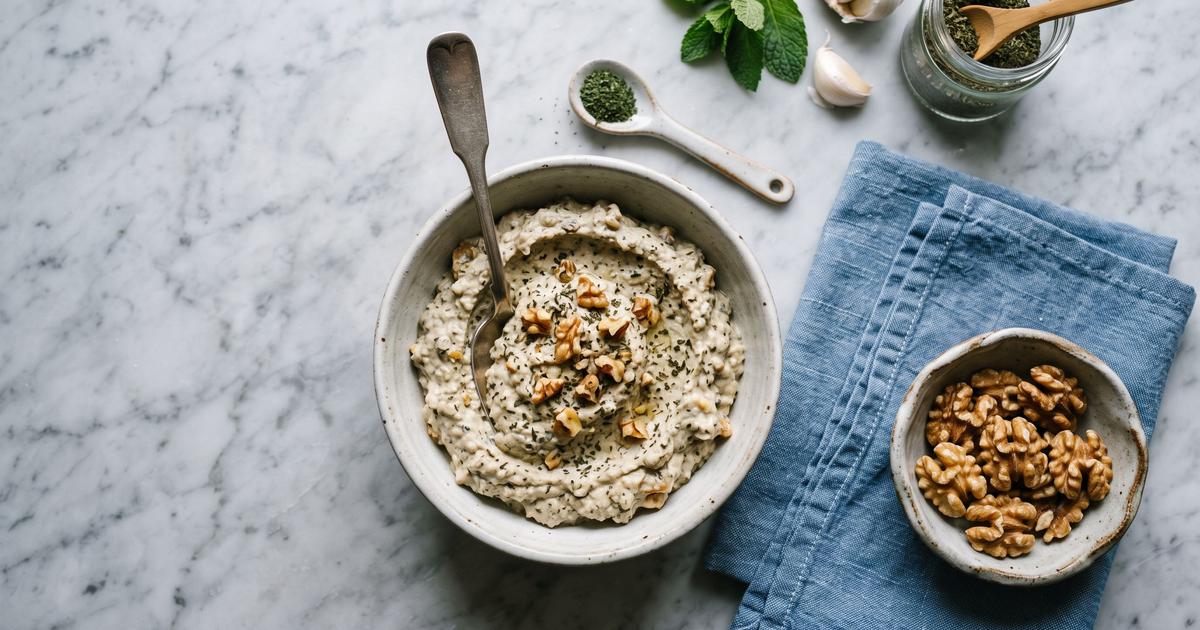
Havuç tarator is the carrot cousin of the yogurt mezes that cover a Turkish table. Grated carrot is softened first, not left raw, because gentle cooking turns it sweet and takes off the hard edge, and it is done here in a covered pan with a splash of water rather than the usual oil. Let the carrot cool completely before it meets the yogurt, or the heat will split it. Thick plant yogurt, a little raw garlic, toasted walnuts, and dried mint rubbed between the palms finish it. The walnuts do the job oil would, folding richness through each spoonful. Serve it cold alongside anything grilled or as one dish among several small plates.
Ingredients
- 4 wholes Carrots (cooking), grated
- 1 clove Garlic, grated
- 1 cup Plain plant yogurt, unsweetened, thick
- 1/3 cup Walnuts, toasted and chopped
- 1 tsp Dried mint
- 1 tbsp Lemon juice
Method
- Cook the grated carrot in a covered dry pan with 2 tbsp water over low heat until soft and sweet, about 8 minutes, stirring once or twice. Softening the carrot first takes off its raw, hard edge and coaxes out its sugar, and steaming it under a lid does that with no oil.
- Spread the carrot on a plate and let it cool completely. Warm carrot stirred into yogurt will thin and split it, so this wait is not optional.
- Stir the grated garlic into the yogurt, then fold in the cooled carrot. Raw garlic added straight to the cold yogurt stays sharp and bright the way this meze wants.
- Top with the toasted walnuts and the dried mint rubbed between your palms, and squeeze over the lemon. The walnuts fold in the richness oil would, and the mint and lemon season it in place of salt.
Nutrition
Estimated per serving: 130 calories, 4 g protein, 3 g fiber, 40 mg sodium. Computed from USDA FoodData Central reference values for the main ingredients. This is an approximation, not a laboratory measurement. How these are computed.
Cost per serving is estimated from US national-average retail prices for cheap staple forms, using BLS dried-bean prices and USDA produce prices. Prices vary by store and season, so treat it as a guide, not a receipt. How this is computed.