Barbunya Pilaki, Turkish Stewed Cranberry Beans
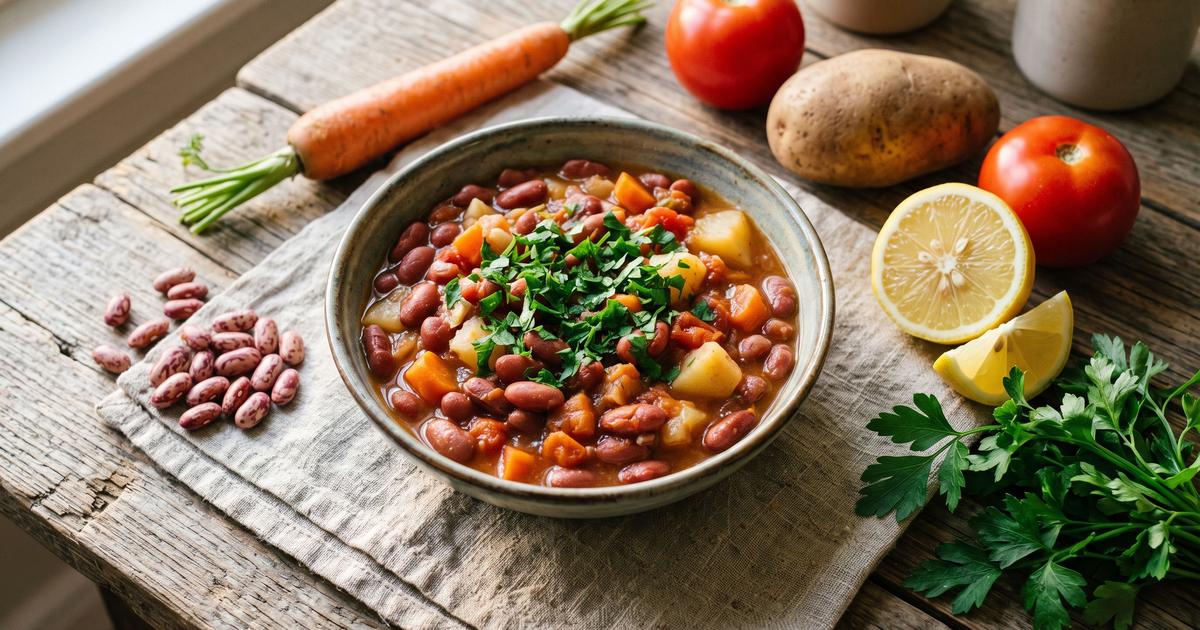
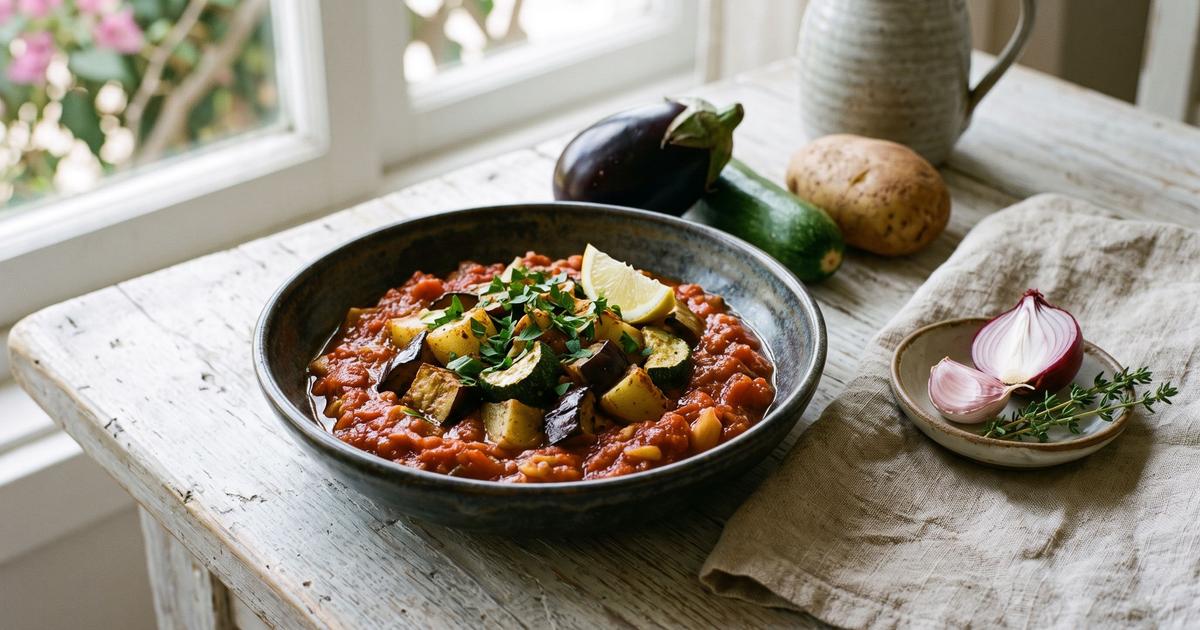
Pilaki is the Turkish way with beans: simmered with vegetables, cooled, and eaten at room temperature as a meze, never hot. Barbunya are cranberry beans, the pink-streaked pods of late summer; pinto beans are the closest easy stand-in and behave the same way in the pot. The dish is usually built on olive oil, but a well-toasted spoon of tomato paste and long, gentle cooking give it the same rounded savor with none poured in. Make it a day ahead. It is better cold the next afternoon, with a fresh squeeze of lemon and plenty of parsley.
Ingredients
- 1 1/2 cups Pinto beans, cooked and drained
- 1 whole Yellow onions, diced
- 3 cloves Garlic, sliced
- 2 wholes Carrots (cooking), diced
- 1 whole Potatoes, diced
- 1 tbsp Tomato paste
- 1 cup Canned crushed tomatoes, no-salt-added
- 1 whole Bay leaves
- 1/2 cup Flat-leaf parsley, chopped
- 2 tbsp Lemon juice
Method
- Sweat the onion and garlic in a pot with a few tablespoons of water until soft, about 8 minutes.
- Push them aside and toast the tomato paste in the bare pot until it darkens to brick red, about 2 minutes. That caramelized paste is where the savory depth comes from in a dish with no meat and no salt.
- Add the carrot, potato, crushed tomatoes, bay leaf, beans, and enough water to just cover. Simmer, partly covered, 30 to 35 minutes until the vegetables are soft and the sauce has thickened. Grated sweetness from the carrot stands in for the traditional pinch of sugar.
- Cool the pot completely, then chill. Pilaki is always served cold, and the rest lets the flavors settle while the starch from the potato sets the sauce into a light gel.
- Just before serving, stir through the lemon juice and parsley. The lemon goes in cold and last so it stays bright and does the seasoning work in place of salt.
Nutrition
Estimated per serving: 210 calories, 10 g protein, 9 g fiber, 60 mg sodium. Computed from USDA FoodData Central reference values for the main ingredients. This is an approximation, not a laboratory measurement. How these are computed.
Cost per serving is estimated from US national-average retail prices for cheap staple forms, using BLS dried-bean prices and USDA produce prices. Prices vary by store and season, so treat it as a guide, not a receipt. How this is computed.