Kongnamul-bap (Soybean Sprout Rice)
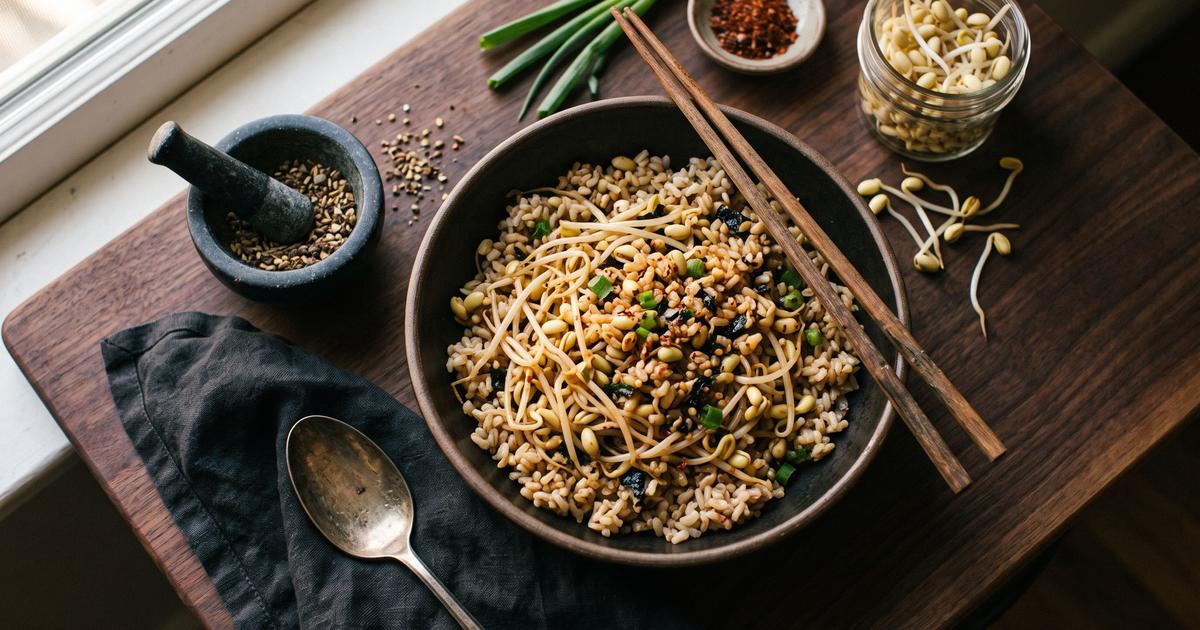
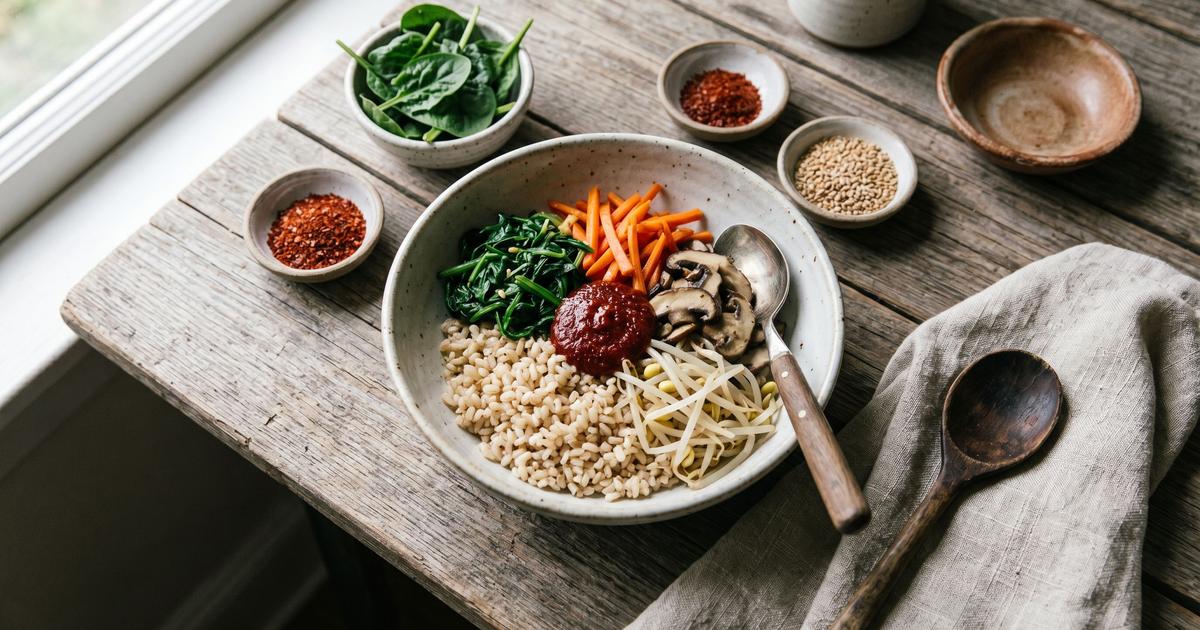
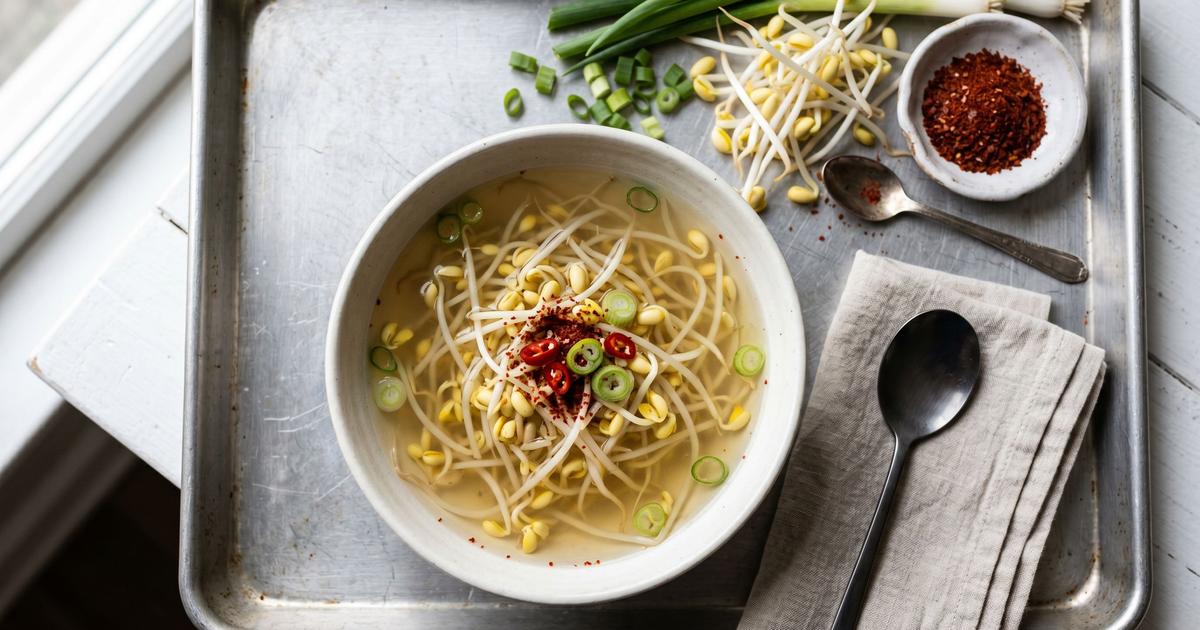
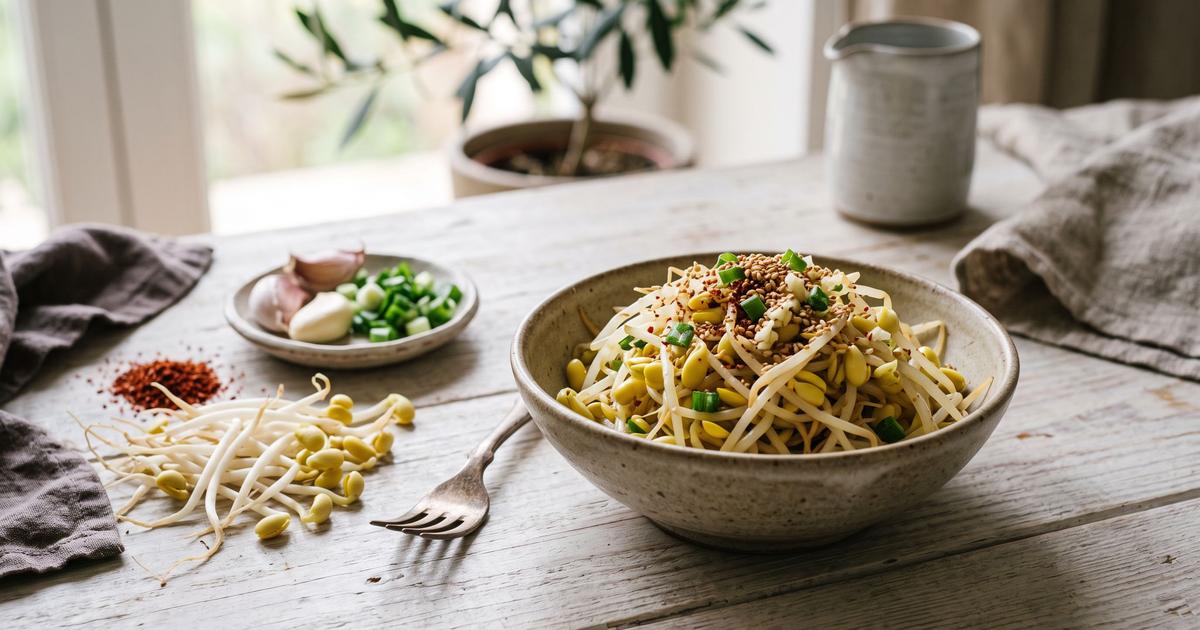
Kongnamul-bap is Korean comfort food at its most economical: rice and soybean sprouts cooked together in a single pot, then dressed with a spoonful of sauce. Soybean sprouts, thicker and nuttier than mung bean sprouts, cook by steam if you layer them on top of the rice instead of stirring them in, which keeps their heads crisp and their tails snappy. The rice and sprouts go in completely unseasoned; all the salt lives in the yangnyeomjang served alongside, so each eater controls it by how much they spoon on. That is the honest way to keep a soy-seasoned dish from turning into a salt bomb.
Ingredients
- 1 1/2 cups short grain brown rice, rinsed until the water runs clear
- 4 cups Soybean sprouts, about 10 oz (280g), rinsed, any loose husks picked off
- 1 medium Carrots, cut into fine matchsticks
- 2 tbsp Low-sodium tamari
- 1 tbsp Gochugaru
- 1 clove Garlic, grated
- 3 pieces Scallions, thinly sliced
- 1 tsp unseasoned rice vinegar
- 1 tbsp Sesame seeds, toasted
Method
- Rinse the rice until the water runs clear, then combine it with 2 cups (480 ml) water in a heavy pot with a tight lid. Brown rice needs slightly less water here than usual, because the sprouts release their own as they steam.
- Scatter the carrots over the rice, then pile the soybean sprouts on top in an even layer. Do not stir them in. Keeping the sprouts up top lets them steam over the cooking rice rather than boil in it, so they stay crunchy and keep their nutty bean heads intact.
- Bring to a boil over high heat, then drop to the lowest flame, cover, and cook 40 minutes without lifting the lid. Peeking lets out the steam that is cooking the sprouts. Pull the pot off the heat and let it rest, still covered, 10 minutes.
- While the rice rests, stir together the tamari, gochugaru, garlic, scallions, rice vinegar, and sesame seeds with 1 tablespoon (15 ml) water. This yangnyeomjang is the seasoning for the whole dish: the rice and sprouts underneath cook completely plain.
- Uncover, fold the sprouts down through the rice, and serve in bowls. Spoon the sauce over each portion and let everyone toss their own, so the tamari seasons at the table and no bowl ends up salty. Start with half the sauce; it is easy to add more.
Nutrition
Estimated per serving: 300 calories, 13 g protein, 6 g fiber, 300 mg sodium. Computed from USDA FoodData Central reference values for the main ingredients. This is an approximation, not a laboratory measurement. How these are computed.
Cost per serving is estimated from US national-average retail prices for cheap staple forms, using BLS dried-bean prices and USDA produce prices. Prices vary by store and season, so treat it as a guide, not a receipt. How this is computed.