Kaeng Liang, Thai Peppery Vegetable Soup
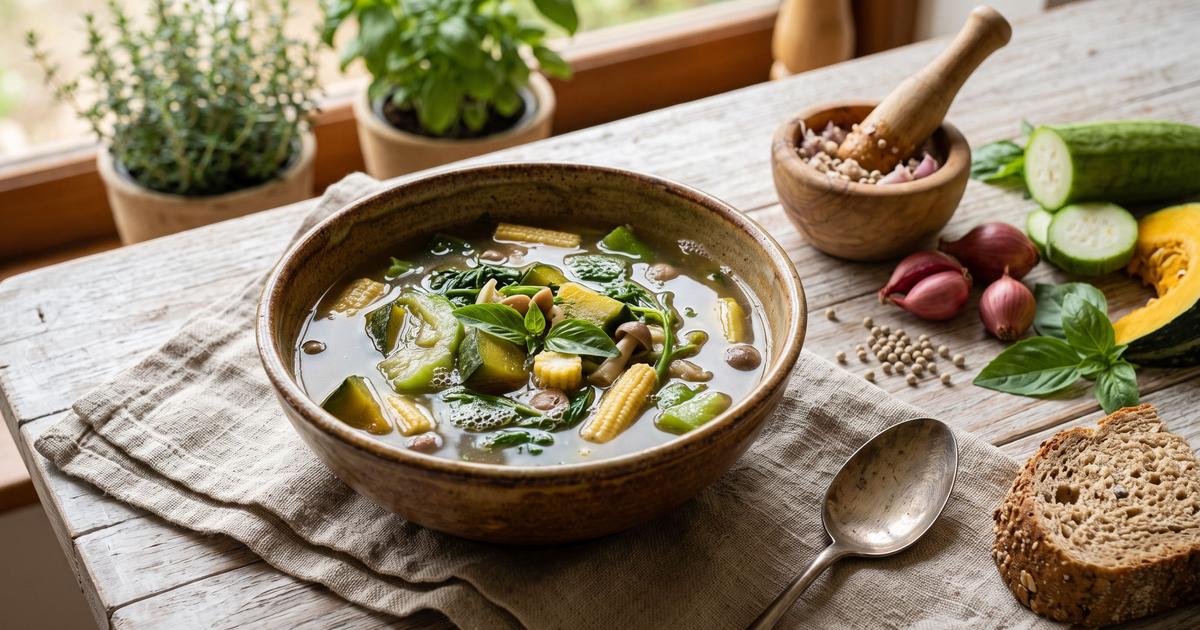
Kaeng liang predates the coconut curries most people picture when they think of Thai soup. It leans on a pounded paste of shallots and white pepper thinned into a clear broth, filled with whatever the season offers. Lemon basil is traditional at the finish; Thai basil stands in with its own anise edge. White miso and soaked shiitake carry the savory depth that fermented seafood usually provides, so the soup tastes complete without fish sauce or salt.
Ingredients
- 5 Dried shiitakes, soaked in 1 cup (240 ml) hot water
- 3 Shallots, peeled
- 1 tsp White pepper
- 1 tbsp White miso
- 1 tsp no-salt vegetable bouillon
- 2 cups Butternut squash, peeled, 1-inch (2.5 cm) cubes
- 6 oz Long beans, cut into 2-inch (5 cm) lengths
- 1 Zucchini, halved lengthwise and sliced into half-moons
- 1 cup Frozen corn
- 1 cup Thai basil, leaves picked
Method
- Soak the dried shiitake in 1 cup (240 ml) hot water for 15 minutes, until soft. Lift them out, slice off and discard the tough stems, and slice the caps. Keep every drop of the soaking liquid: it is a free, dark mushroom stock and the backbone of the broth.
- In a mortar, pound the shallots, white pepper, two of the sliced shiitake caps, and the miso into a coarse paste. This paste replaces the shrimp paste and dried shrimp of the traditional version. The white pepper is not optional here; it is the defining flavor of the soup, floral and warming rather than sharp.
- Scrape the paste into a pot with 4 cups (950 ml) water, the reserved shiitake liquid poured in carefully to leave any grit behind, and the no-salt bouillon. Bring to a gentle boil.
- Add the squash and the remaining sliced shiitake. Simmer for 10 minutes, until the squash is nearly tender. The squash melting slightly at the edges is what thickens the broth, so let a few pieces break down.
- Add the long beans, zucchini, and corn. Simmer 5 minutes more, until everything is just tender. Cook the vegetables in this order because the beans need the longest and the zucchini the least.
- Turn off the heat and stir in the Thai basil, which wilts in the residual warmth. Taste, and add a pinch more white pepper if the broth feels flat. Serve hot in deep bowls over a scoop of brown rice, or on its own.
Nutrition
Estimated per serving: 130 calories, 6 g protein, 5 g fiber, 180 mg sodium. Computed from USDA FoodData Central reference values for the main ingredients. This is an approximation, not a laboratory measurement. How these are computed.
Cost per serving is estimated from US national-average retail prices for cheap staple forms, using BLS dried-bean prices and USDA produce prices. Prices vary by store and season, so treat it as a guide, not a receipt. How this is computed.