Khao Tom, Thai Rice Soup
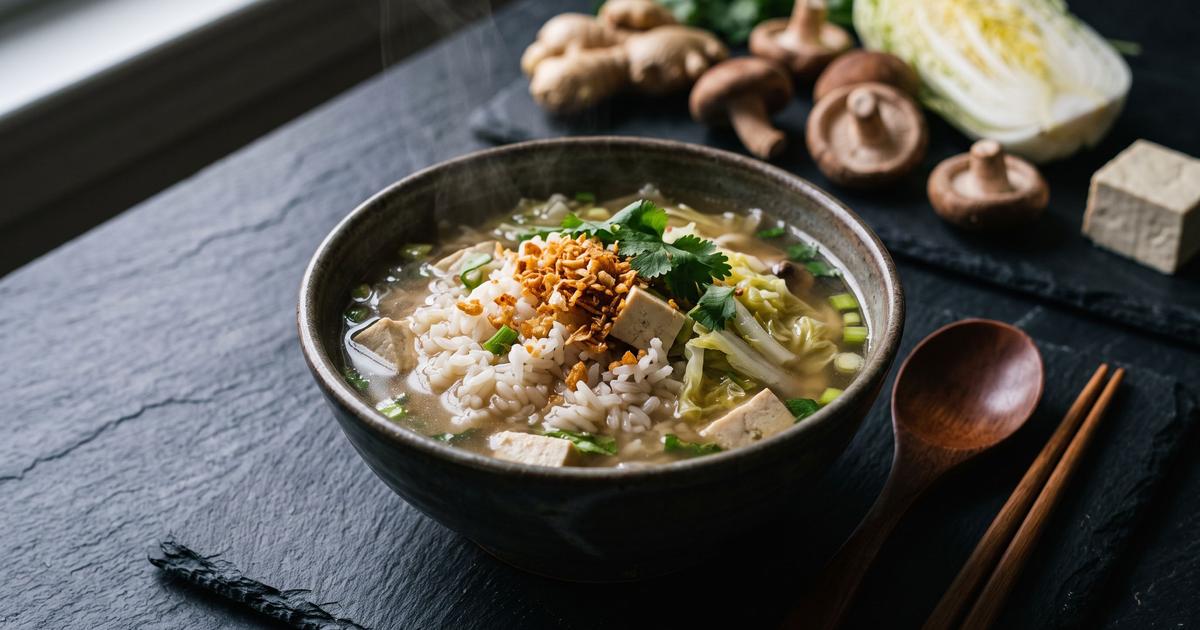
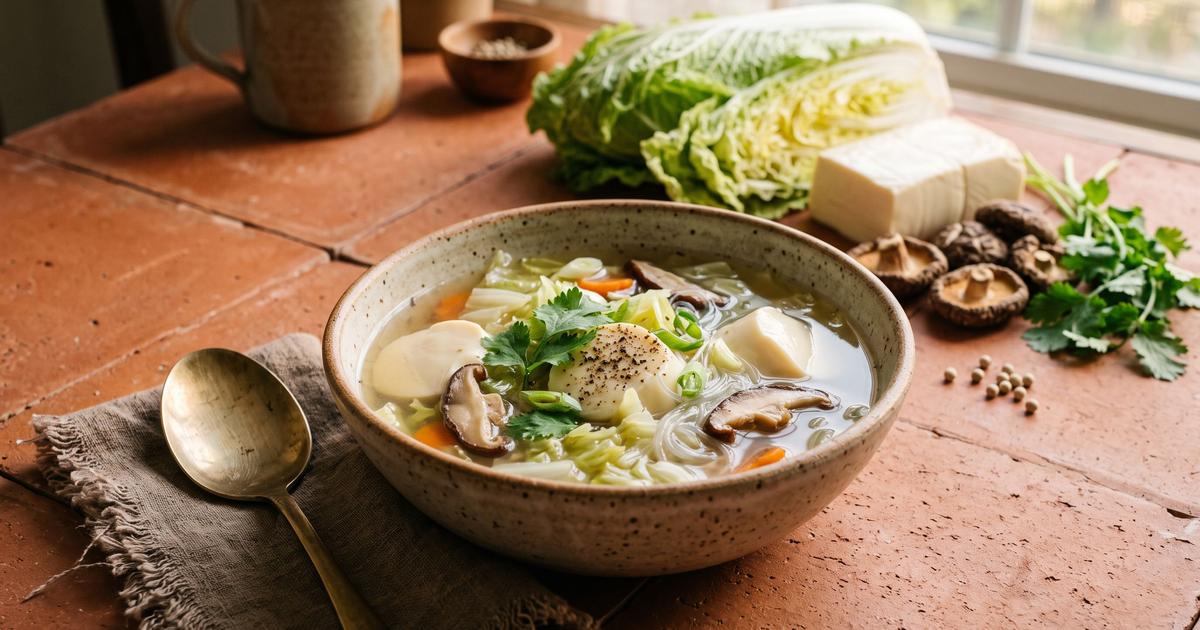
Khao tom is the Thai morning bowl, a clean rice soup eaten when something heavier would be too much: after a late night, on a hot day, or when someone is unwell. Unlike congee, the rice stays whole and the broth stays thin, so the flavor rests on the aromatics rather than the starch. Dried shiitake and their soaking water do the seasoning that fish sauce and stock cubes usually would, and a scatter of dry-fried garlic on top carries most of the character. Use cold day-old rice so the grains hold their shape in the broth.
Ingredients
- 3 cups long grain brown rice, cooked and cooled, day-old preferred
- 5 cups no-salt vegetable bouillon, prepared into broth
- 3 Dried shiitakes, soaked in 1 cup (240 ml) hot water, sliced, soaking liquid reserved
- 7 oz Firm tofu, cut into small cubes
- 2 cups Napa cabbage, sliced into ribbons
- 2 tbsp Ginger, peeled and julienned
- 4 cloves Garlic, 2 minced, 2 thinly sliced
- 3 Scallions, sliced
- 1/4 cup Cilantro, chopped
- 1/4 tsp White pepper
- 1 Lime, cut into wedges
Method
- Soak the dried shiitake in the hot water until soft, about 15 minutes, then slice them and keep the dark soaking liquid. That liquid is a free savory stock, and it is what lets this soup taste seasoned without salt.
- Crisp the sliced garlic first: put it in a cold dry pan, bring the heat up slowly, and stir until it turns pale gold, about 3 minutes. Tip it onto a plate at once, because it goes from gold to burnt in seconds. This is the fried-garlic garnish that defines the bowl.
- In a pot, combine the no-salt broth, the shiitake and their strained soaking liquid, the ginger, and the minced garlic. Bring to a simmer and cook 5 minutes so the ginger perfumes the broth.
- Add the tofu, cabbage, and cooked rice. Simmer 6 to 8 minutes, just until everything is hot and the cabbage wilts. The rice should stay in loose separate grains, which is what makes this khao tom and not a thick congee.
- Kill the heat and stir in the white pepper. White pepper, not black, is the warm background note Thai rice soups are built on.
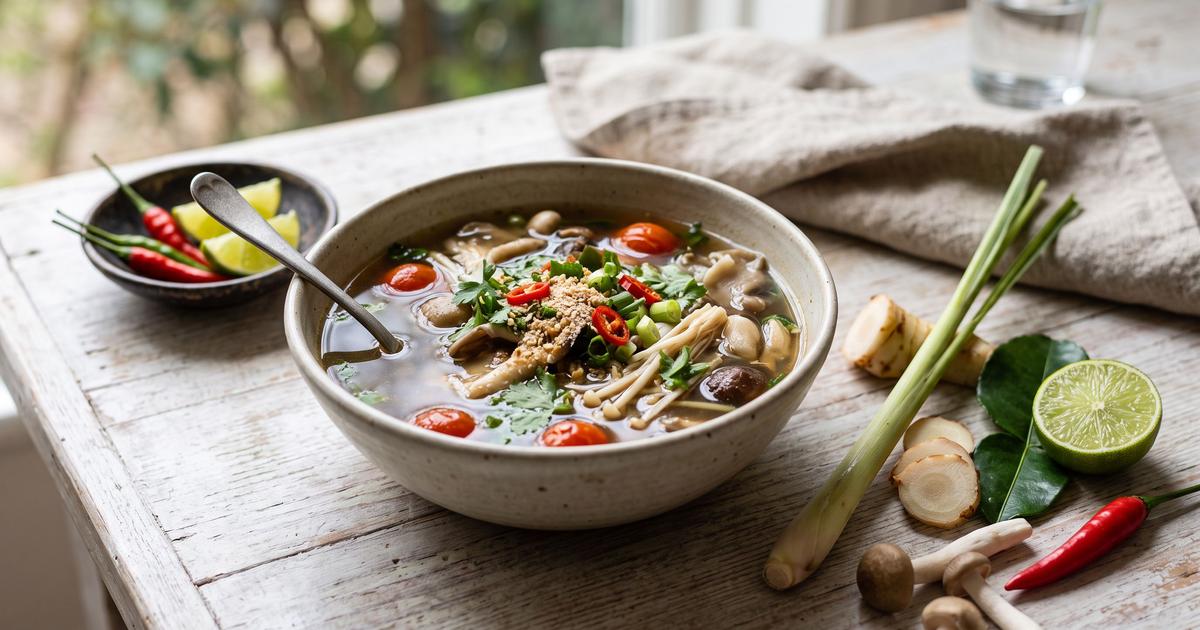
- Ladle into bowls and top with scallion, cilantro, the crisp garlic, and a lime wedge to squeeze in at the table. The raw aromatics and acid go on last so they stay bright against the mild broth.
Nutrition
Estimated per serving: 230 calories, 12 g protein, 5 g fiber, 95 mg sodium. Computed from USDA FoodData Central reference values for the main ingredients. This is an approximation, not a laboratory measurement. How these are computed.
Cost per serving is estimated from US national-average retail prices for cheap staple forms, using BLS dried-bean prices and USDA produce prices. Prices vary by store and season, so treat it as a guide, not a receipt. How this is computed.