Tom Sap Het, Isan Sour Mushroom Soup
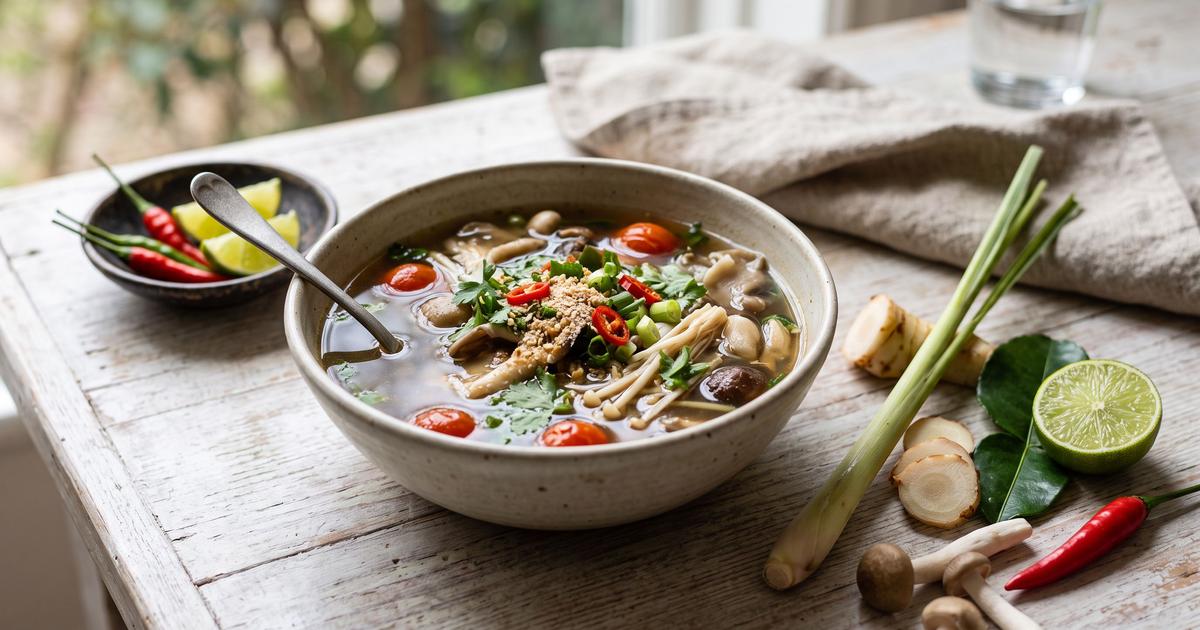
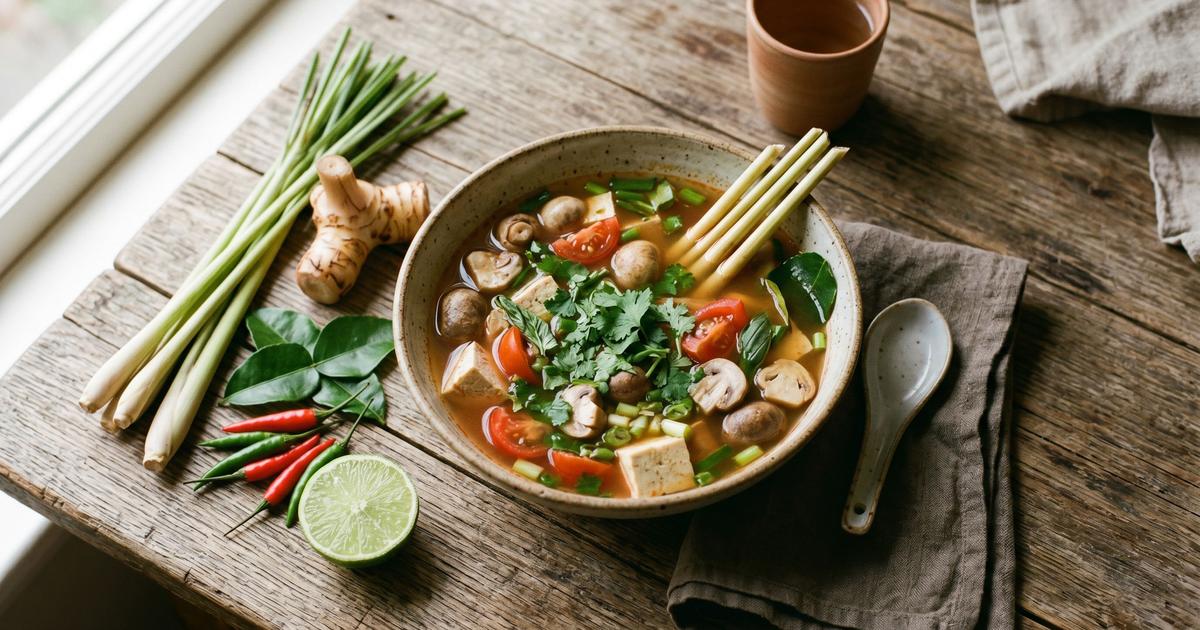
Tom sap is the sour soup of Isan, the northeastern corner of Thailand, close kin to tom yum but leaner and herbier: no chile paste, no coconut, and a spoonful of toasted rice powder stirred in at the end. Here mushrooms stand in for the offal or bones the soup is often built on, both the dried shiitake that flavor the broth and fresh creminis simmered until they give up their savor. Lemongrass, galangal, and makrut lime leaf carry the aroma, lime and tamari the sour-salty edge, and bird chiles the heat. The khao khua, raw rice toasted dark and ground, is not optional; it is what makes the broth taste roasted and rounds the sourness. Serve it very hot.
Ingredients
- 4 Dried shiitakes, rinsed
- 4 cups Cremini mushrooms, quartered
- 2 stalks Lemongrass, bruised and cut into lengths
- 6 slices Galangal
- 5 Makrut lime leaves, torn
- 3 Shallots, smashed
- 3 Thai bird chiles, crushed
- 1 tbsp long grain brown rice, toasted dark and ground to powder
- 3 tbsp Lime juice
- 1 tbsp Low-sodium tamari
- 3 tbsp Cilantro, chopped
- 2 tbsp Scallions, sliced
Method
- Simmer 5 cups (1.2 L) water with the dried shiitake, lemongrass, galangal, torn lime leaves, and smashed shallots for 15 minutes. Steeping the aromatics first builds a fragrant broth with no oil and no bouillon; the dried shiitake give it a savory backbone.
- Add the fresh mushrooms and simmer 8 minutes until tender. They give up their own savor into the broth as they soften, which is most of the depth here.
- Take the pot off the heat before adding the lime juice and tamari. Lime added off the heat stays bright and sharp; boiled, it turns dull and flat.
- Stir in the toasted rice powder, then finish with the crushed chile, cilantro, and scallion. The khao khua thickens the broth just slightly and adds the nutty, roasted aroma that marks a soup as Isan rather than central Thai. It should taste sour and hot before anything else.
Nutrition
Estimated per serving: 70 calories, 5 g protein, 3 g fiber, 200 mg sodium. Computed from USDA FoodData Central reference values for the main ingredients. This is an approximation, not a laboratory measurement. How these are computed.
Cost per serving is estimated from US national-average retail prices for cheap staple forms, using BLS dried-bean prices and USDA produce prices. Prices vary by store and season, so treat it as a guide, not a receipt. How this is computed.