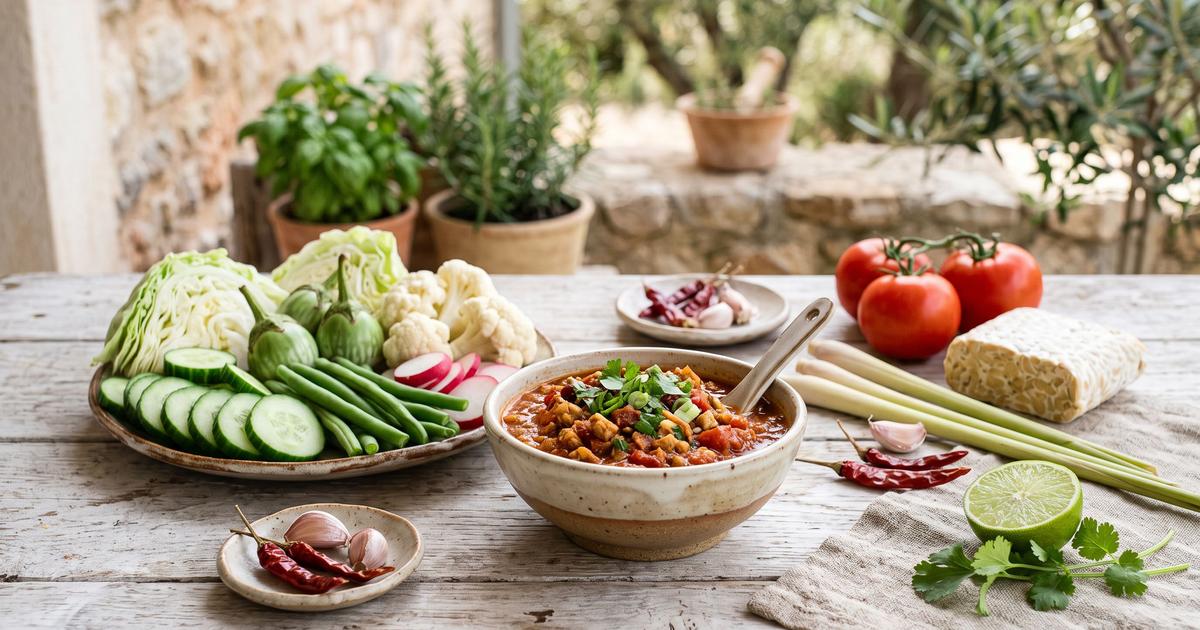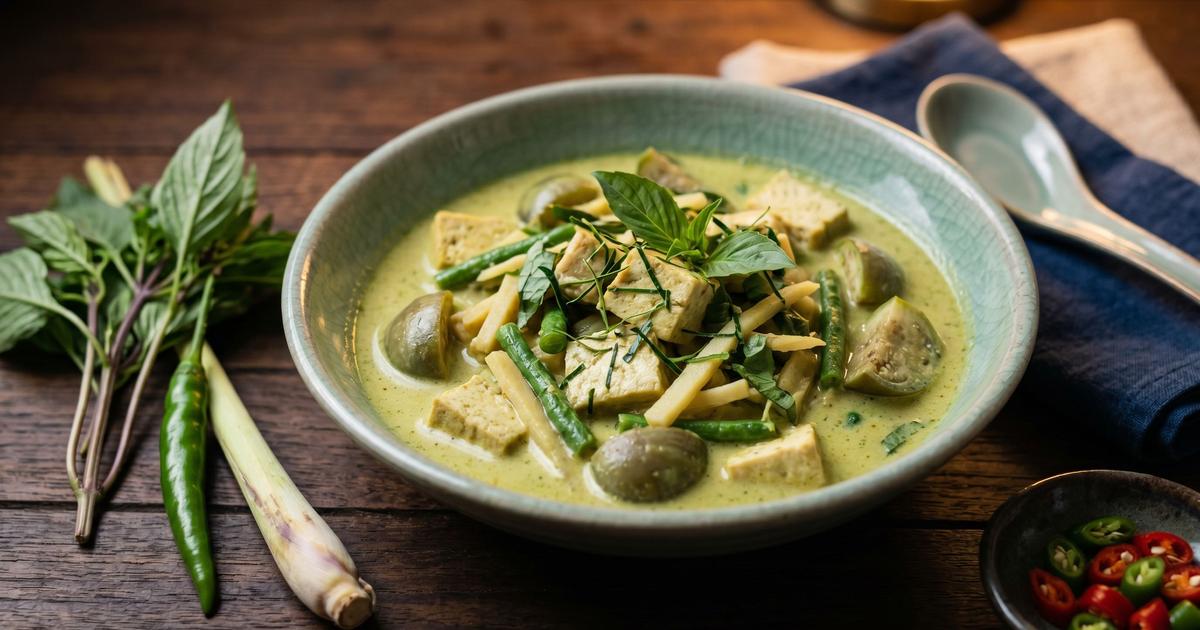
Gaeng Som, Thai Sour Tamarind Vegetable Soup

Gaeng som is a central Thai sour soup, thin and fiercely tart, built on a pounded paste of dried chile, shallot, and turmeric rather than the coconut milk of the curries it is often grouped with. The sourness is tamarind, the savory backbone here comes from a little tamari standing in for shrimp paste, and a single date rounds the edge where palm sugar usually would. Any firm vegetables work: daikon and cauliflower hold the broth, green beans and cabbage go in at the end for snap. Because the paste carries the dish, it cooks straight into the water with no frying step and no oil. Serve it very hot over brown rice, and lean the seasoning sharp; gaeng som is meant to wake the whole meal up.
Ingredients
- 4 Dried Thai chiles, soaked in hot water and stemmed
- 3 Shallots, peeled
- 3 cloves Garlic
- 1 tsp Turmeric
- 1 tbsp Low-sodium tamari
- 2 tbsp Tamarind paste
- 1 Deglet noor date, pitted
- 1 cup Daikon radish, peeled and sliced into half-moons
- 2 cups Cauliflower, small florets
- 1 cup Green beans, cut into 2-inch (5 cm) lengths
- 2 cups green cabbage, cut into wide ribbons
Method
- Pound or blend the soaked chiles, shallots, garlic, and turmeric into a rough paste with a splash of their soaking water. This paste is the whole flavor base of gaeng som, so there is no oil to fry it in; it will cook directly in the broth instead.
- Bring 5 cups (1.2 L) water to a boil and whisk in the paste, the tamari, tamarind, and minced date. Simmer 5 minutes so the raw chile softens and the four flavors of the broth, sour and salty and sweet and hot, come into balance before any vegetable goes in.
- Add the daikon and simmer 6 to 8 minutes until it turns translucent at the edges, because it is the slowest vegetable and sets the timing for everything else.
- Add the cauliflower, green beans, and cabbage and cook just 4 to 5 minutes, until crisp-tender. Taste and adjust: more tamarind for sour, a few drops more tamari for depth. The broth should read sharp and lively, not mellow.
Nutrition
Estimated per serving: 75 calories, 3 g protein, 5 g fiber, 220 mg sodium. Computed from USDA FoodData Central reference values for the main ingredients. This is an approximation, not a laboratory measurement. How these are computed.
Cost per serving is estimated from US national-average retail prices for cheap staple forms, using BLS dried-bean prices and USDA produce prices. Prices vary by store and season, so treat it as a guide, not a receipt. How this is computed.