Goguma Mattang, Date-Glazed Sweet Potato
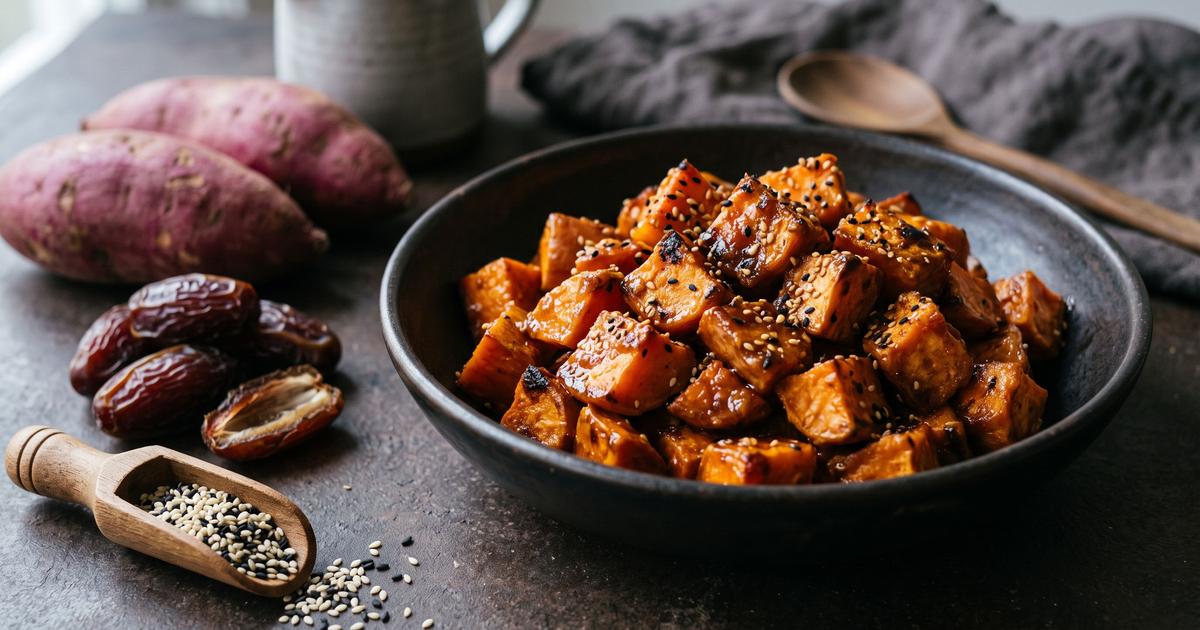
Goguma mattang is a Korean street and home snack of sweet potato in a glassy sugar glaze, the kind of sweet bite that blurs the line between snack and dessert. The traditional method deep-fries the cubes and then coats them in molten sugar. This version roasts them dry until the edges caramelize on their own, then glazes them in a syrup made only from blended dates, so it keeps the sticky, sweet character with no oil and no added sugar. Toasted sesame gives the finish its crunch and nutty aroma. It travels well to a potluck, though it is best eaten while the glaze is still warm.
Ingredients
- 1 1/2 lb Sweet potatoes, about 680 g, peeled and cut into 1-inch (2.5 cm) cubes
- 5 pieces Medjool dates, pitted
- 1 tbsp Sesame seeds, toasted, black and white if you have both
Method
- Spread the sweet potato cubes on a sheet pan and roast at 425F (220C) for 25 to 30 minutes, turning once, until the edges are deep brown and a fork slides in easily. Dry roasting at high heat drives off water and caramelizes the natural sugars at the corners, which is the flavor the deep-fried original is chasing.
- While they roast, blend the dates with 3 tablespoons (45 ml) water into a thick, pourable syrup. Dates are sticky enough to coat and cling on their own, so they replace the melted sugar syrup that gives mattang its name without any refined sugar.
- Warm the date syrup in a wide skillet over medium heat, add the roasted cubes, and toss for a minute or two until each piece is glossy and the syrup pulls into strands. Letting a little water cook off thickens the glaze so it grips the sweet potato instead of sliding off.
- Off the heat, scatter the sesame over the top and toss once more. Serve warm, when the glaze is at its stickiest; it firms up as it cools, so eat it soon after or set the pieces apart so they do not fuse into one block.
Nutrition
Estimated per serving: 180 calories, 3 g protein, 5 g fiber, 35 mg sodium. Computed from USDA FoodData Central reference values for the main ingredients. This is an approximation, not a laboratory measurement. How these are computed.
Cost per serving is estimated from US national-average retail prices for cheap staple forms, using BLS dried-bean prices and USDA produce prices. Prices vary by store and season, so treat it as a guide, not a receipt. How this is computed.