Anjeer Khajur Roll, Fig and Date Nut Log
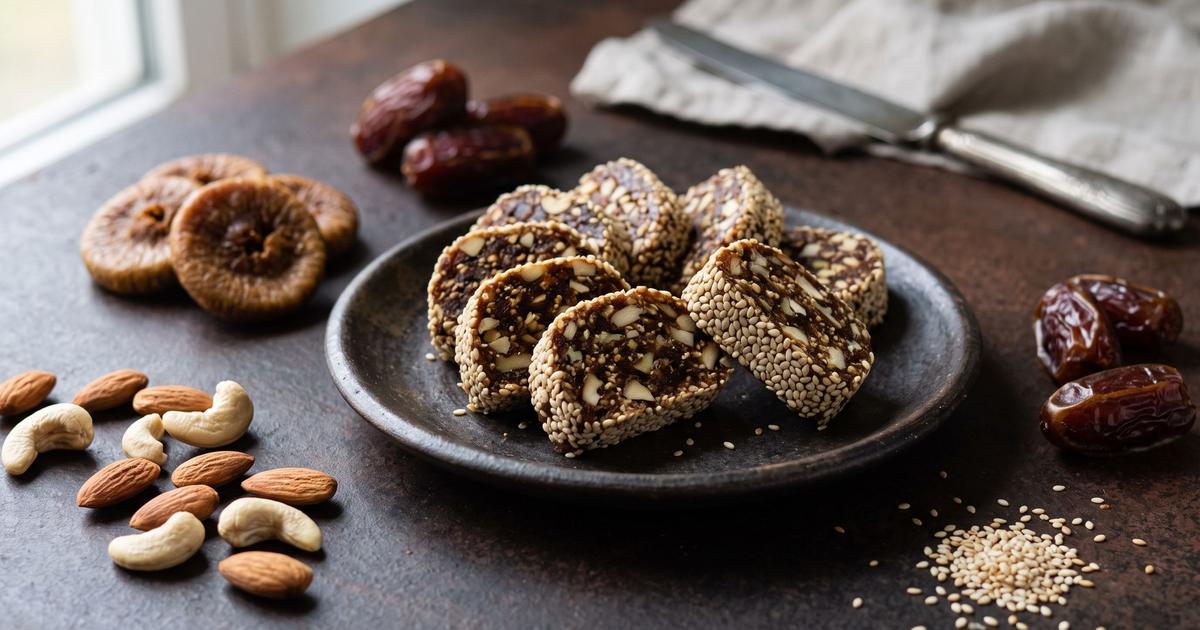
Anjeer khajur roll is the fig-and-date log sold by weight at every Indian mithai counter, a no-cook sweet that leans entirely on dried fruit for sweetness and nuts for body. It is one of the few traditional Indian desserts that needs no sugar, no ghee, and no cooking at all, which makes it a natural fit here. The only technique worth naming: toast the nuts before you fold them in, and chill the log before you slice it, so each round holds together and shows off the cashews and almonds set into the dark fruit. It keeps a couple of weeks in the fridge.
Ingredients
- 1 cup Dried figs, stems trimmed
- 1 cup Medjool dates, pitted
- 1/2 cup Raw cashews
- 1/2 cup Almonds
- 1/2 tsp Green cardamom, ground
- 2 tbsp Sesame seeds
Method
- Warm a dry pan over medium heat and toast the cashews and almonds until they smell nutty and color lightly, about 4 minutes, then chop them coarse. Toasting deepens the flavor and keeps the nuts crunchy inside the soft log.
- If the figs are stiff, soak them in warm water for 5 minutes and pat dry. Blend or pound the figs and dates together into a thick, sticky paste. The dried fruit is both the only sweetener and the glue that holds the roll together, so no sugar or syrup is needed.
- Knead the chopped nuts and ground cardamom into the fruit paste until evenly studded. It will be stiff; work it with your hands.
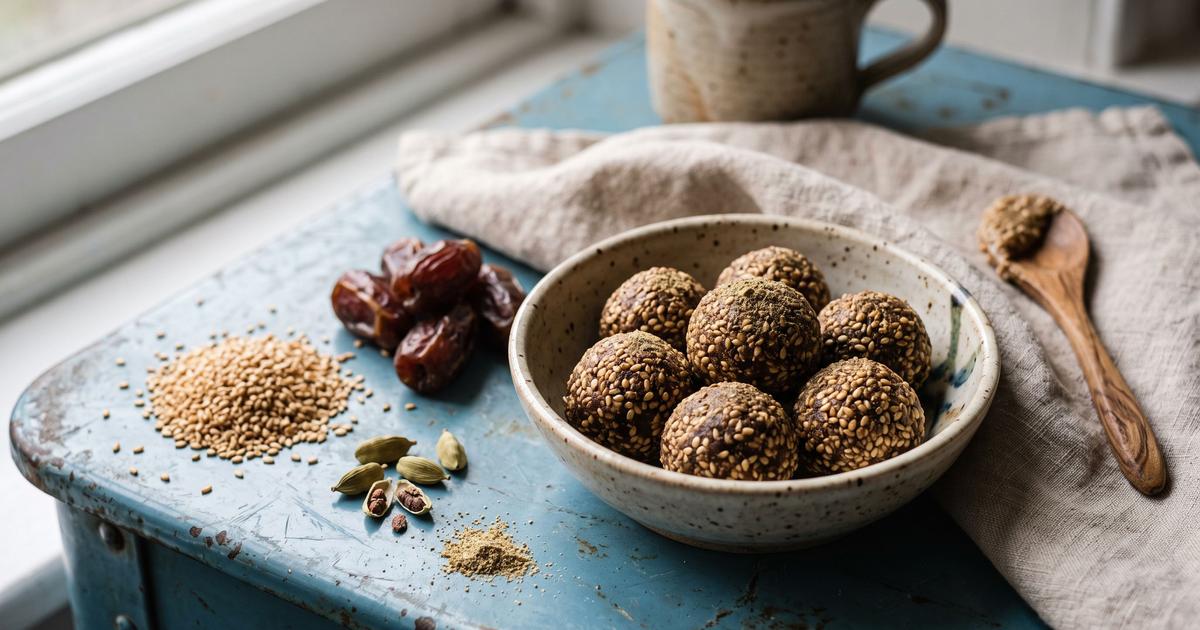
- Toast the sesame seeds in the dry pan for 1 minute and scatter them on a board. Shape the mixture into a log and roll it over the seeds so they coat the outside, the way the sweet-shop version is finished.
- Wrap the log tight in parchment and chill at least 1 hour. Slice into 12 rounds with a sharp knife. Chilling firms the paste so the slices hold their shape and show the nuts in cross-section.
Nutrition
Estimated per serving: 95 calories, 2 g protein, 3 g fiber, 5 mg sodium. Computed from USDA FoodData Central reference values for the main ingredients. This is an approximation, not a laboratory measurement. How these are computed.
Cost per serving is estimated from US national-average retail prices for cheap staple forms, using BLS dried-bean prices and USDA produce prices. Prices vary by store and season, so treat it as a guide, not a receipt. How this is computed.