Shrikhand
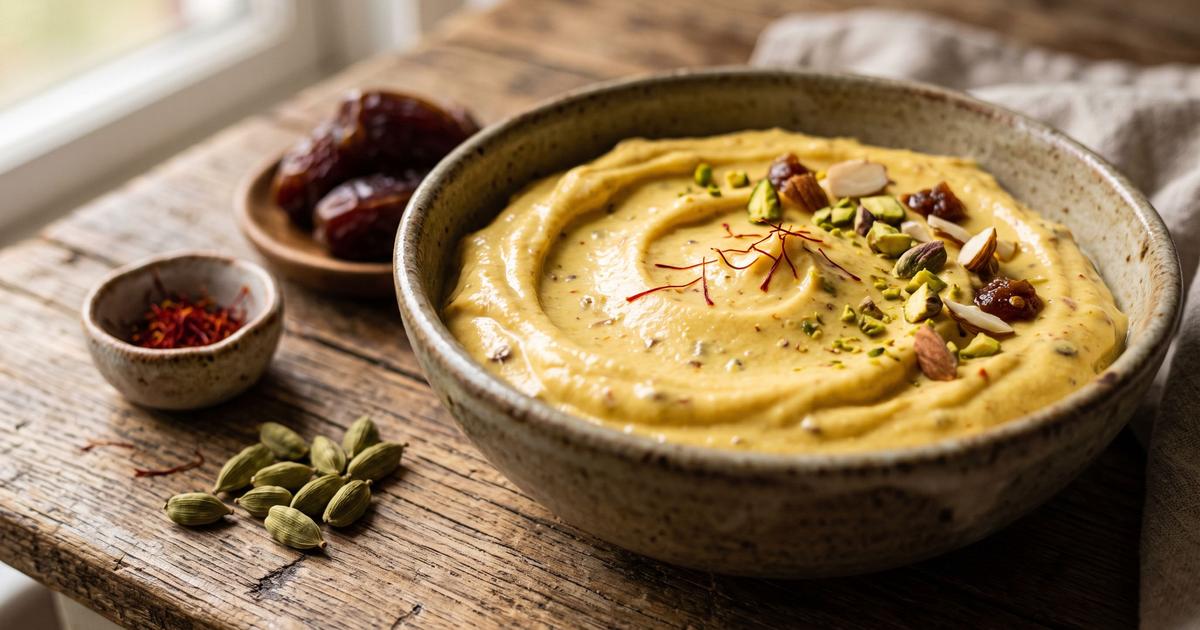
Shrikhand is the strained-yogurt dessert of Gujarat and Maharashtra, traditionally hung in muslin overnight, sweetened hard with sugar, and perfumed with saffron and cardamom. Soy-based plant yogurt strains the same way and carries more protein than dairy, so it holds its shape once the whey drains off. Blended dates do the sweetening, and a pinch of saffron bloomed in warm liquid colors the whole bowl. Whisk it until it turns airy, chill it, and keep the nuts and pomegranate for the last minute so they stay crisp.
Ingredients
- 3 cups Plain plant yogurt
- 6 wholes Medjool dates, pitted
- 1 pinch Saffron
- 4 pods Green cardamom, seeds crushed
- 2 tbsp Almonds, slivered
- 2 tbsp Pomegranate, seeds
Method
- Line a sieve with a clean cloth, spoon in the yogurt, and set it over a bowl in the fridge for at least 4 hours or overnight. Straining is what turns pourable yogurt into the dense, spoonable base shrikhand needs, and it drives off the watery whey that would otherwise thin it.
- Warm 1 tablespoon (15 ml) of the drained whey or plain water and steep the saffron in it for 10 minutes. Saffron gives up its color and honeyed aroma to warm liquid, not to cold yogurt, so blooming it first spreads it through the whole bowl.
- Soak the pitted dates in hot water for 10 minutes, then blend with 2 tablespoons (30 ml) of the soaking water into a smooth paste. This is the only sweetener, and pureeing keeps it from leaving chewy flecks in a dessert that should be silk.
- Scrape the strained yogurt into a bowl and whisk in the date paste, the saffron liquid, and the crushed cardamom seeds until glossy. Whisk hard for a full minute: shrikhand is defined by its whipped, airy smoothness.
- Chill for an hour so the flavors settle, then top with slivered almonds and pomegranate seeds just before serving. The cardamom deepens as it rests, so the wait is not optional.
Nutrition
Estimated per serving: 180 calories, 8 g protein, 3 g fiber, 40 mg sodium. Computed from USDA FoodData Central reference values for the main ingredients. This is an approximation, not a laboratory measurement. How these are computed.
Cost per serving is estimated from US national-average retail prices for cheap staple forms, using BLS dried-bean prices and USDA produce prices. Prices vary by store and season, so treat it as a guide, not a receipt. How this is computed.