Geröstete Kürbiskerne, Roasted Pumpkin Seeds
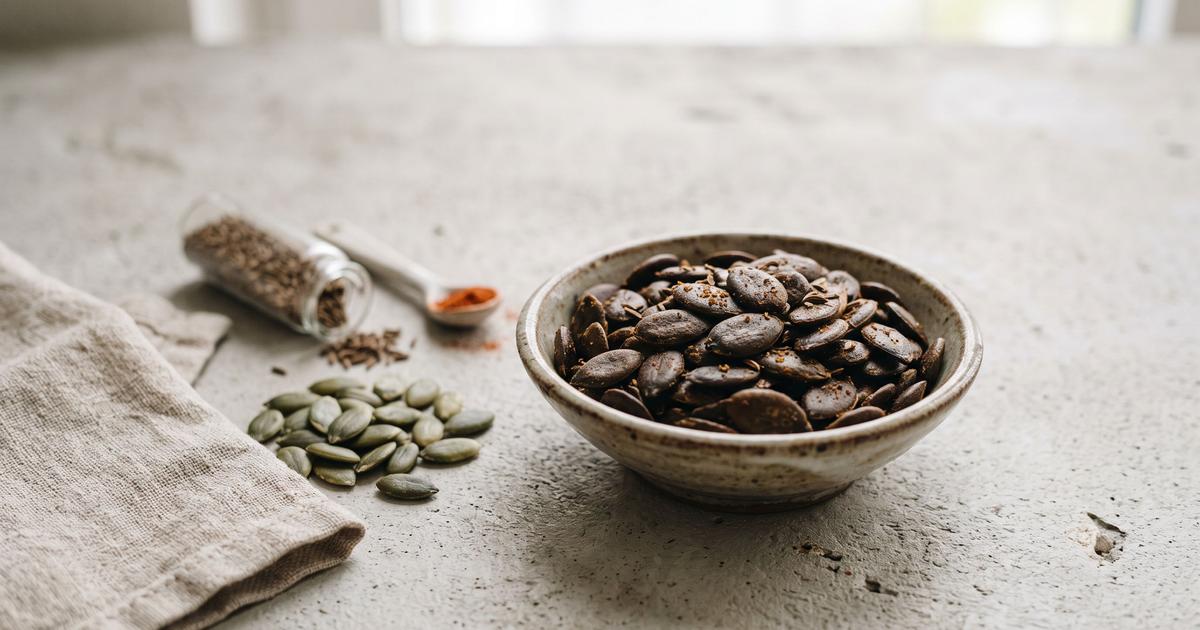
Pumpkin seeds are the pride of Styria, the German-speaking corner of Austria that presses them for their dark green oil and roasts the surplus by the handful. Here they are the whole snack, toasted in a dry pan until they pop and swell, which costs nothing and beats any bagged version soaked in oil and salt. Caraway ties them to the German table, paprika goes in off the heat so it stays sweet, and a splash of cider vinegar hisses away at the end to leave a savory edge where salt would normally sit. They travel well and outlast a bag of chips in the cupboard.
Ingredients
- 1 1/2 cups Pumpkin seeds
- 1 tsp Caraway
- 1 tsp Sweet paprika
- 1/2 tsp Black peppercorns, freshly ground
- 1 tsp Apple cider vinegar
Method
- Warm a wide, dry skillet over medium heat and add the pumpkin seeds in a single layer. Pumpkin seeds carry enough of their own fat to toast in a bare pan, so no oil is needed; crowding them, though, steams instead of toasts, so use your widest pan.
- Toast, shaking the pan often, until the seeds swell, pop, and turn one shade darker, about 6 minutes. The popping is the signal that the moisture inside has flashed off, which is what turns them from chewy to crisp. Toss the caraway seeds in for the last minute so they bloom in the residual heat without scorching.
- Kill the heat and add the paprika and black pepper off the flame. Paprika burns and turns bitter over direct heat, so stirring it in at the end keeps it sweet and keeps the seeds red rather than scorched.
- Sprinkle the cider vinegar over the hot seeds and toss until it hisses away. The acid flashes off almost instantly but leaves a savory tang behind, which is the trick that lets these stand in for a salted bar snack. Cool completely on a plate; they crisp fully as they come to room temperature and keep two weeks in a jar.
Nutrition
Estimated per serving: 160 calories, 9 g protein, 2 g fiber, 5 mg sodium. Computed from USDA FoodData Central reference values for the main ingredients. This is an approximation, not a laboratory measurement. How these are computed.
Cost per serving is estimated from US national-average retail prices for cheap staple forms, using BLS dried-bean prices and USDA produce prices. Prices vary by store and season, so treat it as a guide, not a receipt. How this is computed.