Krautsalat, Bavarian Cabbage Salad with Caraway
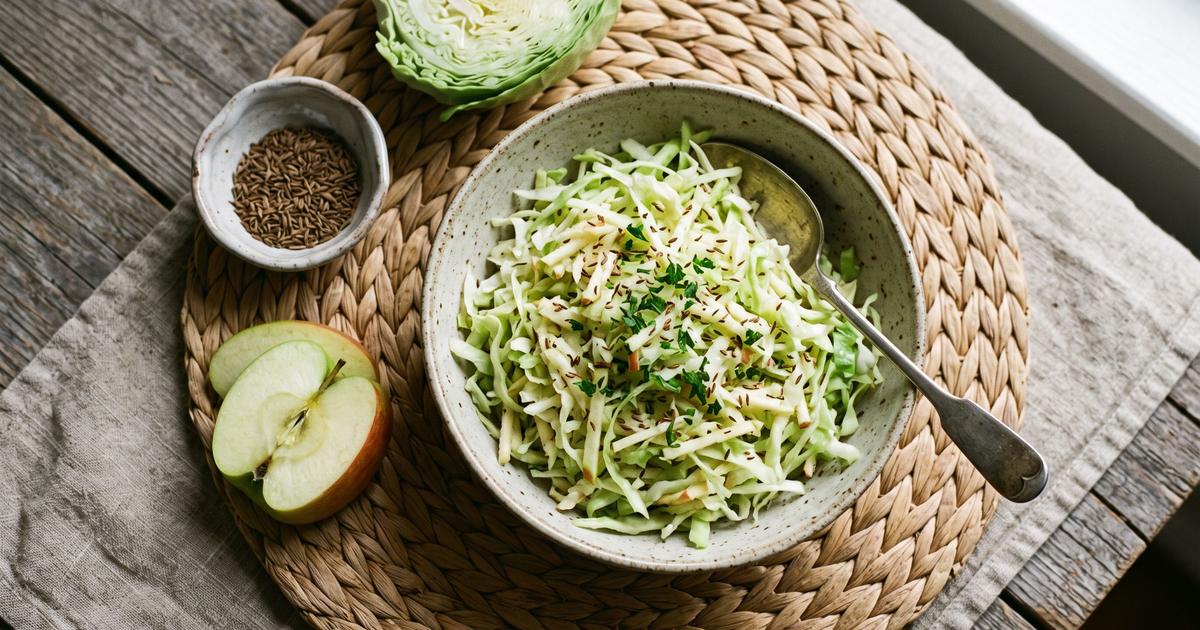
Krautsalat is the plain shredded cabbage salad that shows up next to everything in a Bavarian beer garden, sharp with vinegar and scented with caraway. It is about as cheap as a dish gets, one head of the cheapest vegetable in the store turned into a bowl that feeds six and keeps for days. The trick to a good one with no salt is mechanical: knead the shredded cabbage with the vinegar until it physically breaks down and weeps, which is what makes the difference between silky salad and a bowl of raw crunch. Toasted caraway is not optional, since it carries the whole identity of the dish, and grated apple brings the faint sweetness the traditional version gets from sugar. Make it ahead; it is better the next day.
Ingredients
- 1 small head green cabbage, cored, shredded paper-thin
- 1 1/2 tsp Caraway
- 1 tsp Yellow mustard seed
- 3 tbsp White wine vinegar
- 1/2 whole Apples, grated
- 1/2 whole Yellow onions, finely minced
- 1/2 tsp Black peppercorns, freshly ground
- 2 tbsp Sunflower seeds, dry-toasted
Method
- Shred the cabbage as thin as you can, ideally on a mandoline. Thin shreds wilt and drink the dressing; thick ribbons stay tough and squeaky and taste raw no matter how long they sit.
- Put the cabbage in a big bowl and knead it hard with the vinegar for two full minutes, until it darkens and softens and gives up liquid. Salt is what traditionally wilts krautsalat; kneading with acid collapses the same cell walls so the cabbage turns silky instead of crunchy, with no salt added.
- Toast the caraway and mustard seed in a dry pan until fragrant, about a minute, then add them warm. Toasting wakes the oils in the seeds, and caraway is the single flavor that makes this read as German rather than as plain slaw.
- Fold in the grated apple, minced onion, and black pepper. The apple's sweetness stands in for the pinch of sugar a classic krautsalat usually gets, with fiber attached.
- Let it sit at least 20 minutes, or up to a day cold, then scatter the toasted sunflower seeds over just before serving. Time lets the cabbage relax fully into the dressing; the seeds go on last so they stay crisp.
Nutrition
Estimated per serving: 70 calories, 2 g protein, 3 g fiber, 25 mg sodium. Computed from USDA FoodData Central reference values for the main ingredients. This is an approximation, not a laboratory measurement. How these are computed.
Cost per serving is estimated from US national-average retail prices for cheap staple forms, using BLS dried-bean prices and USDA produce prices. Prices vary by store and season, so treat it as a guide, not a receipt. How this is computed.