Linsen-Aufstrich, German Lentil Spread
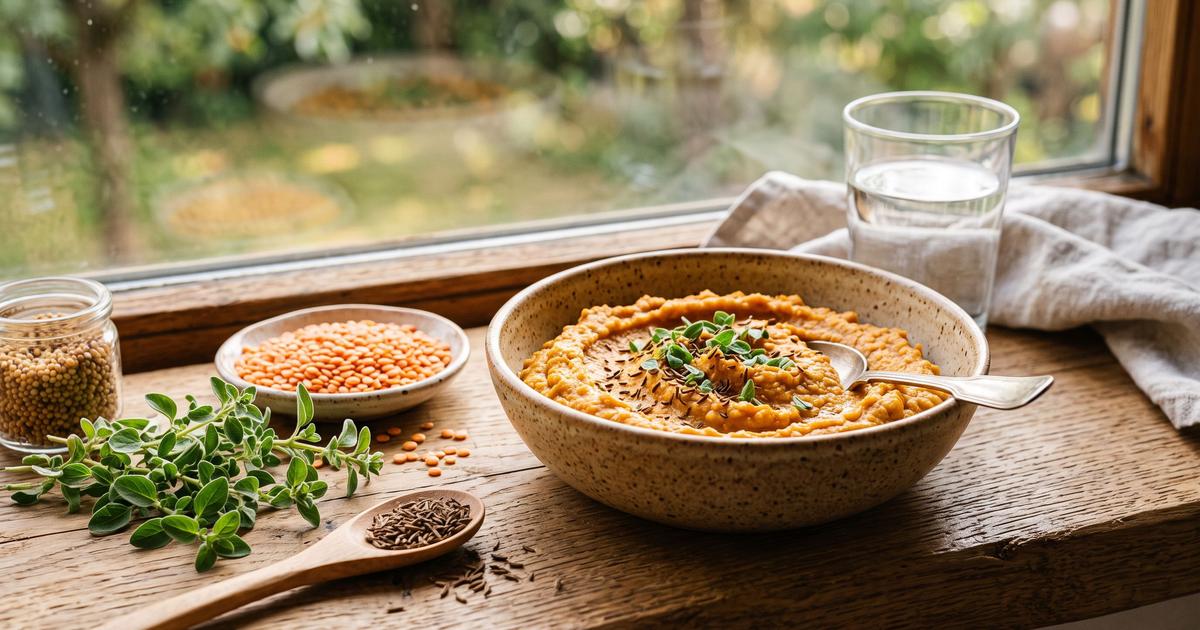
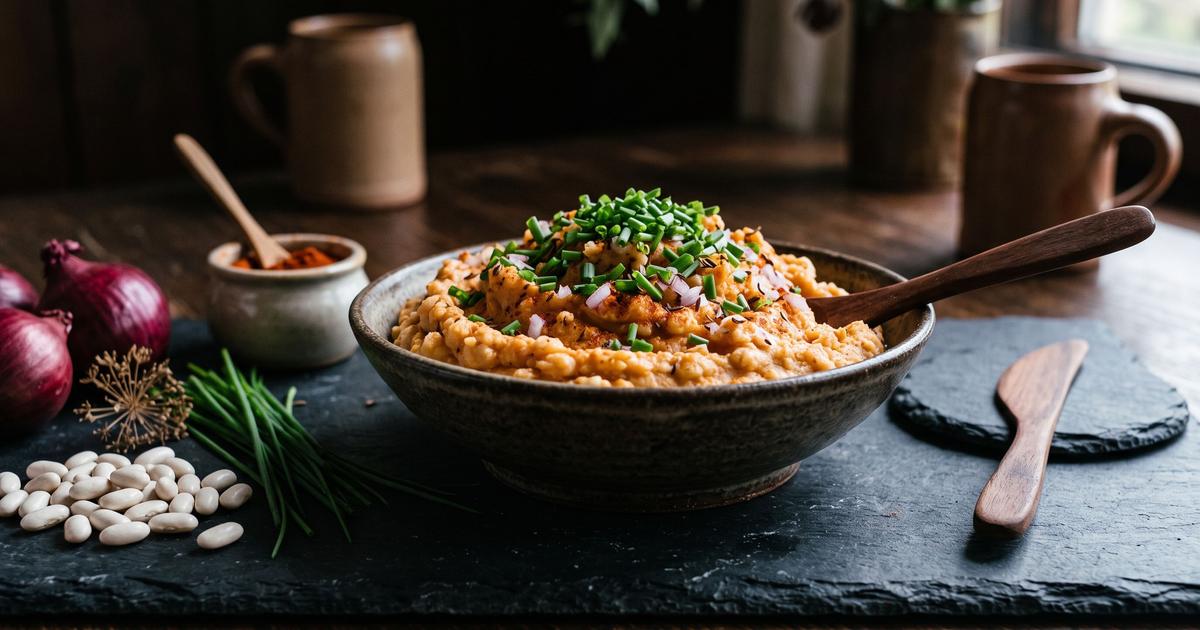
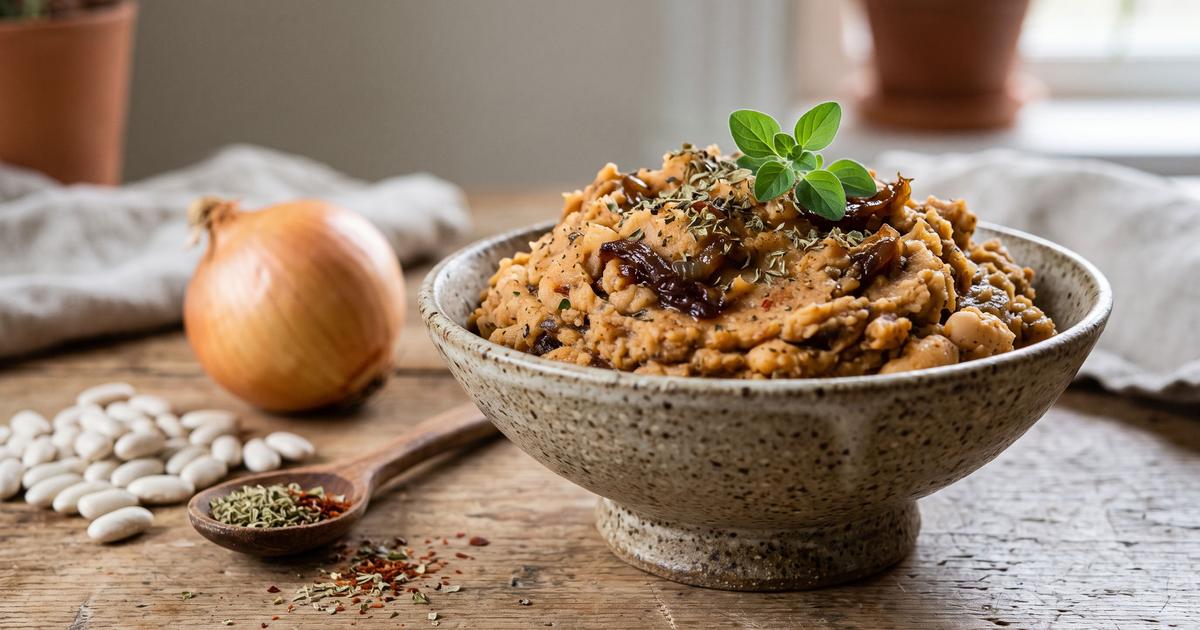
Vegan bread spreads, the Brotaufstriche that sit next to the mustard in every German fridge, are usually built on lentils or white beans because they set firm and cost almost nothing. This one leans on red lentils, which cook down to a puree in a quarter of an hour and hold a slice without help from oil. The flavor is classic German pantry: sweet dried marjoram, a little toasted caraway, and enough mustard and cider vinegar to make salt beside the point. Spread it thick on dense rye, pile on sliced radish or pickle, and it holds its own next to anything cured.
Ingredients
- 3/4 cup Red lentils, rinsed
- 1 whole Yellow onions, finely diced
- 2 cloves Garlic, minced
- 3 tbsp Sunflower seeds
- 1 tbsp Dijon mustard
- 1 tbsp Apple cider vinegar
- 1 tsp Dried marjoram
- 1/2 tsp Caraway, ground
- 1/2 tsp Black peppercorns, freshly ground
- 2 tbsp Flat-leaf parsley, chopped
Method
- Simmer the red lentils in 2 cups (475 ml) unsalted water until they collapse and thicken, about 15 minutes. Red lentils are the one pulse that breaks down on its own into a smooth, spreadable base, so no oil or dairy is needed to bind it. Let them cool slightly.
- While the lentils cook, sweat the onion and garlic in 3 tablespoons (45 ml) water over medium heat until soft, sweet, and dry, about 8 minutes. Raw onion would sit sharp on the bread; sweating it out first turns it mellow so the finished spread reads savory rather than biting.
- Toast the sunflower seeds and the caraway in a dry pan for 2 minutes until fragrant. Toasting wakes up the oils in both, and the caraway is what makes this taste unmistakably German rather than like a generic bean dip.
- Mash or pulse the lentils with the onion, sunflower seeds, mustard, vinegar, marjoram, caraway, and black pepper into a thick, scoopable paste. The mustard and vinegar do the job salt usually would, sharpening the lentils so they taste seasoned without any added sodium. Fold in the parsley by hand.
- Serve at room temperature, or chill an hour to firm it up and let the marjoram bloom into the lentils. It keeps five days in the fridge and thickens as it sits, so loosen it with a spoon of water if needed.
Nutrition
Estimated per serving: 130 calories, 7 g protein, 5 g fiber, 130 mg sodium. Computed from USDA FoodData Central reference values for the main ingredients. This is an approximation, not a laboratory measurement. How these are computed.
Cost per serving is estimated from US national-average retail prices for cheap staple forms, using BLS dried-bean prices and USDA produce prices. Prices vary by store and season, so treat it as a guide, not a receipt. How this is computed.