Kürbissuppe, German Pumpkin and Apple Soup
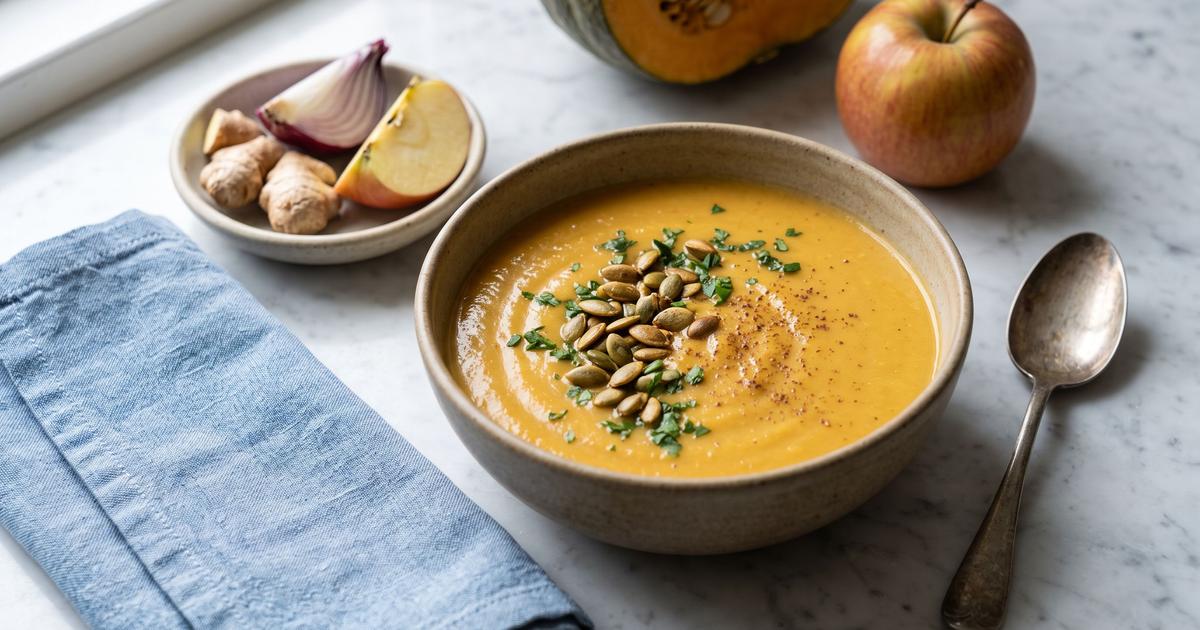
Kürbissuppe is the soup Germany reaches for the week the first Hokkaido squash appears at the market. The classic pot leans on butter and cream, but a blended squash carries all the body a soup needs on its own, and the trick is to build flavor without either. Sweat the aromatics in water until they collapse, let one apple do the work of both sweetness and acid, and blend the whole pot until it turns to velvet. A little grated ginger keeps it from feeling heavy, and the cider vinegar at the finish is what makes it taste seasoned. Toast the pumpkin seeds dry in the same pot before you start and they stay crisp on top. Serve it with dark rye or a plate of braised cabbage.
Ingredients
- 1 1/2 lb Butternut squash, peeled, cubed
- 1 whole Apples, peeled, chopped
- 1 whole Yellow onions, diced
- 1 whole Carrots, chopped
- 1 tbsp Ginger, grated
- 1 tbsp no-salt vegetable bouillon
- 1/2 tsp Dried marjoram
- 1/4 tsp Nutmeg, freshly grated
- 1/2 tsp Black peppercorns, freshly ground
- 2 tsp Apple cider vinegar
- 2 tbsp Pumpkin seeds, toasted
Method
- Sweat the onion and carrot in 3 tbsp water (45 ml) over medium heat until soft, about 6 minutes, adding a splash more whenever the pan goes dry. Starting the base in water instead of oil lets the vegetables give up their own sweetness, which is the seasoning that carries a salt-free soup.
- Add the squash, apple, ginger, marjoram, the bouillon, and 4 cups water (950 ml). The apple is not a garnish here: it loosens the dense squash and adds the faint tartness that keeps the soup from tasting flat and one-note. Bring to a boil, then simmer covered until a knife slides through the squash easily, about 25 minutes.
- Blend the pot smooth with an immersion blender. The squash and apple carry enough body that no cream is needed; the starch alone gives a velvet texture once it is pureed.
- Stir in the nutmeg, pepper, and cider vinegar off the heat. The vinegar at the end wakes the whole pot up, standing in for the salt you did not add. Ladle out and scatter the toasted pumpkin seeds over each bowl, since a dry-toasted seed adds the crunch and nuttiness a swirl of cream never would.
Nutrition
Estimated per serving: 150 calories, 4 g protein, 6 g fiber, 45 mg sodium. Computed from USDA FoodData Central reference values for the main ingredients. This is an approximation, not a laboratory measurement. How these are computed.
Cost per serving is estimated from US national-average retail prices for cheap staple forms, using BLS dried-bean prices and USDA produce prices. Prices vary by store and season, so treat it as a guide, not a receipt. How this is computed.