Linsensuppe
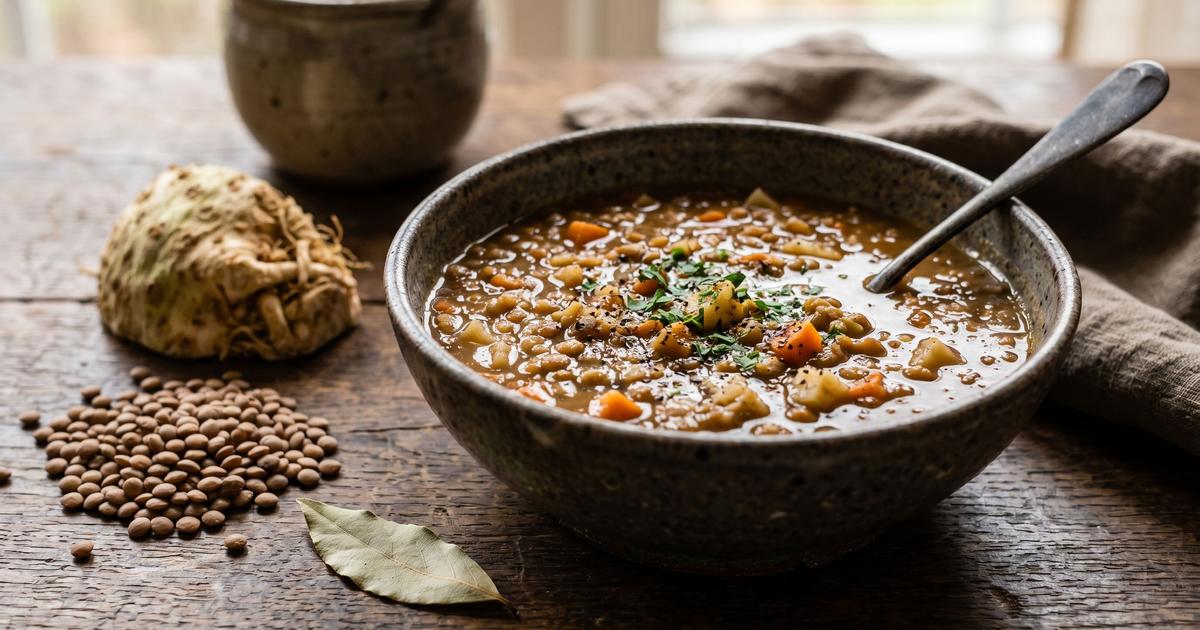
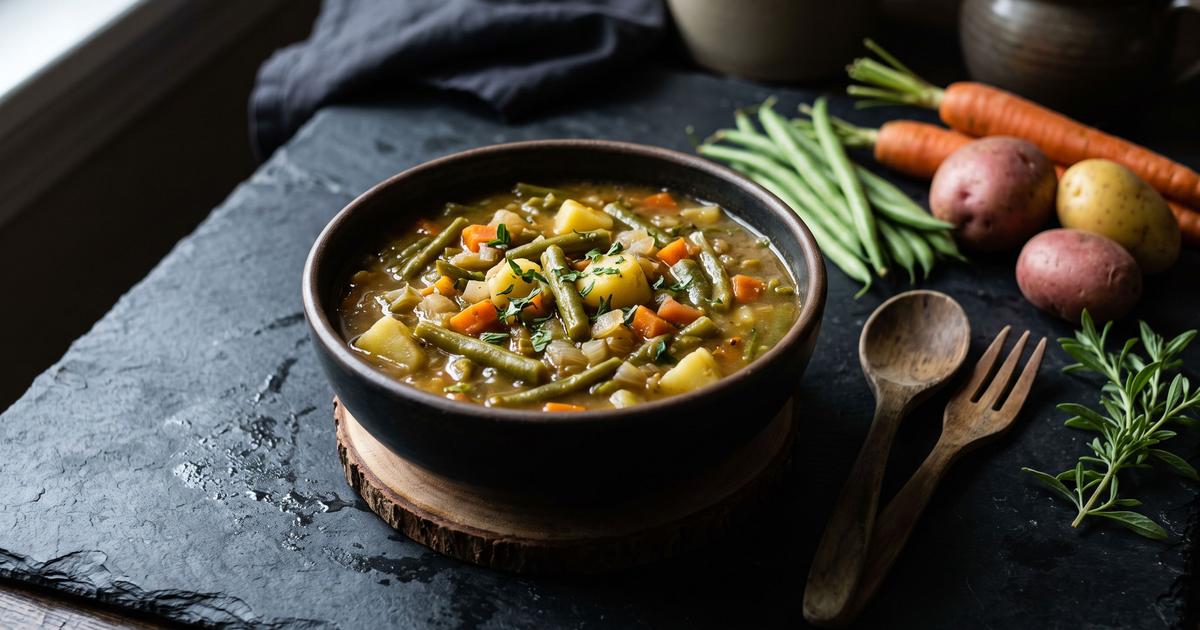
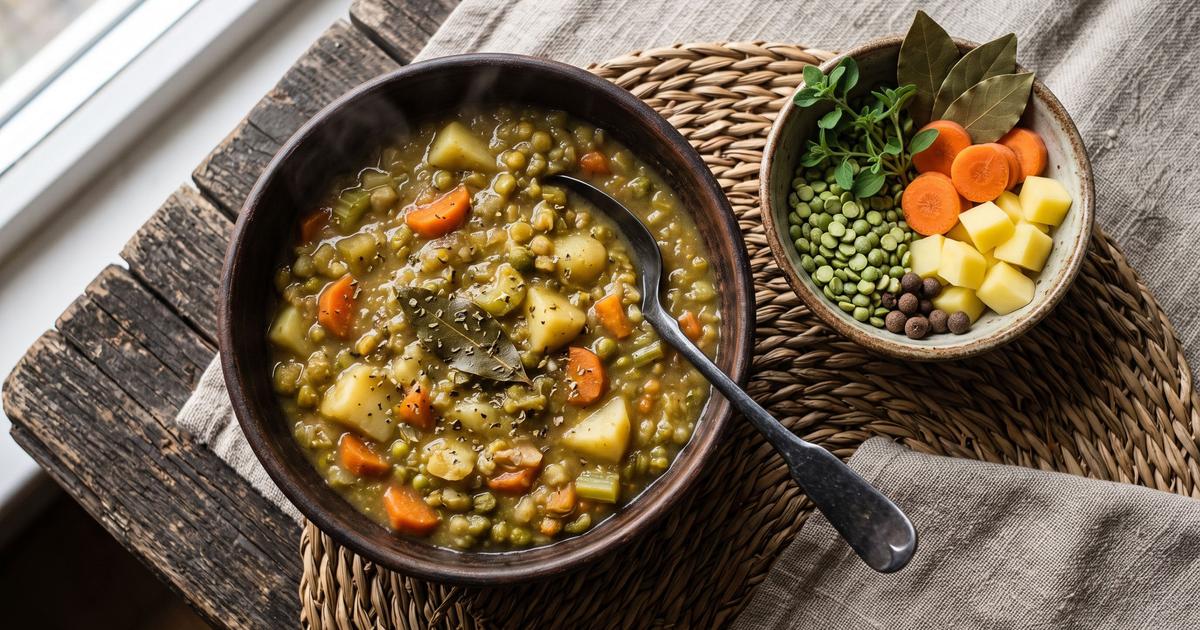
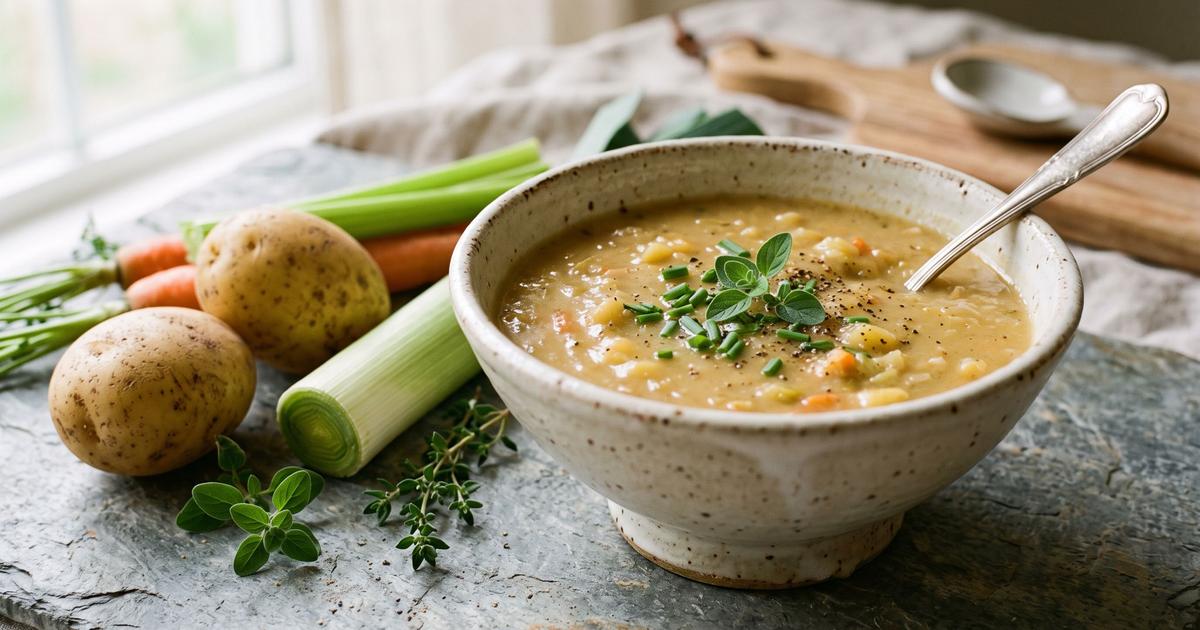
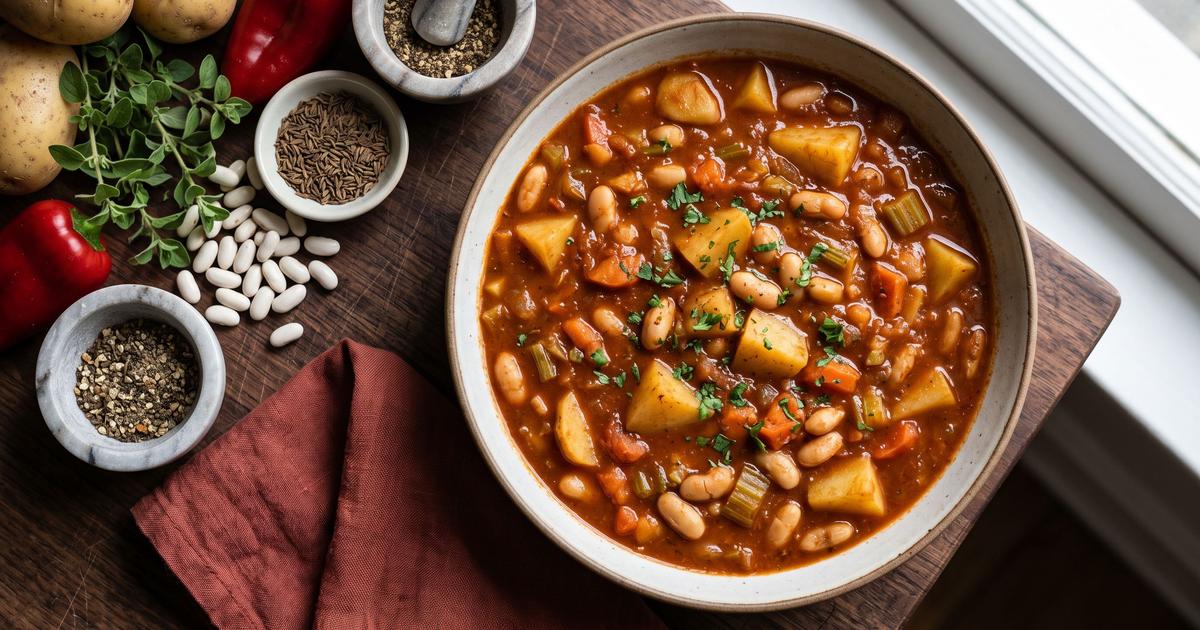
Linsensuppe is the pot a German kitchen turns to when the week needs stretching further than the grocery budget allows: lentils, carrots, potato, and a knob of celery root simmered until the broth thickens on its own. Home cooks there finish the pot with a spoonful of vinegar and little else, a habit worth borrowing, since a well-timed splash of acid does the flavor work salt usually gets credit for. The other trick is patience with the tomato paste: two minutes caramelizing in a dry, hot spot of the pot turns it from tinny to savory, so no oil is needed to unlock it.
Ingredients
- 1 1/2 cups Brown lentils, picked over and rinsed
- 1 medium Yellow onions, chopped
- 3 mediums Carrots, diced
- 1 cup Celery root, peeled and diced
- 2 mediums Potatoes, diced
- 3 cloves Garlic, minced
- 1 tbsp Tomato paste
- 2 leafs Bay leaves
- 1 1/2 tsp Dried marjoram
- 1 pinch Allspice, ground
- 1/2 tsp Black peppercorns, freshly ground
- 2 1/2 tsp no-salt vegetable bouillon
- 2 tbsp Apple cider vinegar, plus more to taste
- 3 tbsp Flat-leaf parsley, chopped, for garnish
Method
- Warm a few tablespoons of water in a large pot over medium heat. Add the onion, carrots, and celery root and cook, stirring occasionally, until the onion turns translucent and the vegetables begin to soften, about 10 minutes. Splash in more water anytime the pot starts to catch.
- Stir in the garlic and cook 30 seconds, until it smells fragrant but hasn't browned. Push the vegetables to one side, drop the tomato paste into the open spot, and let it sit undisturbed until it turns from red to brick, about 1 minute. That color shift means the natural sugars in the paste have caramelized, and it's what gives the broth savory depth with no meat or oil behind it.
- Stir the tomato paste into the vegetables, then add the lentils, potatoes, bay leaves, marjoram, allspice, and black pepper. Pour in the bouillon and 7 cups (1.7 L) water, scraping up anything stuck to the pot bottom, and bring to a boil.
- Lower to a steady simmer and cook uncovered, stirring occasionally, until the lentils are tender and the potatoes are falling apart at the edges, 30 to 35 minutes. Brown lentils keep their shape better than red ones, so the soup stays chunky rather than smooth; the potato pieces that do break down are what thicken the broth, no cream or roux needed.
- Fish out the bay leaves. Stir in the vinegar one tablespoon at a time, tasting after each addition. It should sharpen the soup the way salt would, turning the broth from flat to lively rather than making it taste sour.
- Ladle into bowls and scatter with parsley. Linsensuppe thickens as it sits, so leftovers may need a splash of water when reheated.
Nutrition
Estimated per serving: 330 calories, 18 g protein, 12 g fiber, 75 mg sodium. Computed from USDA FoodData Central reference values for the main ingredients. This is an approximation, not a laboratory measurement. How these are computed.
Cost per serving is estimated from US national-average retail prices for cheap staple forms, using BLS dried-bean prices and USDA produce prices. Prices vary by store and season, so treat it as a guide, not a receipt. How this is computed.