Garbure, Gascon Cabbage and White Bean Soup
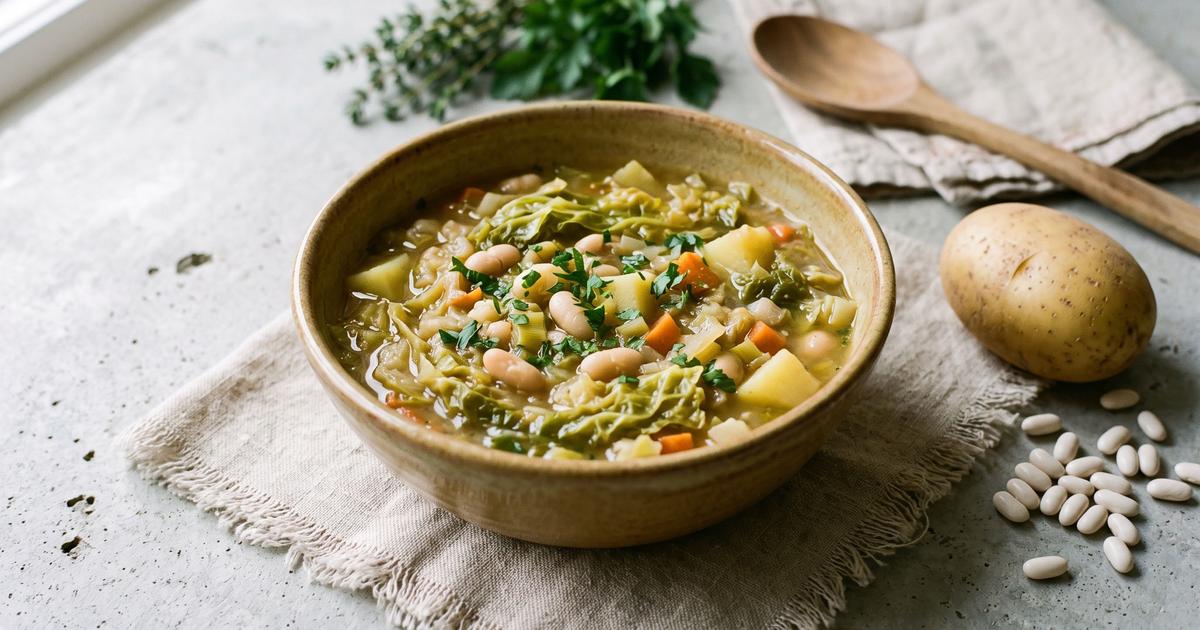
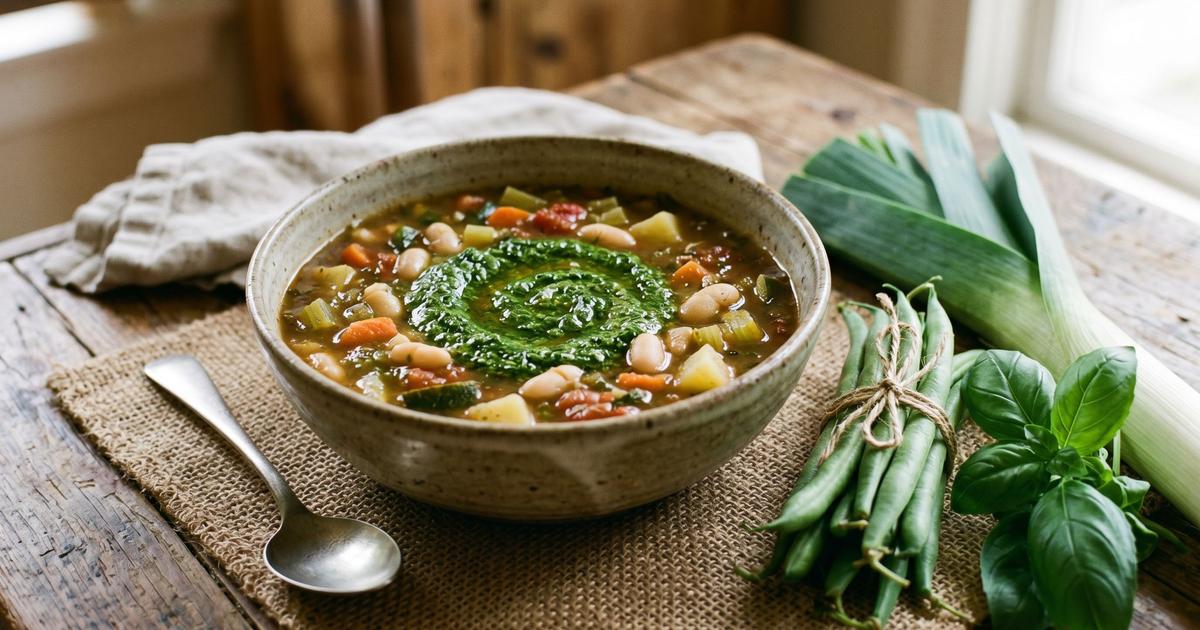
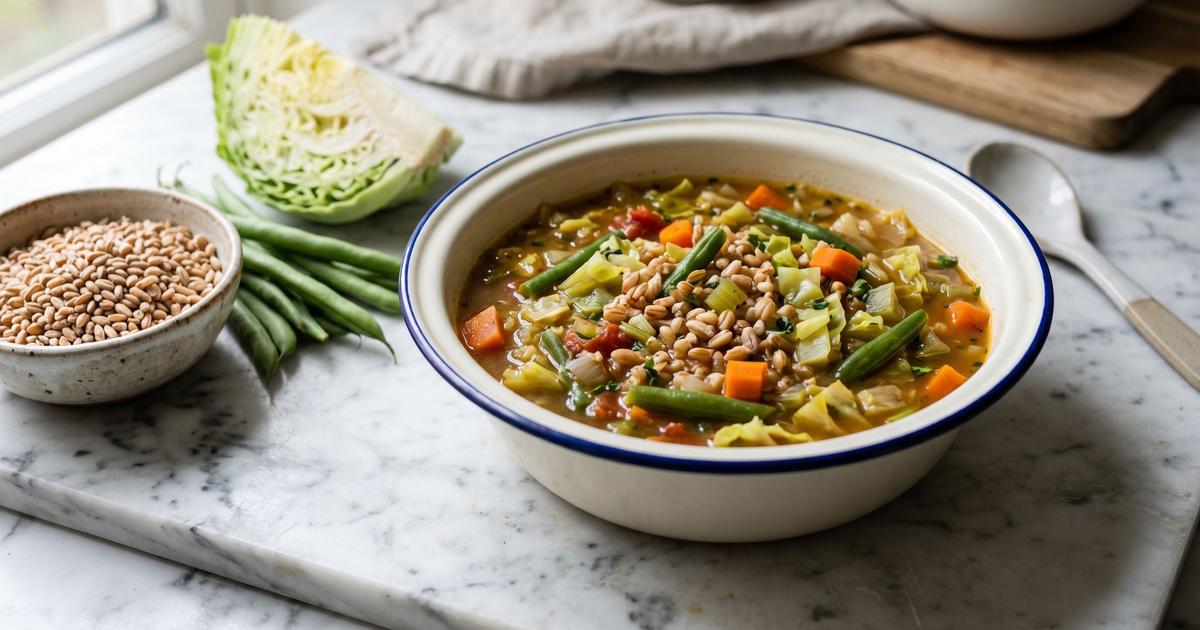
Garbure is the everyday soup of Gascony, a wintry pot of cabbage, white beans, and whatever roots the garden held, traditionally enriched with preserved duck and a knuckle of ham. Strip those away and the vegetables carry it easily, because the real backbone was always the slow-sweated onion and leek and the mountain of cabbage. It stays within the rules by starting in water rather than fat, and by thickening itself: crush a cupful of the cooked potato and beans and stir it back, and the soup turns thick and glossy with no cream. A tablespoon of red wine vinegar at the end stands in for salt, brightening the sweetness of the long-cooked cabbage. Like most bean soups it is better the next day, so make the full pot.
Ingredients
- 1 whole Yellow onions, diced
- 2 wholes Leeks, white and light green, sliced
- 4 cloves Garlic, sliced
- 2 wholes Carrots, diced
- 2 wholes Turnips, diced
- 2 wholes Potatoes, peeled and diced
- 1/2 whole green cabbage, cored and shredded
- 1 1/2 cups Great northern beans, cooked
- 1 tbsp no-salt vegetable bouillon
- 2 wholes Bay leaves
- 4 sprigs Thyme
- 1/2 tsp Black peppercorns, freshly ground
- 1 tbsp Red wine vinegar
- 1/4 cup Flat-leaf parsley, chopped
Method
- Sweat the onion, leeks, and garlic in 0.25 cup (60 ml) water in a large covered pot over medium heat until soft and sweet, about 10 minutes. Leeks and onion cooked slowly in water build the deep, mellow base a garbure needs, standing in for the fat the pot was traditionally started in.
- Add the carrots, turnips, thyme, and bay, and cook 5 minutes so the roots start to soften and pick up flavor before the liquid dilutes everything.
- Add the potatoes, cabbage, bouillon, and 6 cups (1.4 L) water. Bring to a boil, then simmer partly covered until the potatoes are completely tender, about 30 minutes. Cabbage is the soul of this soup, so add it generously; it collapses and sweetens as it cooks.
- Stir in the cooked beans and simmer 10 minutes more to let them warm through and lend the broth their starch. A garbure is meant to be thick and spoon-standing, not brothy.
- Scoop out about a cup of the potato and beans, crush them to a paste against the side of a bowl, and stir the paste back in. This is how you thicken a garbure without cream or flour: its own starch does the work.
- Pull out the bay and thyme stems, then finish with the black pepper, parsley, and red wine vinegar. The splash of vinegar lifts the whole pot and sharpens the sweet cabbage, doing the job salt would otherwise be asked to do.
Nutrition
Estimated per serving: 190 calories, 9 g protein, 10 g fiber, 95 mg sodium. Computed from USDA FoodData Central reference values for the main ingredients. This is an approximation, not a laboratory measurement. How these are computed.
Cost per serving is estimated from US national-average retail prices for cheap staple forms, using BLS dried-bean prices and USDA produce prices. Prices vary by store and season, so treat it as a guide, not a receipt. How this is computed.