Cock-a-Leekie, Scottish Leek and Prune Soup
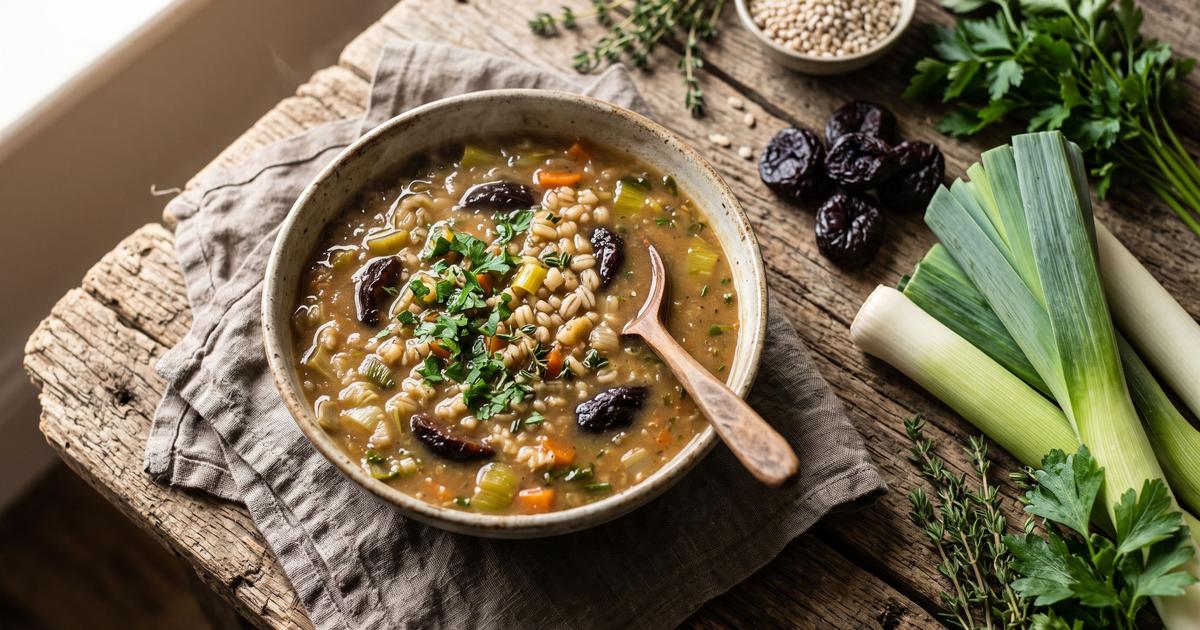
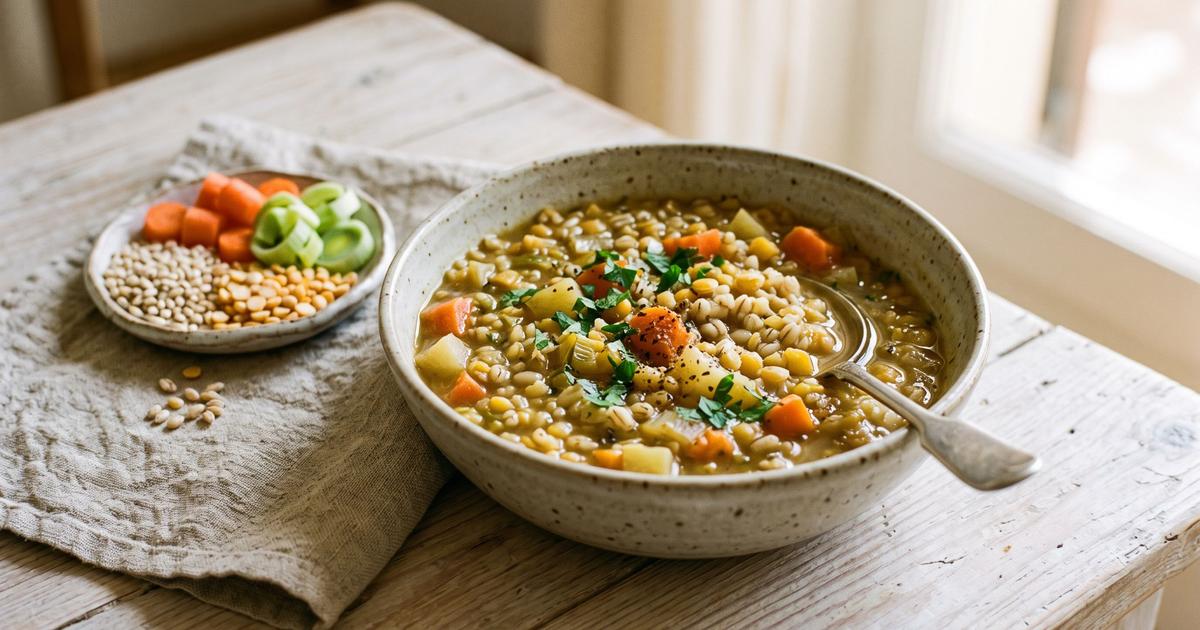
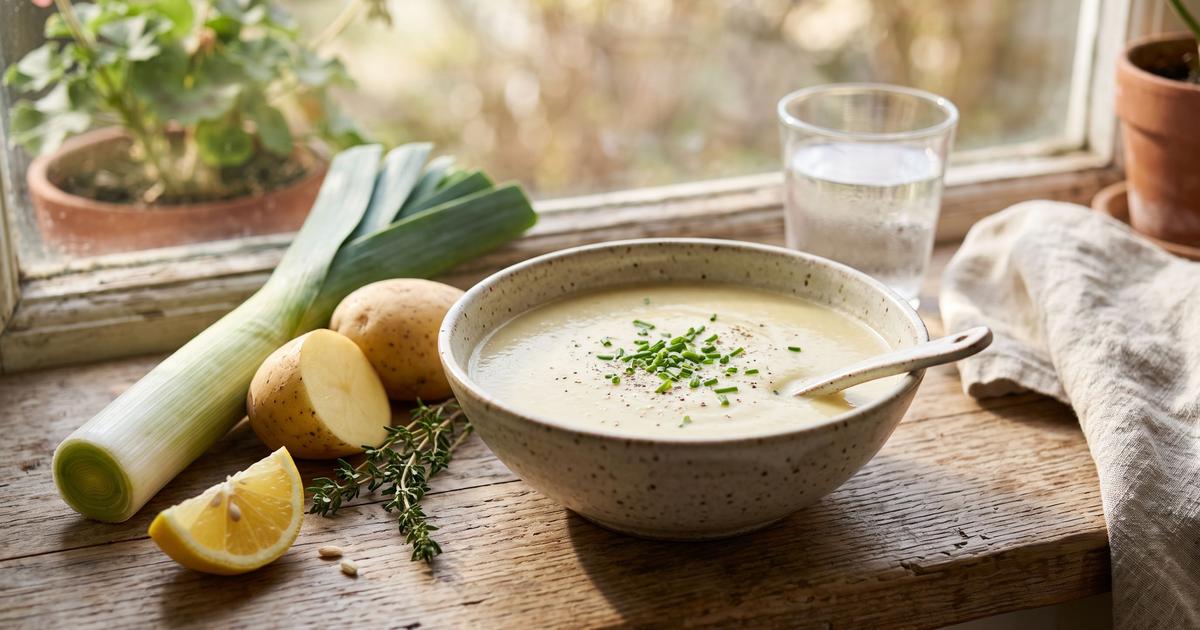
Cock-a-leekie is one of Scotland's oldest soups, and its defining oddity is the prunes, dropped in whole to melt against the leeks and turn the broth quietly sweet. The traditional version starts with a boiling fowl, but the leeks and barley were always doing the real work, so the pot loses very little when the bird is left out. Half the leeks are cooked down to a sweet base and half go in late for texture, while hulled barley thickens the broth as it softens, giving the body the meat once provided. The prunes are not optional or a garnish; they are the soup, so do not skip them. It keeps and reheats well, and thickens further overnight into something closer to a stew.
Ingredients
- 4 wholes Leeks, white and light green, sliced
- 1 whole Yellow onions, diced
- 2 cloves Garlic, sliced
- 1 whole Carrots, diced
- 1/2 cup Hulled barley, rinsed
- 8 wholes Prunes, pitted and halved
- 2 wholes Bay leaves
- 4 sprigs Thyme
- 1 tbsp no-salt vegetable bouillon
- 1/2 tsp Black peppercorns, freshly ground
- 2 tbsp Flat-leaf parsley, chopped
Method
- Sweat the onion, garlic, and half the sliced leeks in 0.25 cup (60 ml) water in a covered pot until soft, about 8 minutes. Cooking half the leeks down to nothing now builds a sweet, savory backbone; the rest go in later to keep some texture and fresh oniony bite.
- Add the carrot, barley, bouillon, bay, thyme, and 6 cups (1.4 L) water. Simmer partly covered until the barley is tender and has thickened the broth slightly, about 40 minutes. Hulled barley keeps its chew and thickens the pot as it releases starch, the body that a chicken carcass once gave.
- Add the remaining leeks and the prunes and simmer 15 minutes more. This is the part that surprises people: the prunes half dissolve and lend the broth a dark, almost savory sweetness that is the whole point of cock-a-leekie.
- Pull out the bay and thyme stems, then finish with black pepper and parsley. The sweetness of the prunes and the long-cooked leeks makes the bowl taste seasoned without salt; a good grind of pepper is all it wants.
Nutrition
Estimated per serving: 155 calories, 4 g protein, 6 g fiber, 70 mg sodium. Computed from USDA FoodData Central reference values for the main ingredients. This is an approximation, not a laboratory measurement. How these are computed.
Cost per serving is estimated from US national-average retail prices for cheap staple forms, using BLS dried-bean prices and USDA produce prices. Prices vary by store and season, so treat it as a guide, not a receipt. How this is computed.