Freekeh Pilaf with Herbs and Almonds
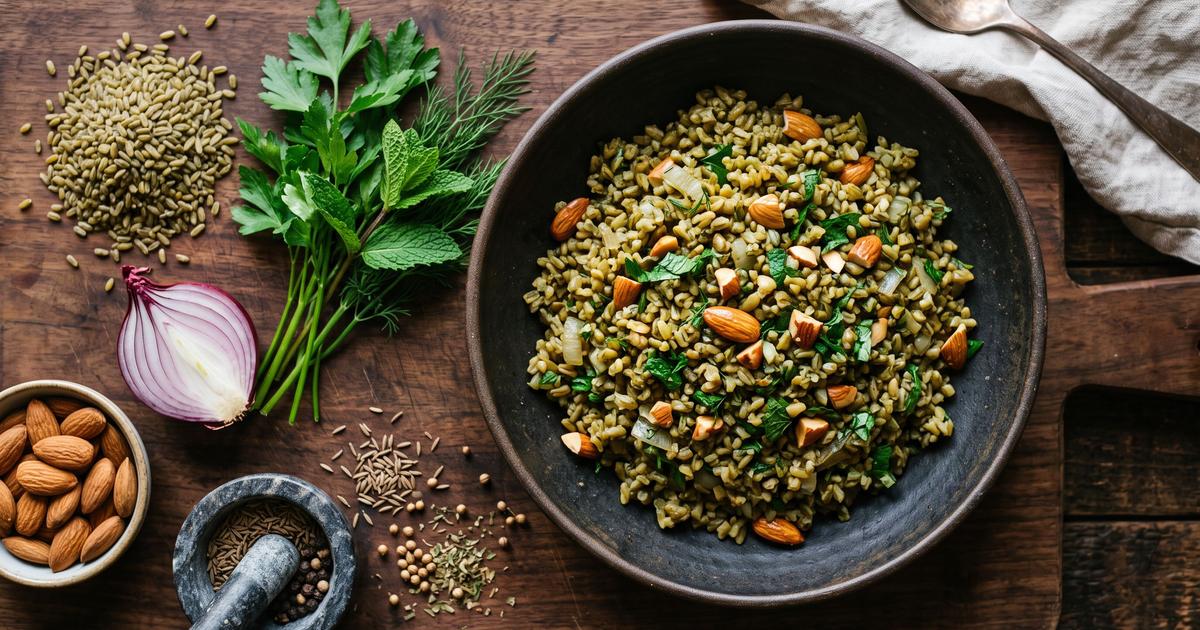
Freekeh is wheat harvested young and roasted while still green, which gives it a smoky, savory flavor no other grain has and a chew that holds up in a salad or a pilaf. It is a staple across the eastern Mediterranean and deserves to be better known, not least because it is filling and high in fiber. Here it is treated simply, toasted for depth and then loaded with more soft herbs than seems reasonable, because the herbs and the lemon are what make it sing without salt or oil. Toasted almonds add crunch and a little richness. It holds well for a few days, so it doubles as a grain to cook once and fold into lunches through the week.
Ingredients
- 1 cup Freekeh, rinsed
- 1 Yellow onion, finely diced
- 3 cloves Garlic, minced
- 1 tbsp no-salt vegetable bouillon
- 1/3 cup Flat-leaf parsley, chopped
- 3 tbsp Mint, chopped
- 2 tbsp Dill, chopped
- 1/3 cup Almonds, toasted and chopped
- 1 Lemon, zested and juiced
- 1/2 tsp Black peppercorns, ground
Method
- Sweat the onion in a pot with a splash of water over medium heat until soft, about 6 minutes, then add the garlic for one minute more.
- Add the rinsed freekeh and stir it in the dry pan for a minute until it smells toasty. Freekeh is young wheat that was roasted while green, and briefly toasting it again deepens the smoky flavor that is the whole reason to cook with it.
- Pour in 2.5 cups (600 ml) water and the bouillon, bring to a boil, then cover and simmer low for 20 to 25 minutes until the grains are tender but still have a chew and the liquid is absorbed. Cracked freekeh cooks faster than whole, so start checking at 15 minutes.
- Take it off the heat and let it stand covered for 5 minutes, then fluff with a fork. The rest lets the grains firm up and stops them from clumping.
- Fork through the parsley, mint, dill, lemon zest and juice, and the toasted almonds, and grind over the pepper. Everything bright goes in at the end so the herbs stay green and the lemon stays sharp, which is what carries the dish without salt. Serve warm or at room temperature.
Nutrition
Estimated per serving: 200 calories, 7 g protein, 6 g fiber, 40 mg sodium. Computed from USDA FoodData Central reference values for the main ingredients. This is an approximation, not a laboratory measurement. How these are computed.
Cost per serving is estimated from US national-average retail prices for cheap staple forms, using BLS dried-bean prices and USDA produce prices. Prices vary by store and season, so treat it as a guide, not a receipt. How this is computed.