Crustless Pumpkin Custard
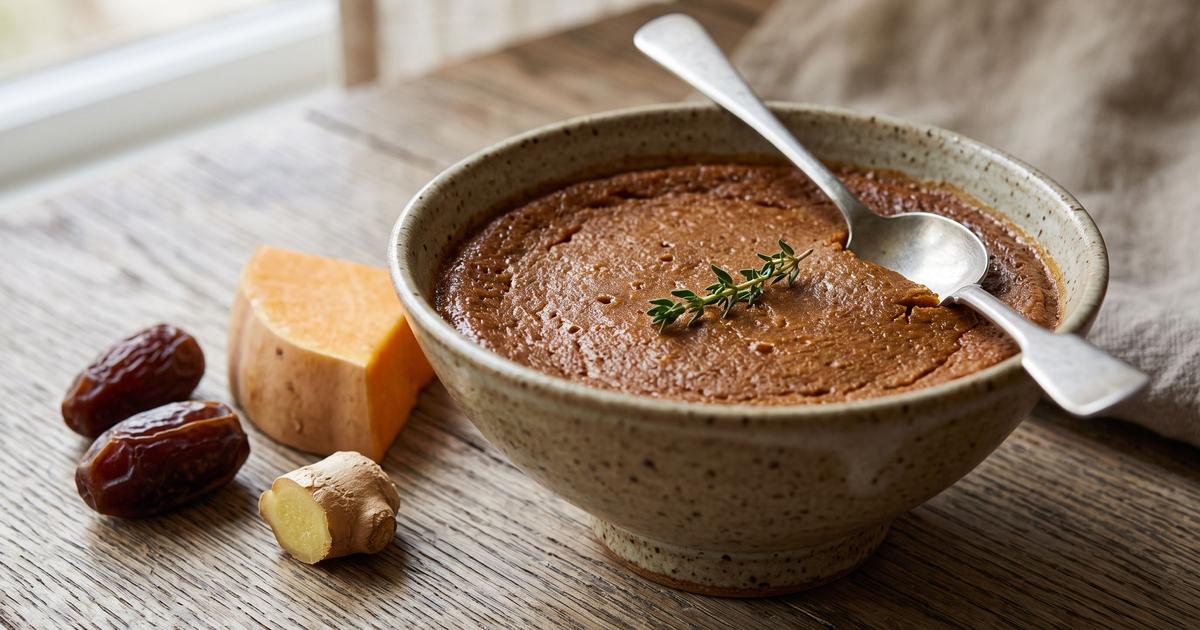
This is everything people actually want from pumpkin pie, the spiced, silky, custardy filling, without the refined-flour crust it sits in or the cup of sugar it usually carries. Silken tofu does the setting the eggs would, blended dates sweeten it, and mashed winter squash gives the color and body. The warm spice mix, heavy on cinnamon with ginger, nutmeg, and a whisper of clove, is what makes it read unmistakably as the holiday dessert. Two details decide the texture: blend long enough that the dates vanish completely, and pull the custards from the oven while the centers still wobble, since they set as they chill. Bake it in ramekins for a party, and make it the day before.
Ingredients
- 2 cups Butternut squash, cooked, mashed
- 1 cup Silken tofu
- 6 wholes Medjool dates, pitted
- 1 1/2 tsp Ceylon cinnamon
- 1/2 tsp ground ginger
- 1/4 tsp Nutmeg, freshly grated
- 1 pinch Cloves, ground
- 2 tbsp Ground flaxseed
- 1/4 cup Unsweetened oat milk
Method
- Blend the squash, silken tofu, dates, spices, flaxseed, and oat milk until completely smooth, stopping to scrape down the sides. Silken tofu replaces the eggs and evaporated milk of a pumpkin pie filling, and a long blend is what makes the custard satiny rather than grainy; the dates must break down fully or they leave sweet lumps.
- Let the batter rest 10 minutes. Ground flaxseed needs time in liquid to turn gelatinous, and that gel, working with the tofu, is what sets the custard in place of the eggs a classic recipe leans on.
- Divide among six ramekins and bake at 350F (175C) until the edges are set but the centers still wobble when nudged, 35 to 40 minutes. Pull them while they jiggle; the custard keeps firming as it cools, and baking until the middle looks solid overshoots and cracks the tops.
- Cool, then chill at least 2 hours before serving. A pumpkin custard only reaches its clean, sliceable, spoon-holding set when it is fully cold, so the fridge time is not optional.
Nutrition
Estimated per serving: 150 calories, 6 g protein, 4 g fiber, 45 mg sodium. Computed from USDA FoodData Central reference values for the main ingredients. This is an approximation, not a laboratory measurement. How these are computed.
Cost per serving is estimated from US national-average retail prices for cheap staple forms, using BLS dried-bean prices and USDA produce prices. Prices vary by store and season, so treat it as a guide, not a receipt. How this is computed.